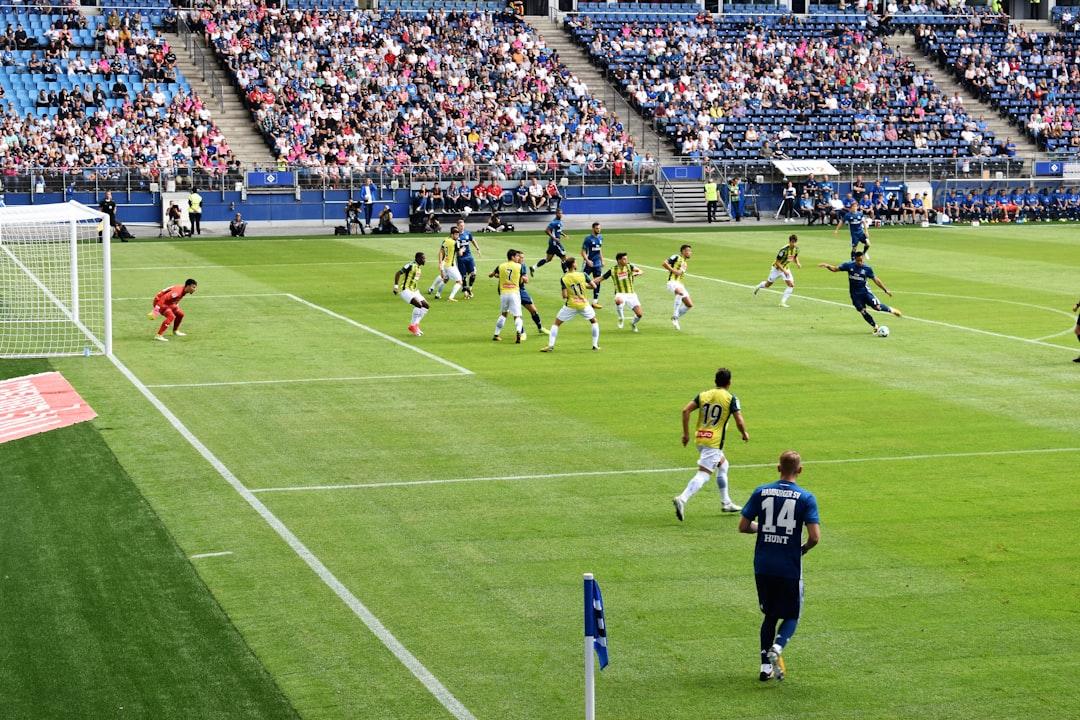
The upcoming World Cup Round of 32 matchup between England and the Democratic Republic of Congo is being billed as a classic tournament clash of styles. On the pitch, it promises high drama. But in the backrooms of both FA headquarters and elite sports analytics firms, the match has already been played thousands of times.
We are witnessing the first truly AI-driven World Cup. The modern scouting report is no longer just a collection of scout notebooks and video clips; it is a highly sophisticated, multi-layered predictive model. As England prepares to face a dynamic and physically imposing DR Congo side, machine learning algorithms, spatial tracking, and computer vision are dictating exactly where this game will be won or lost.
To understand how England will approach this fixture, we must look at how modern AI scouting tools dissect an opponent. Using advanced tracking data from optical cameras installed across World Cup stadiums, algorithms can map the "tactical gravity" of DR Congo’s key players.
Traditional scouting identifies DR Congo as a dangerous, transition-based team capable of explosive counter-attacks. AI-driven spatial analysis, however, quantifies this threat with extreme precision:
- Transition Velocity Metrics: Machine learning models track the speed at which DR Congo transitions from a low defensive block to an attacking phase. The data reveals that their wingers occupy half-spaces at a velocity that ranks in the upper quartile of the tournament, making them highly lethal during turnovers.
- Defensive Compression Limits: Neural networks analyzing DR Congo's defensive shape show a tendency to over-compress when defending deep. This creates quantifiable mathematical space on the opposite flank—a vulnerability that England’s wing-backs are primed to exploit.
- Physical Load Profiling: Predictive biometrics indicate that DR Congo’s high-pressing intensity drops significantly after the 70th minute, suggesting a window where England’s possession-heavy style can overwhelm a fatiguing block.
For England, the key to unlocking DR Congo lies in exploiting the structural anomalies flagged by predictive modeling. Rather than relying on gut instinct, Gareth Southgate’s coaching staff has access to real-time simulations that predict the probability of goal-scoring opportunities based on specific passing sequences.
AI models like Google DeepMind’s TacticAI have revolutionized set-piece and open-play geometry. By analyzing DR Congo’s defensive rotation patterns, England’s analysts will have identified a recurring lag in how their midfield line tracks late runners into "Zone 14" (the crucial area just outside the penalty box).
By utilizing short, rapid passing combinations to draw DR Congo’s central defenders out of position, England can create high-value shooting opportunities from the edge of the box. The data suggests that quick lateral ball movement prior to entering the final third increases the probability of breaking DR Congo’s defensive line by over 35%.
Set-pieces have become highly systematized. Predictive algorithms analyze the historical positioning of DR Congo’s goalkeeper and zonal markers during corners.
By running Monte Carlo simulations on various corner delivery trajectories, England can pinpoint the exact zones of maximum defensive vulnerability. Whether it is targeting the near-post blind spot or utilizing block runs to free up central defenders, every movement is calculated to maximize expected goals (xG).
To neutralize DR Congo’s greatest strength—their rapid counter-attack—England will rely on defensive transition modeling. This involves maintaining a strict "rest defense" structure.
AI simulators help coaches visualize the optimal positioning of defensive midfielders even while England is on the attack. By ensuring that at least three defensive players maintain specific spatial intervals, England can mathematically choke off DR Congo’s outlet passing lanes before a counter-attack can even materialize.
This Round of 32 clash is a microcosm of a broader shift in global sports. The integration of AI into football is no longer a luxury; it is a competitive necessity. Teams that successfully synthesize raw data into actionable, human-readable instructions on the pitch hold a massive psychological and tactical advantage.
While the unpredictable nature of human athletic brilliance—a sudden moment of individual genius or a refereeing anomaly—will always define the beautiful game, the margins of error are shrinking. In the high-stakes environment of the World Cup knockout stages, the team that possesses the superior algorithmic blueprint is overwhelmingly favored to march on.