- The 2026 World Cup match in Toronto serves as a cultural homecoming for the city's massive Portuguese and Croatian immigrant populations.
- Luka Modrić and Cristiano Ronaldo are redefining career longevity through advanced sports science and tactical adaptation.
- The 48-team expansion is leveraging local demographics to create high-stakes, emotionally charged atmospheres in North American host cities.
- The match highlights a tactical contrast between Croatia's possession-based control and Portugal's high-intensity transition play.
- This 'Last Dance' narrative significantly boosts the commercial value and global viewership of the tournament's early stages.
The Twilight of Titans: Modric, Ronaldo, and the Cultural Crucible of Toronto 2026
Why a high-stakes clash between two aging icons in North America represents the ultimate intersection of immigrant heritage and modern football longevity.
Jul 3, 2026·0 views
Key Takeaways
The 2026 FIFA World Cup was always designed to be a spectacle of unprecedented scale, but few could have scripted a narrative as poignant as the one unfolding in the streets of Toronto. When the schedules aligned to bring the legends of Portugal and Croatia to the shores of Lake Ontario, it wasn't just a fixture; it was a homecoming for two of the most influential immigrant communities in North America. At the heart of this clash are two men who have defied the conventional expiration dates of elite athletics: Luka Modrić and Cristiano Ronaldo.
This isn't merely a match between two European powerhouses; it is a deep-dive into the evolution of the 'Last Dance' era. As sports science pushes the boundaries of human performance, we are witnessing a tournament where the protagonists are not just the rising stars like Mbappé or Haaland, but the elder statesmen who refuse to yield the stage. In Toronto, a city whose soccer identity was built brick-by-brick by Portuguese and Croatian laborers, the stakes have never felt more personal.
To understand the gravity of this match, one must look beyond the pitch and into the neighborhoods of Little Portugal on Dundas Street West and the Croatian centers in Mississauga. Toronto is a city where soccer is the primary language of the diaspora. For decades, these communities have lived for the European Championships and World Cups, often from a distance.
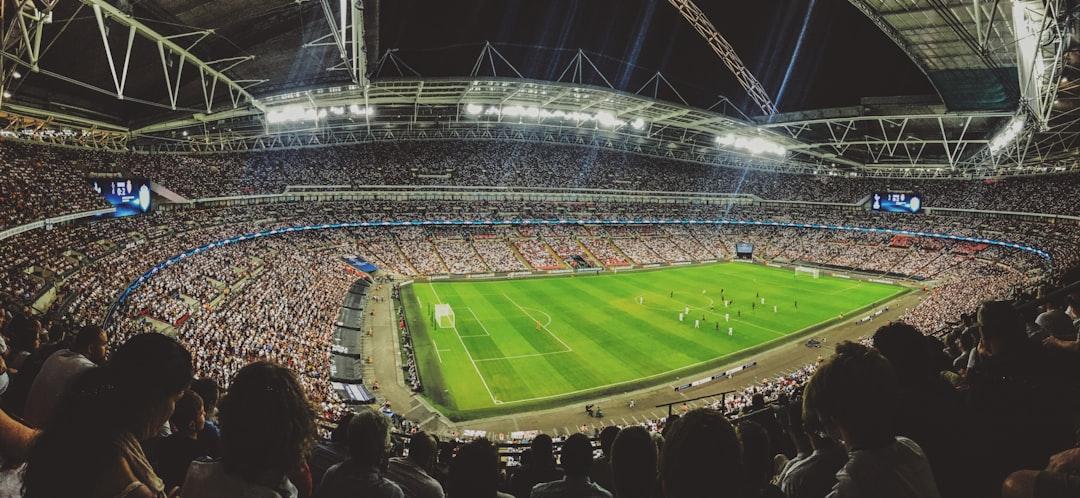
In 2026, the distance has vanished. The tension in the air is palpable, a mixture of nostalgic reverence and the fierce competitive drive that defines these two nations. For the local fans, seeing Ronaldo and Modrić lead their teams out at the renovated BMO Field is a validation of their own history. It represents the bridge between the old world they left behind and the new world they have built. This cultural synergy is exactly what FIFA envisioned when expanding the tournament to a 48-team format across North America: a global game played in local backyards.
In previous eras, a midfielder at 40 or a striker at 41 would be a curiosity—a mascot brought along for locker room morale. However, Modrić and Ronaldo have transformed the twilight of their careers into a masterclass in professional maintenance.
Modrić remains the metronome, a player whose intelligence allows him to bypass the need for raw pace. His ability to manipulate space and dictate the tempo of a game is, if anything, more refined now than it was during his Ballon d'Or-winning campaign in 2018. On the other side, Cristiano Ronaldo has transitioned from the explosive winger of his Manchester United days to a predatory 'Number 9' whose positioning and aerial prowess remain world-class.
Their presence in 2026 is a testament to the 'Longevity Revolution' in sports. Through hyper-personalized nutrition, cryotherapy, and cognitive training, these icons are proving that the peak of a footballing career can be extended by a decade. This shift has massive implications for the industry, from how clubs structure veteran contracts to how the media markets legacy players.
The tactical battle between Croatia and Portugal in this Toronto classic provides a fascinating case study in contrasting styles. Croatia, led by Modrić, continues to rely on a 'possession-as-defense' philosophy. Their midfield remains their greatest weapon, a three-headed monster that seeks to suffocate the opposition by denying them the ball.
Portugal, meanwhile, has evolved into a more direct, high-pressing unit under their latest tactical iteration. While Ronaldo provides the finishing touch, the supporting cast of Bruno Fernandes and Bernardo Silva ensures that the service is relentless. The tension of this match stems from the clash of these ideologies: Can Croatia’s composure withstand the sheer physical intensity of Portugal’s transition play?
From an SEO and marketing perspective, the Modrić-Ronaldo rivalry is gold. It bridges the gap between the 'Millennial' fans who grew up watching their prime and the 'Gen Z' audience that consumes their highlights on TikTok and Instagram. For FIFA, this match is a commercial juggernaut. The broadcast rights and sponsorship valuations for a match featuring these two are significantly higher than almost any other group-stage or early knockout fixture.
Furthermore, the 2026 World Cup is serving as a litmus test for the growth of soccer in North America. Following the 'Messi Effect' in MLS, the presence of Ronaldo and Modrić in a competitive, high-stakes environment is accelerating the sport's mainstream penetration in Canada and the United States. We are seeing a shift where soccer is no longer a 'niche' interest but a dominant cultural force.
As the final whistle blows in Toronto, the result will be etched into the record books, but the narrative will endure. Whether this is truly the final World Cup appearance for these two legends remains to be seen—they have made a habit of defying expectations.
What is certain, however, is that the 2026 World Cup has successfully tapped into the soul of its host cities. By placing these icons in a city like Toronto, football has honored its past while paving the way for its future. The tension, the history, and the sheer talent on display remind us why we call it the beautiful game. In the end, Modrić and Ronaldo are not just playing for a trophy; they are playing for immortality in the eyes of a global community that sees itself reflected in their struggle against time.
Enjoying this article?
Get the daily AI briefing sent straight to your inbox.
Frequently Asked Questions
Why is the 2026 World Cup match in Toronto significant for Portugal and Croatia?
Toronto has some of the largest Portuguese and Croatian diaspora communities in North America. The match represents a unique cultural intersection where local fans can support their ancestral teams on home soil.
How are Modrić and Ronaldo still playing at an elite level in 2026?
Both players have utilized modern sports science, including specialized recovery protocols and nutrition, to extend their physical peaks. Additionally, they have adapted their playing styles to rely more on intelligence and positioning rather than raw speed.
What does the 48-team format mean for the 2026 World Cup?
The expanded format allows for more diverse matchups and ensures that major icons have a higher probability of participating, which increases the tournament's global reach and commercial appeal.
Comments
0Please sign in to leave a comment.
Related articles
CR7 vs. Lamine: The Iberian Clash Defining a New Era of Football
An epic Iberian rivalry reaches a boiling point as veteran icon Cristiano Ronaldo faces teenage sensation Lamine Yamal in a must-watch Round of 16 fixture.
Mastering the Penalty Kick: Rules and Strategy for the 2026 World Cup
Discover the intricate rules governing penalty kicks and how they shape the outcome of the most important matches in the 2026 FIFA World Cup.
Christian Fuchs Steps Down: Newport County Chairman Huw Jenkins Responds
Newport County manager Christian Fuchs has unexpectedly resigned, leaving the club's leadership and supporters stunned as they look toward the future.