- Penalty kicks are awarded for fouls within the box, requiring strict adherence to IFAB positioning rules.
- The 'stutter step' run-up is legal as long as forward momentum is maintained during the strike.
- Penalty shootouts serve as the final tie-breaker in knockout rounds, moving to sudden death after five rounds.
- Data analytics and psychological conditioning are now critical components of professional penalty strategy.
Mastering the Penalty Kick: Rules and Strategy for the 2026 World Cup
As the world turns its eyes to the 2026 tournament, we break down the high-stakes rules and tactical nuances of football's most dramatic moment.
Jul 3, 2026·0 views
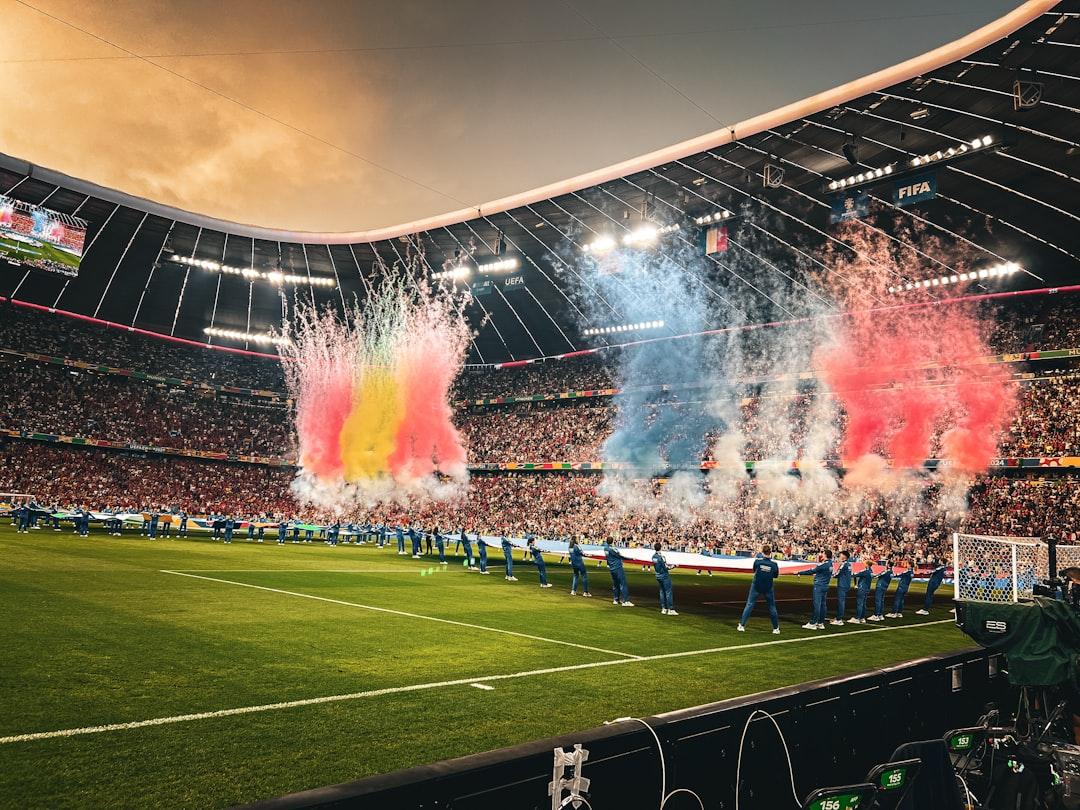
Key Takeaways
In the grand landscape of global football, few moments command as much gravity as the penalty kick. As we approach the 2026 FIFA World Cup, fans and analysts alike are preparing for the intense pressure of the knockout stages, where a single whistle can determine the fate of a nation. Whether awarded during regulation time or serving as the final arbiter in a penalty shootout, the spot-kick remains the ultimate test of nerves, technique, and tactical precision.
A penalty kick is awarded when a player commits a direct free-kick offense inside their own penalty area while the ball is in play. The rules established by the International Football Association Board (IFAB) are rigorous and designed to maintain fairness under extreme pressure.
- The Spot: The ball must be placed firmly on the penalty mark, exactly 12 yards (11 meters) from the goal line.
- The Goalkeeper: The keeper must remain on their goal line, facing the kicker, between the goalposts until the ball is struck. At least one foot must touch or be in line with the goal line at the moment of impact.
- The Kicker: Once the referee signals, the kicker must move forward to strike the ball. While 'stutter steps' or feints are permitted during the run-up, the kicker is prohibited from feinting once they have completed their run-up and are about to strike.
- The Rest of the Players: All other players must remain outside the penalty area and at least 10 yards away from the penalty mark until the ball is in play.
One of the most debated aspects of modern penalty taking is the use of the 'stutter step' or the 'hesitation' run-up. Players like Neymar and Bruno Fernandes have popularized this technique, which involves slowing down or pausing momentarily before the final strike.
From a tactical perspective, the goal of the hesitation is to force the goalkeeper to commit to a direction prematurely. Once the keeper moves, the kicker has a split second to direct the ball into the opposite side of the net. While visually polarizing, IFAB rules allow this as long as the player does not stop their forward momentum entirely after the initiation of the strike motion.
When a knockout match in the 2026 World Cup ends in a draw after extra time, the game proceeds to a penalty shootout. This is not a 'penalty kick' in the sense of a foul, but rather a tie-breaking procedure.
Each team is initially allotted five kicks, taken alternately. If, after five kicks, one team has scored more goals than the other, the match concludes. If the score remains tied, the shootout enters a 'sudden death' phase, where teams continue taking single kicks until one team scores and the other misses.
The 2026 World Cup will undoubtedly feature advanced sports science to assist players in these moments. Modern goalkeepers now study the 'penalty profiles' of opposing strikers, utilizing data analytics to determine the most likely direction of a shot based on the player’s body language and historical data.
Conversely, kickers are increasingly focusing on 'mental conditioning' to block out the roar of 80,000 fans. The ability to remain calm under the weight of global expectation is what separates legendary players from the rest. As we look toward the 2026 tournament, expect to see even more sophisticated psychological battles between the keeper and the kicker.
As the tournament approaches, teams are already simulating high-pressure shootouts in training. Coaches are analyzing everything from the angle of the approach to the specific footwork of their keepers. For the fans at home, understanding these nuances adds a layer of appreciation to the spectacle. When the referee points to the spot in 2026, remember that you are witnessing the intersection of pure physics, elite athleticism, and unparalleled mental fortitude.
Enjoying this article?
Get the daily AI briefing sent straight to your inbox.
Frequently Asked Questions
Can a goalkeeper move before the penalty kick is taken?
No, the goalkeeper must keep at least one foot on or in line with the goal line until the ball is kicked.
Are feints allowed during a penalty kick?
Feinting during the run-up is allowed, but feinting once the player has completed their run-up and is about to strike the ball is considered unsporting behavior.
How does sudden death work in a shootout?
If the score is tied after five kicks each, teams take one penalty at a time until one scores and the other misses.
Comments
0Please sign in to leave a comment.
Related articles
Liverpool Midfield Shake-up: Veteran Star Set for Reunion with Former Coach
Liverpool’s midfield is undergoing a tactical overhaul, with reports suggesting a veteran star is finalizing a move to reunite with a former mentor.
Portugal Secures Round of 16 Spot in Thrilling Victory Over Croatia
Portugal advances to the Round of 16 after a high-stakes 2-1 victory over Croatia, featuring a vintage performance from Cristiano Ronaldo.
K League 1 Returns: Jeonbuk vs. Gangwon Headlines Round 16 Showdown
The K League 1 resumes after the World Cup break, with Round 16 setting the stage for a high-stakes second half of the season.