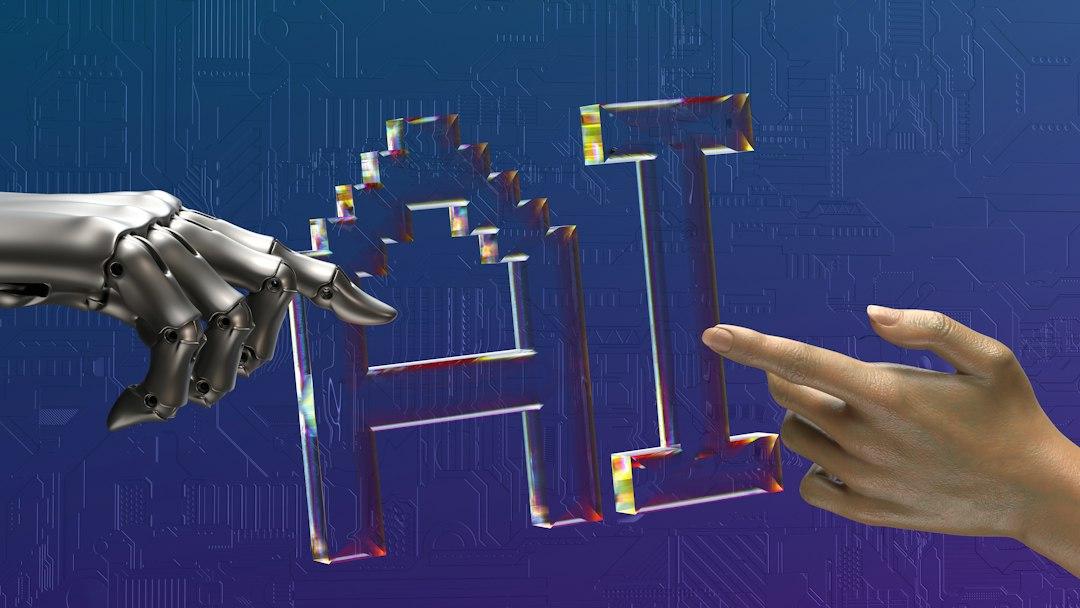
The announcement that ClickUp, a nine-year-old titan of the productivity software space, has laid off hundreds of employees to make room for thousands of AI agents is more than a corporate restructuring—it is a manifesto for the future of work. For years, the tech industry has discussed AI as a "copilot" or an assistant. ClickUp’s move suggests that for the modern enterprise, AI is moving from the passenger seat to the cockpit.
This shift represents the transition from Generative AI (tools that create content) to Agentic AI (systems that execute workflows). As organizations grapple with the economic pressures of 2026, the ClickUp model offers a glimpse into a leaner, more autonomous business architecture that prioritizes algorithmic efficiency over human headcount.
ClickUp has long marketed itself as the "one app to replace them all." By consolidating tasks, docs, goals, and chat, they built a massive repository of organizational data. This data has now become the fuel for their new workforce.
Instead of human project managers tracking deadlines or customer success leads answering repetitive queries, ClickUp is deploying specialized AI agents. These agents are not mere chatbots; they are autonomous entities capable of:
- Inter-app execution: Moving data between CRM, development environments, and marketing tools without human intervention.
- Dynamic decision-making: Assessing project risks and automatically reallocating resources or adjusting timelines.
- 24/7 Operational Continuity: Maintaining peak productivity across all time zones without the overhead of traditional global operations.
The SaaS (Software as a Service) industry has reached a point of saturation. Growth at all costs has been replaced by the "Rule of 40"—a balance of growth and profitability. In this environment, the cost of human capital is the largest line item on the balance sheet.
By replacing hundreds of salaried roles with thousands of AI agents, ClickUp is effectively trading high-variance human labor for low-cost, scalable compute. This isn't just about saving money; it’s about the speed of iteration. An AI agent can process a customer request or update a product roadmap in milliseconds, whereas a human team might take days to coordinate.
ClickUp is the first major productivity platform to take this leap so publicly, but they will not be the last. Competitors like Monday.com, Asana, and Notion are likely watching this experiment with a mixture of trepidation and interest.
- The End of the Middle Manager? Many of the roles displaced in this pivot are mid-level coordination roles. If an AI agent can bridge the gap between executive strategy and developer execution, the need for traditional management layers evaporates.
- The Rise of the 'Solopreneur' Enterprise: We are approaching an era where a company with ten human employees and ten thousand AI agents can generate the same revenue as a Fortune 500 company.
- The API-First Workforce: Hiring will no longer be about finding people who can do the work, but finding people who can orchestrate the agents that do the work.
While the business logic behind ClickUp’s decision is sound from a shareholder perspective, the human impact is profound. We are witnessing the first wave of large-scale displacement caused not by a lack of demand, but by a superior alternative to human labor in the digital domain.
For the workforce, this is a clarion call. The value of "process-oriented" work is plummeting. To remain relevant, professionals must pivot toward AI Orchestration—the ability to design, prompt, and manage fleets of AI agents. The skills that matter now are high-level strategy, ethical oversight, and cross-domain creative problem solving.
As ClickUp replaces hundreds with thousands of agents, it raises a fundamental question: What is the purpose of the modern corporation? If a company can function without a significant human workforce, the traditional social contract between employer and employee is severed.
Policy makers and industry leaders must now address the reality of a post-labor economy. We are no longer talking about theoretical automation; it is happening in the apps we use to manage our daily lives. ClickUp’s mass layoff is a signal flare. It tells us that the future of work isn't just about working with AI—it’s about a world where AI is the work.
In the coming months, we will see if ClickUp’s gamble pays off. If their product velocity increases and their customer satisfaction remains stable, the "Agentic Pivot" will become the standard blueprint for every tech company on the planet. The era of the human-centric office is closing; the era of the autonomous enterprise has begun.