For decades, Martin Scorsese has stood as the unofficial guardian of 'pure' cinema. As a vocal advocate for film preservation and a critic of the 'theme park' nature of modern blockbusters, Scorsese is perhaps the last person the industry expected to champion artificial intelligence. However, news that the Academy Award-winning director is utilizing AI for storyboarding has sent shockwaves through Hollywood.
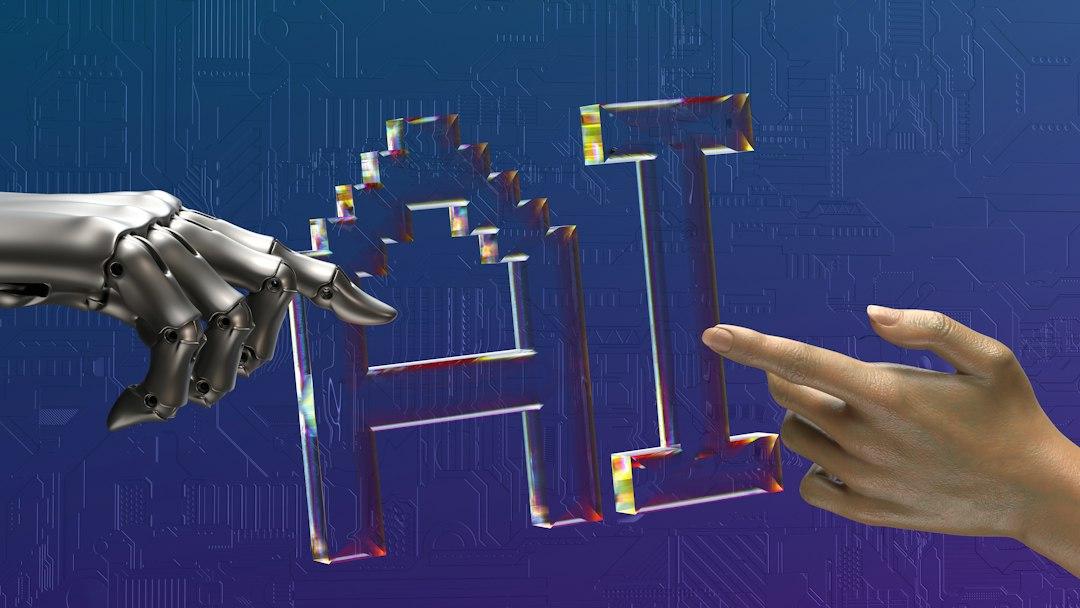
This isn't a case of a veteran filmmaker chasing a trend; it is a calculated, analytical adoption of generative AI in filmmaking to solve one of the most labor-intensive phases of production. By using AI to visualize complex sequences before a single frame is shot, Scorsese is signaling that the debate is no longer about whether AI belongs in cinema, but how it can be harnessed to serve the director’s vision.
To understand Scorsese’s leap into AI, one must look at his history with cutting-edge technology. While he champions the soul of the 35mm frame, he has never been a Luddite. From the pioneering 3D work in Hugo to the massive, multi-million dollar de-aging VFX in The Irishman, Scorsese has consistently pushed the boundaries of what digital tools can achieve.
His transition to AI-assisted storyboarding is the logical next step in this evolution. Traditional storyboarding requires a team of artists to spend weeks, sometimes months, sketching out a director's vision. With generative models, a director can iterate on lighting, camera angles, and composition in real-time. This 'Generative Pre-Viz' allows for a level of experimentation that was previously cost-prohibitive even for a filmmaker of Scorsese's stature.
The choice to limit AI usage to the storyboarding phase is a strategic one. It addresses three critical areas of the filmmaking business:
- Speed of Iteration: Directors can test dozens of visual styles and blocking configurations in hours rather than days.
- Cost Efficiency: Reducing the 'discovery' phase on set saves millions in production overhead.
- Creative Control: Unlike AI-generated final frames, AI storyboards remain internal blueprints, ensuring the final product is still captured through a human lens.
When a figure like Scorsese adopts a technology, the industry's collective skepticism begins to thaw. For the past two years, the conversation around AI in Hollywood has been dominated by fear—specifically regarding the displacement of writers and actors. However, Scorsese’s use case highlights a symbiotic relationship: AI as a tool for the 'Auteur.'
This 'Scorsese Effect' is likely to accelerate the adoption of AI tools across mid-to-high budget productions. If the man who defined the visual language of the 20th century finds value in generative prompts, it provides a 'creative license' for younger directors to explore these tools without the fear of being labeled 'unoriginal.'
The tools Scorsese is reportedly using represent a new 'stack' in the film industry. We are seeing a convergence of Large Language Models (LLMs) for script analysis and Diffusion Models for visual synthesis.
- Semantic Storyboarding: Converting script descriptions directly into visual compositions.
- Consistent Character Generation: Ensuring that the 'AI actors' in the storyboards maintain the same physical traits across different angles.
- Lighting Simulation: Using AI to predict how natural light will hit a specific location at a specific time of day, integrated directly into the storyboard.
This technological shift moves the industry closer to a 'Real-time Cinema' model, where the barrier between a director's thought and a visual representation is virtually non-existent.
Despite the excitement, Scorsese’s move does not come without friction. The use of AI in any creative capacity raises questions about the training data used to create these storyboards. Are the models trained on the work of the very storyboard artists they are now augmenting—or replacing?
Scorsese’s approach maintains a strict 'human-in-the-loop' philosophy. By using the tech solely for internal planning, he preserves the sanctity of the performance and the cinematography. This distinction is vital for the current labor climate in Hollywood. It frames AI not as a replacement for the artist, but as a sophisticated 'digital paintbrush' that requires a master’s hand to be effective.
As we look toward 2026 and beyond, the integration of AI in the creative process will likely become invisible. We will stop talking about 'AI-generated' content and start talking about 'AI-enhanced' workflows. Martin Scorsese’s endorsement—even in this limited capacity—is a watershed moment.
It suggests a future where the grandest cinematic visions are no longer limited by the speed of a pencil, but by the depth of a director’s imagination. For the film industry, the message is clear: The maestro has embraced the machine, and cinema will never be the same.