- FC Barcelona became the first club to have 17 players represented at a single World Cup, surpassing records held by Bayern Munich and Manchester City.
- The club's success is attributed to the 'La Masia' philosophy, which prioritizes technical proficiency and tactical intelligence, making players easily integrable into various national teams.
- This international dominance provides Barcelona with significant financial and branding advantages, crucial for navigating their current economic challenges.
- Looking toward the 2026 FIFA World Cup, Barcelona's young core (Yamal, Gavi, Pedri) is expected to further extend this record-breaking influence.
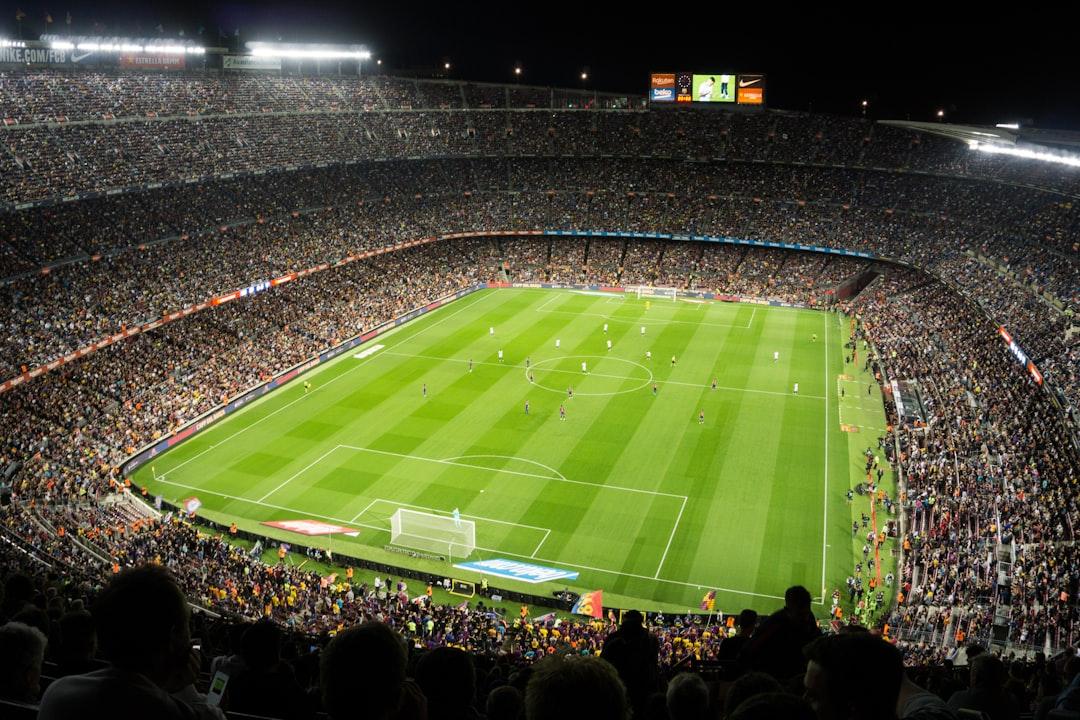
The Blaugrana Blueprint: How Barcelona’s World Cup Record Redefines Global Football Dominance
Beyond the Camp Nou: Analyzing the unprecedented international influence of FC Barcelona and its implications for the 2026 FIFA World Cup.
Jul 14, 2026·0 views
Key Takeaways
For decades, the greatness of a football club was measured primarily by the silver in its trophy cabinet. However, in the modern era of hyper-globalized sports, a new metric of dominance has emerged: international representation. FC Barcelona has recently shattered a long-standing record, becoming the first club in history to provide 17 different players to various national teams during a single FIFA World Cup cycle.
This achievement is not merely a statistical anomaly; it is the culmination of a decades-long commitment to a specific tactical philosophy. While other elite clubs like Real Madrid or Manchester City often rely on aggressive transfer market maneuvers to bolster their ranks, Barcelona’s record highlights a unique hybrid model of world-class scouting and the unparalleled output of La Masia. As the football world pivots toward the 2026 FIFA World Cup in North America, Barcelona’s footprint on the global game has never been more pronounced.
The record of 17 players at the 2022 FIFA World Cup surpassed the previous benchmark of 16, held jointly by Bayern Munich and Manchester City. What makes Barcelona’s feat particularly impressive is the diversity of the representation. The club didn't just populate the Spanish national team; its players were pivotal for nations ranging from France and the Netherlands to Poland and Brazil.
- The Spanish Core: Naturally, the backbone of La Roja remains inextricably linked to Barcelona. Players like Gavi, Pedri, and Alejandro Balde represent the next generation of the tiki-taka evolution.
- Global Reach: The presence of veteran leaders like Robert Lewandowski and emerging stars like Jules Koundé ensures that the Barcelona 'DNA'—characterized by positional awareness and technical proficiency—is distributed across the world's top-tier national squads.
- The Youth Surge: Perhaps most frightening for rivals is the age profile of these record-breakers. Many of the players contributing to this milestone are under the age of 23, suggesting that Barcelona’s dominance in World Cup rosters will likely intensify by 2026.
The influence of FC Barcelona extends far beyond the number of bodies on a pitch. The club’s insistence on a specific style of play—heavy on possession, high-pressing, and intricate triangles—has become the default tactical blueprint for many national team managers.
When a national coach integrates a Barcelona player, they aren't just getting an athlete; they are getting a player with a 'PhD in Positioning.' This ease of integration allows national teams, which often suffer from limited training time, to implement complex tactical systems more rapidly. As we approach the 2026 tournament, the tactical flexibility of Barcelona-trained players will be a prized asset for managers looking to navigate the expanded 48-team format.
While the World Cup record is a point of pride, it also serves a vital strategic purpose for a club that has faced well-documented financial headwinds. In an era of Financial Fair Play (FFP) and strict La Liga salary caps, Barcelona’s ability to produce or identify talent that appreciates on the international stage is a financial lifeline.
- Valuation Spikes: Success on the World Cup stage exponentially increases a player's market value, providing the club with high-value assets that can either lead the team to domestic glory or be sold for a significant 'pure profit' if they are academy graduates.
- Brand Globalism: Being the most represented club at a World Cup is a powerful marketing tool. It solidifies Barcelona as a global brand, attracting sponsors and fans in emerging markets like the United States and Mexico ahead of 2026.
- Recruitment Magnetism: The record acts as a beacon for young talents worldwide. Aspiring players know that joining Barcelona is the clearest path to representing their country on the grandest stage of all.
As the focus shifts to the 2026 FIFA World Cup, the 'Barcelona Record' sets a high bar for the rest of the elite European clubs. The expansion of the tournament to 48 teams means that squad depth and the ability to produce international-caliber players will be more critical than ever.
We are currently witnessing the rise of Lamine Yamal and Pau Cubarsí—talents who were barely teenagers when the previous records were set. If Barcelona continues its current trajectory, it is entirely possible they will break their own record in 2026. The club is no longer just a participant in the footballing economy; it is the primary engine of international talent.
For Imai News, this record signals a shift in the power dynamics of football. Success is no longer just about who wins the Champions League in May, but about whose philosophy governs the World Cup in July. In that regard, Barcelona has already won the long game.
Enjoying this article?
Get the daily AI briefing sent straight to your inbox.
Frequently Asked Questions
Which club held the previous record for World Cup representation?
The previous record was 16 players, held jointly by Bayern Munich and Manchester City, before Barcelona set the new benchmark with 17 players.
Why is Barcelona's record significant for the 2026 World Cup?
With the 2026 World Cup expanding to 48 teams, Barcelona's ability to produce international-caliber talent across multiple nations positions them as the primary influence on the tournament's tactical landscape.
How does this record help Barcelona financially?
High international representation increases player market values and strengthens the club's global brand, which is essential for attracting sponsorships and meeting Financial Fair Play requirements.
Comments
0Please sign in to leave a comment.
Related articles
Hull City's £55M Bridging Loan: A Strategic Move or Financial Enigma?
Hull City has secured a substantial £55 million bridging loan, a move its owner, Acun Ilicali, states is crucial for future Premier League readiness. However, football finance experts are questioning the timing and necessity, especially as the club anticipates an influx of top-tier funding.
Garnacho Transfer Saga: Roma's Bid for Chelsea Winger Ignites Summer Market, Mendes Key
AS Roma's opening bid for Chelsea winger Alejandro Garnacho has been rejected, yet the London club remains keen to offload the young talent this summer. Super-agent Jorge Mendes is reportedly a pivotal figure in orchestrating a potential move, highlighting the intricate dynamics of the European transfer market.
The Art of Stillness: How Lionel Messi Redefined World-Class Performance
Analyzing the tactical shift in Lionel Messi’s game, where walking has become a strategic weapon in his quest for global supremacy.