- Investors are shifting $400 million from training GPUs to specialized inference chips.
- Inference chips offer better energy efficiency and lower latency for production-level AI.
- The move signals a maturing AI market that prioritizes operational cost-effectiveness over model training.
- Specialized hardware is becoming essential for scaling AI applications to mass-market levels.
The $400M Shift: Why Investors Are Moving From GPUs to Inference Chips
As AI infrastructure matures, a massive new financing deal signals a pivotal pivot from training hardware to the efficiency of inference-focused silicon.
Jul 17, 2026·0 views
Key Takeaways
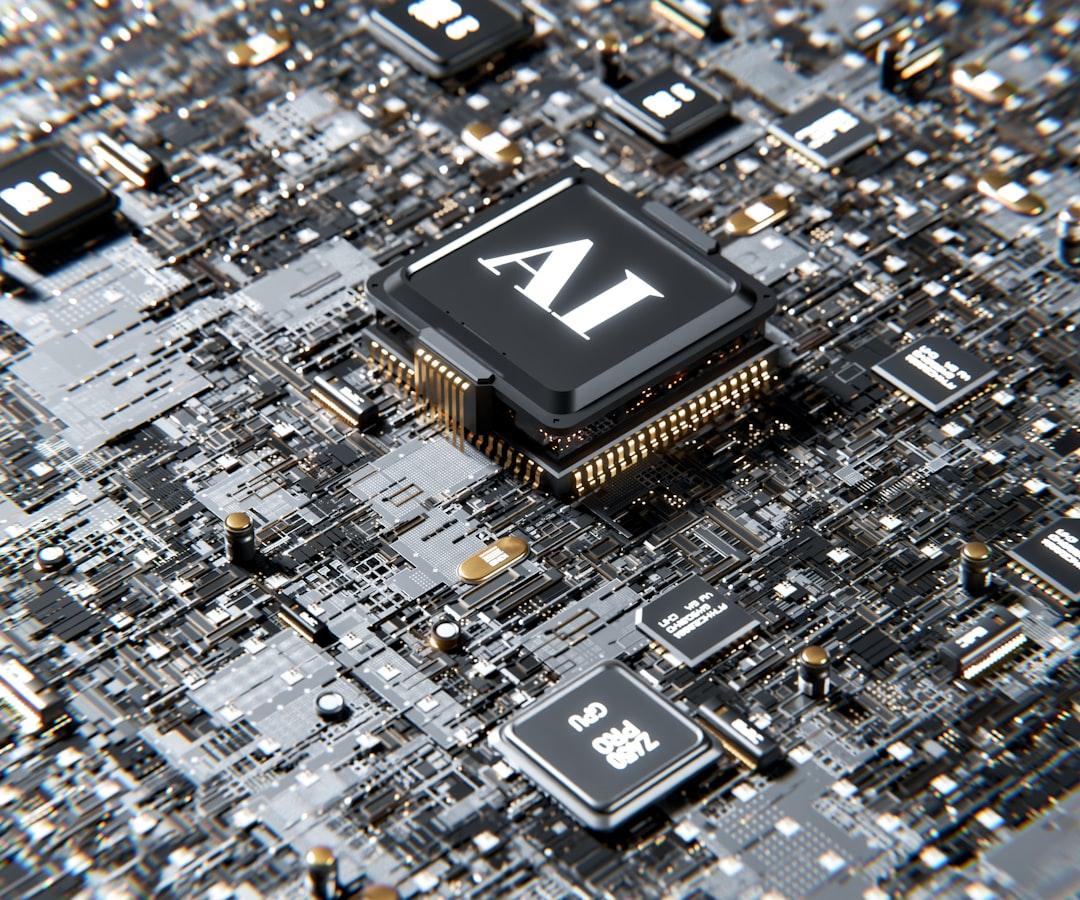
The landscape of artificial intelligence investment is undergoing a seismic shift. For the past three years, the venture capital and private equity worlds have been obsessed with a single asset class: the high-performance training GPU. However, a landmark $400 million chip-backed loan has signaled that the market is officially entering its second phase. Investors are no longer merely funding the creation of massive models; they are betting on the hardware that will actually run them.
This $400 million deal represents more than just liquidity; it is a fundamental re-evaluation of AI hardware economics. While training chips—the behemoths of the data center—have dominated the headlines, the bottleneck for widespread AI adoption is no longer just model development. It is the cost, latency, and energy efficiency of inference. As companies move from experimental AI projects to production-grade applications, the industry is pivoting toward chips specifically engineered for the task of prediction.
To understand why financiers are shifting their focus, one must look at the math of modern AI deployment. Training a model is an expensive, one-time capital expenditure. Running that model for millions of users—inference—is a continuous operational cost. For many startups and enterprises, the cost of running inference on general-purpose GPUs has become a primary barrier to profitability.
Inference chips are designed with a specific philosophy: strip away the complexity required for backpropagation and training, and optimize for high-speed, low-power execution of pre-trained models. By focusing on these specialized units, investors are looking to capture the "long tail" of the AI market. If training is the construction of a factory, inference is the daily production line, and the latter is where the long-term, predictable revenue lies.
- Energy Efficiency: Inference-optimized silicon requires significantly less electricity, lowering the total cost of ownership for data centers.
- Reduced Latency: Specialized architectures allow for near-instantaneous responses, which is critical for real-time applications like autonomous vehicles and voice assistants.
- Scalability: By lowering the cost-per-query, companies can scale their services to millions of users without seeing their margins evaporate.
- Market Maturity: As foundation models become more standardized, the need for specialized hardware to run them becomes more pressing than the need for experimental training hardware.
Many of the firms involved in this $400 million transaction were the very entities that fueled the initial GPU boom. By moving their capital into inference-focused ventures, these financiers are demonstrating a sophisticated understanding of the AI lifecycle. They recognize that the "training gold rush" is reaching a point of diminishing returns, while the infrastructure for deployment remains largely underserved.
This transition mirrors the evolution of the cloud computing era. Just as the industry moved from general-purpose servers to specialized, software-defined infrastructure, AI is moving toward a heterogeneous computing environment. The era of the "one size fits all" GPU is ending, replaced by a diverse ecosystem of specialized silicon designed for specific workloads.
For the end-user, this shift is largely invisible but deeply impactful. It means faster AI tools, cheaper subscription prices for AI-powered services, and more robust applications that don't crash under the weight of heavy traffic. For the tech industry at large, this $400 million investment is a bellwether. It suggests that the next generation of "AI giants" may not be the ones building the biggest models, but the ones building the most efficient pipes through which that intelligence flows.
As we look toward the remainder of 2026, we expect to see a surge in similar asset-backed financing deals. The message is clear: the AI boom is maturing, and the smart money is moving toward the infrastructure that makes AI not just possible, but profitable.
Enjoying this article?
Get the daily AI briefing sent straight to your inbox.
Frequently Asked Questions
What is the difference between training and inference chips?
Training chips are designed to handle the complex computations required to 'teach' an AI model, while inference chips are optimized to run those models efficiently once they are already trained.
Why are financiers moving away from GPU-only investments?
As AI moves into mass production, the high operational costs of running inference on general-purpose GPUs have become unsustainable, driving a need for more efficient, specialized hardware.
Comments
0Please sign in to leave a comment.
Related articles

HiRO-ACEv2: Revolutionizing Weather Forecasting with AI Precision
New AI weather modeling from the Allen Institute for AI promises to democratize climate data by cutting computational costs while maintaining extreme precision.
TII Unveils Falcon ASR: A New Era in Open-Source Speech Recognition
TII has launched Falcon ASR, a state-of-the-art open-source speech recognition model designed to set new benchmarks in accuracy and efficiency.

How the AI Community is Building the Models That Big Tech Won't
When the perfect AI model doesn't exist, the modern developer doesn't wait—they build it. Here is how the open-source movement is reshaping the AI landscape.