- Tenstorrent raised $1.5 billion, reaching a total valuation of $6.2 billion.
- The funding allows the company to remain independent rather than being acquired by a larger tech firm.
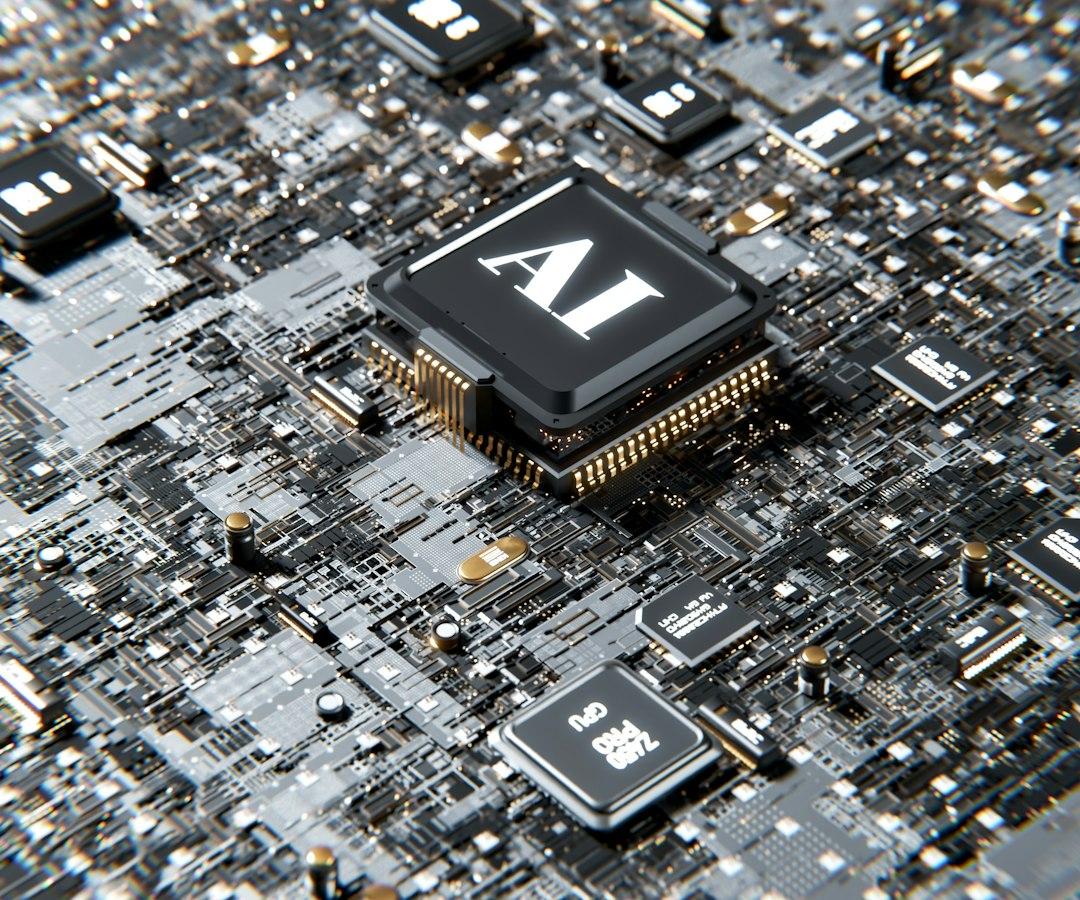
- The company focuses on open-weight AI hardware, utilizing RISC-V architecture to challenge Nvidia's market dominance.
- Capital will be used to scale manufacturing, improve software stacks, and expand R&D efforts.
Tenstorrent Hits $6.2B Valuation: A New Challenger in the AI Hardware Race
The AI chip designer secures $1.5 billion in fresh funding, signaling a firm commitment to independence in a market dominated by industry giants.
Oct 19, 2026·0 views
Key Takeaways
In a landscape increasingly dominated by the massive capital expenditure of tech titans, Tenstorrent has made a definitive statement. The Santa Clara-based AI chip designer recently closed a staggering $1.5 billion funding round, catapulting its valuation to $6.2 billion. This financial milestone not only underscores investor confidence in the company’s proprietary architecture but also solidifies Tenstorrent’s resolve to remain an independent player in the fiercely competitive AI hardware sector.
Following reports of acquisition interest earlier this year—rumors that placed the firm in the crosshairs of several major tech conglomerates—the company’s decision to pursue this massive capital injection suggests a long-term strategy centered on autonomy. By securing independent funding, Tenstorrent avoids the potential constraints of being absorbed into a larger ecosystem, allowing it to continue its mission of democratizing AI infrastructure through open-weight hardware solutions.
At the core of Tenstorrent’s strategy is the promotion of open-weight AI models. Unlike the 'walled garden' approaches favored by some competitors, where hardware and software are tightly coupled in a proprietary loop, Tenstorrent is betting on a more flexible future. The company’s hardware—characterized by its modular architecture—is designed to be agnostic, supporting a wide range of AI models without forcing developers to abandon their preferred frameworks.
This approach is particularly timely. As organizations globally seek to move away from vendor lock-in, the demand for hardware that can run open-source and open-weight models efficiently has surged. Tenstorrent’s chips, which utilize a unique RISC-V architecture, provide the necessary compute power for high-end inference and training tasks while offering a level of transparency and customizability that traditional incumbents often lack.
With $1.5 billion now on the balance sheet, Tenstorrent is positioned to accelerate its roadmap significantly. Key areas of focus for this new capital include:
- Manufacturing Expansion: Scaling the production of its latest generation of AI accelerators to meet the growing backlog of enterprise demand.
- Software Ecosystem Development: Investing in its software stack, 'Buda' and 'Metal,' to ensure seamless integration for developers working with PyTorch, TensorFlow, and other standard tools.
- Talent Acquisition: Doubling down on R&D by hiring top-tier silicon engineers and software architects to maintain its competitive edge in power efficiency and compute density.
For years, Nvidia has held a near-monopoly on the hardware required to train large language models (LLMs). However, the industry is beginning to recognize the risks associated with a single-vendor reliance. Tenstorrent, led by industry veteran Jim Keller, is positioning itself as the primary alternative for firms that want high performance without the cost and restrictions of the current market leader.
Keller’s reputation as a legendary chip architect has been a massive draw for investors. His track record at companies like Apple, AMD, and Tesla provides the credibility needed to challenge the status quo. The fact that Tenstorrent has secured this level of funding suggests that the market is ready for a 'second act' in AI silicon—one that prioritizes efficiency and open standards over sheer brute-force scaling.
While a $6.2 billion valuation is a significant achievement, the true test for Tenstorrent lies in its ability to execute. As the AI hype cycle begins to transition into an era of practical, ROI-focused implementation, hardware providers must prove that their chips can deliver not just raw performance, but also sustainability and cost-effectiveness.
By choosing to remain independent, Tenstorrent has taken the harder path. However, in an industry that demands innovation and diversity in its compute supply chain, this independence could be the company’s greatest asset. As they continue to scale, all eyes will be on whether their open-weight hardware philosophy can shift the balance of power in the global AI market.
Enjoying this article?
Get the daily AI briefing sent straight to your inbox.
Frequently Asked Questions
What is Tenstorrent's current valuation?
Following its latest funding round of $1.5 billion, Tenstorrent has reached a valuation of $6.2 billion.
Why did Tenstorrent choose to remain independent?
By remaining independent, Tenstorrent can maintain its focus on an open-weight hardware ecosystem without the constraints or proprietary lock-in often associated with being acquired by larger tech conglomerates.
Who leads Tenstorrent?
Tenstorrent is led by legendary chip architect Jim Keller, known for his previous work at companies such as Apple, AMD, and Tesla.
Comments
0Please sign in to leave a comment.
Related articles

Plex Media Server Users Urged to Update Following Active Malware Attacks
Plex has issued critical updates to address security flaws currently being weaponized by threat actors to install malware on private media servers.
Eugenia Kuyda’s Wabi: Realizing an AI Vision Twelve Years in the Making
Eugenia Kuyda has officially launched Wabi, an AI assistant that brings a concept she first pitched at TechCrunch Disrupt over a decade ago to life.

OpenCode Security Breach: Hackers Exploit AI Coding Tool to Drain User Credits
OpenCode users are facing unexpected billing charges after hackers gained access to the platform, highlighting the growing security risks in the AI developer tool ecosystem.