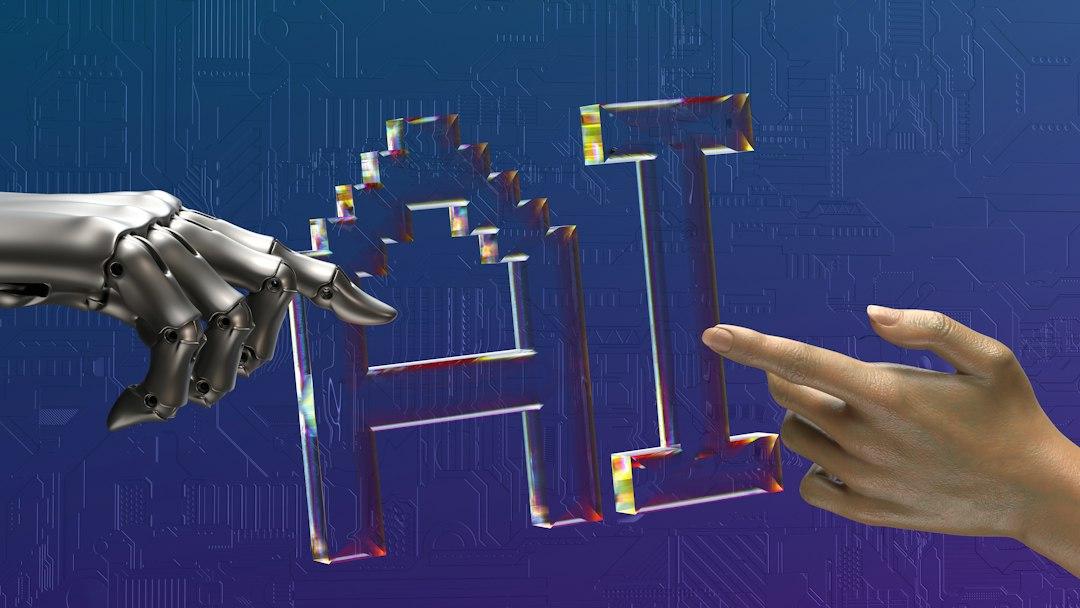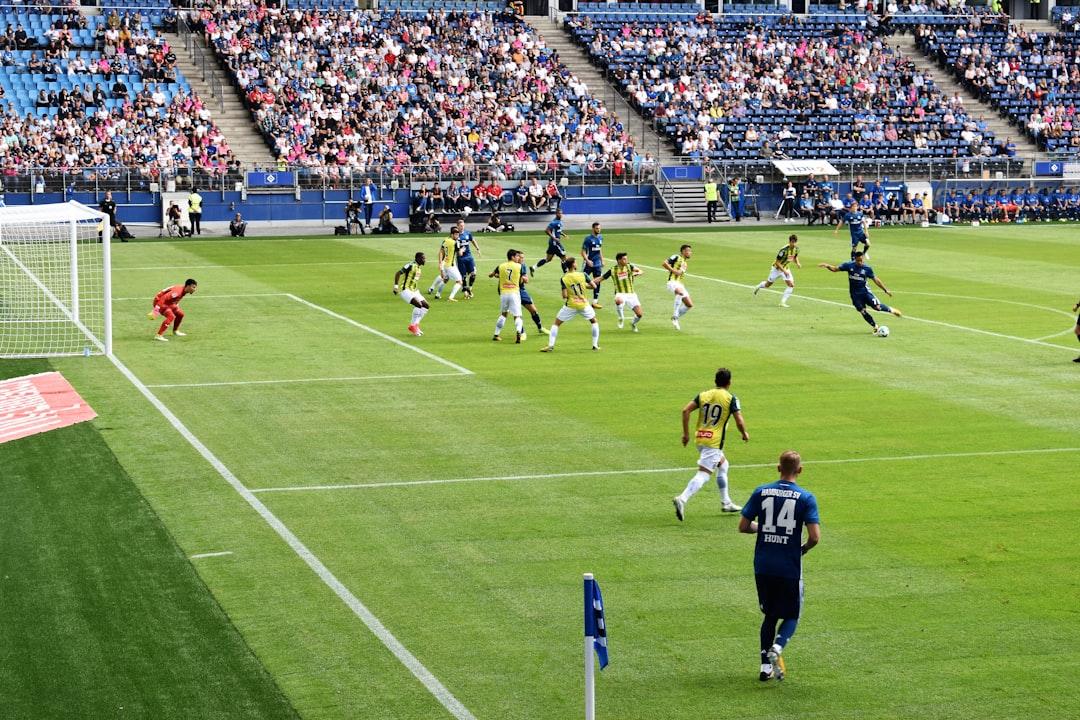
The 2026 World Cup is more than a global sporting event; it is a massive data experiment playing out across the stadiums of North America. As the tournament transitions into the high-stakes knockout stage, the narrative is no longer just about individual brilliance or tactical masterclasses. Instead, it is being written by neural networks, Monte Carlo simulations, and real-time predictive modeling. At the center of this algorithmic consensus sits France, the statistical favorite to lift the trophy.
While traditional sports journalism focuses on the narrative of the 'beautiful game,' the modern industry is increasingly dominated by the 'analytical game.' The odds currently favoring France are not merely the result of bookmaker intuition; they are the output of complex systems that ingest millions of data points per second. From player fatigue levels tracked via wearable sensors to the historical success rates of specific formation shifts, AI is providing a level of foresight that was previously impossible.
Why does every major predictive model, from proprietary betting algorithms to academic sports analytics frameworks, place France at the top of the list? The answer lies in 'squad depth variance.' AI models are particularly adept at measuring a team's resilience to injury and fatigue—two critical factors in a grueling knockout tournament.
France possesses a roster where the statistical drop-off between the starting XI and the bench is the lowest in the world. Using advanced ELO rating systems and Expected Goals (xG) metrics, AI researchers have noted that France’s tactical flexibility allows them to maintain a high 'win probability' regardless of the opponent's style. Their ability to transition from a low-block defensive posture to a high-intensity counter-attack is quantified by machine learning models as having the highest 'efficiency rating' in the current tournament field.
Furthermore, sentiment analysis—a subset of AI that scans social media, news reports, and press conferences—indicates a high level of psychological stability within the French camp. While sentiment might seem subjective, modern betting AI uses it as a proxy for team morale, which historically correlates with performance in high-pressure knockout rounds.
For the betting industry, the 2026 World Cup represents a watershed moment for AI integration. We have moved past the era of static odds. Today, bookmakers utilize Reinforcement Learning (RL) agents that adjust lines in milliseconds based on live data feeds.
When France takes the pitch, these agents are processing:
- Ball Tracking Data: Real-time coordinates of the ball to predict the likelihood of a goal within the next 10 seconds.
- Player Biometrics: Estimating exhaustion levels to predict when a substitution will occur or when a defensive lapse is likely.
- Market Arbitrage: Balancing the books by analyzing global betting patterns to ensure the house remains protected against 'black swan' events.
For the professional bettor, the challenge is no longer beating a human oddsmaker, but finding inefficiencies in a machine-learning model. This has led to an arms race in 'Betting AI,' where private syndicates deploy their own LLMs (Large Language Models) to parse through obscure tactical data and local news in multiple languages to find an edge that the broader market has missed.
The 2026 tournament features the most advanced implementation of Semi-automated Offside Technology (SAOT) and AI-enhanced VAR (Video Assistant Referee). For analysts, this reduces the 'chaos variable' in predictive modeling. In previous decades, a human error by a linesman could invalidate a perfect statistical prediction.
With AI-driven officiating, the game becomes more 'solvable.' When models predict a France victory, they are doing so with the assumption that the rules will be applied with mathematical precision. This transparency in officiating actually stabilizes the betting markets, leading to narrower spreads and higher confidence intervals for the favorites. The 'human element'—long the bane of the data scientist—is being systematically minimized in favor of algorithmic consistency.
Despite France’s dominance in the data, AI experts remain cautious about the 'Black Swan' event—the highly improbable occurrence that defies statistical trends. In soccer, this could be a freak red card, a weather-induced pitch failure, or a moment of individual genius that falls outside the standard deviation.
Machine learning models are notoriously poor at predicting 'outlier' events. While France may have a 65% probability of winning a specific match, the remaining 35% represents a vast territory of unpredictable human drama. This is where the tension between the tech journalist and the sports fan resides. We can quantify the probability, but we cannot automate the outcome.
The implications of these technologies extend far beyond the 2026 World Cup. The data infrastructure being built for this tournament—the high-speed cameras, the sensor-embedded balls, and the cloud-based analytics platforms—will become the blueprint for all future professional sports.
For the business of AI, this is a massive proof-of-concept. Companies like AWS, Google Cloud, and specialized sports-tech firms are using the World Cup to showcase their ability to process 'Big Data' under extreme pressure. If an AI can accurately predict the flow of a knockout game between France and a high-pressing underdog, it can certainly be applied to supply chain logistics, financial market fluctuations, or urban traffic management.
As the knockout stage begins, all eyes are on France, but the real winner of the 2026 World Cup may well be the technology that predicted its path. We are witnessing the birth of a new era where sport is a dialogue between human athleticism and digital intelligence.
Whether France justifies its status as the favorite or a data-defying underdog rises to the occasion, the 2026 tournament will be remembered as the moment AI became the primary lens through which we view, analyze, and wager on the world's most popular sport. The beautiful game is becoming a precise game, and in the world of precision, the machines have already made their choice.