- Former official Darren Cann asserts that the 'referee bubble' prevents external influence and media bias from affecting World Cup decisions.
- The rigorous internal review process by FIFA ensures that only the most objective and high-performing officials advance to the final rounds.
- Technological advancements like Semi-Automated Offside are shifting the burden of proof from human judgment to data-driven accuracy.
- The psychological pressure to avoid errors is a much stronger motivator for referees than any perceived national or team favouritism.
- Transparency initiatives, such as live VAR announcements, are essential for maintaining the 'Integrity Economy' of global football.
Inside the Whistle: Why the Myth of FIFA World Cup Favouritism Fails the Reality Test
As the road to 2026 intensifies, former elite officials break down the rigorous neutrality and psychological fortress required to police the world’s biggest stage.
Jul 19, 2026·0 views
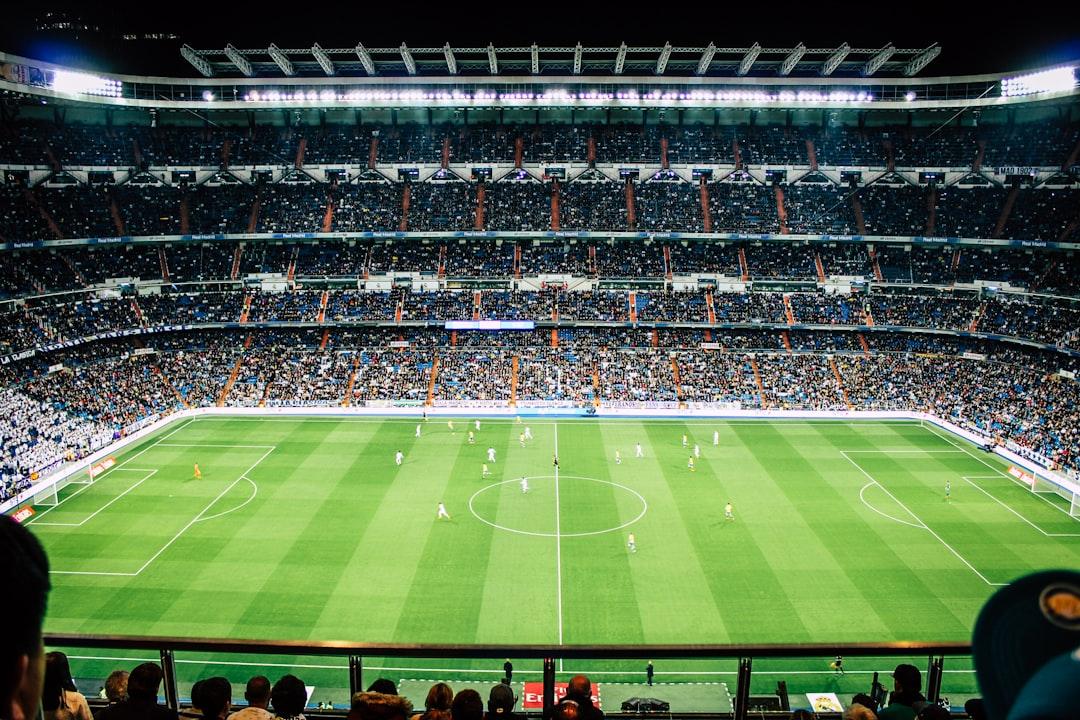
Key Takeaways
In the tribalistic world of international football, the referee is often cast as the pantomime villain—a figure of suspicion whose every decision is dissected by millions through the lens of national bias. For decades, conspiracy theories have suggested that FIFA’s biggest tournament is susceptible to 'favouritism,' particularly toward the game’s traditional powerhouses. However, Darren Cann, a man who has stood at the epicenter of these high-pressure environments, is speaking out to dismantle these narratives.
Cann’s insights come at a pivotal moment for the sport. As we approach the FIFA World Cup 2026, the scrutiny on officiating has never been higher, fueled by the omnipresence of social media and the increasing complexity of Video Assistant Referee (VAR) protocols. The reality of elite officiating, as Cann describes it, is far removed from the shadowy backrooms of popular imagination; it is instead a world defined by clinical isolation, professional obsession, and an almost monastic devotion to the Laws of the Game.
One of the most persistent myths in football is that officials are swayed by the atmosphere of a stadium or the prestige of certain nations. Cann refutes this by highlighting the 'bubble' that FIFA creates for its officials. During a World Cup, referees are sequestered in a high-security environment, often miles away from the fan zones and media hubs. Their daily routine is a rigorous cycle of physical training, tactical analysis, and psychological preparation.
- Isolation from External Noise: Officials are actively encouraged to avoid media consumption. This isn't just a suggestion; it is a professional survival mechanism. By cutting off the 'noise' of punditry and fan outrage, officials maintain a psychological baseline of neutrality.
- The Professionalism of Peers: Referees at this level are competing for the highest honor—the final. Showing bias toward a particular team would not only be a breach of ethics but a career-ending move that would be flagged by the rigorous internal review systems FIFA employs.
- The Global Mix: FIFA intentionally mixes officiating crews from different confederations. A referee from Europe might be paired with assistants from South America and a fourth official from Africa. This diversity acts as a natural check and balance against any localized bias.
While Cann emphasizes the human integrity of officials, the landscape of the 2026 World Cup will be defined by the integration of advanced technology. The transition from pure human judgment to a hybrid 'Human-AI' model is designed specifically to eliminate the 'favouritism' that fans fear.
We are seeing the rapid deployment of Semi-Automated Offside Technology (SAOT), which uses dedicated tracking cameras and a sensor inside the ball to provide instantaneous data. This removes the 'human error' element from offside calls—the very area where bias was historically most often alleged. When the data dictates a decision, the 'intent' of the official becomes irrelevant.
However, this technological shift brings its own set of challenges. As the 'subjective' elements of refereeing—such as the interpretation of 'intent' in a handball or the 'intensity' of a tackle—become the only remaining areas for human judgment, the pressure on officials like Cann to be perfectly consistent has increased. The technology doesn't just assist; it exposes the minute variations in human perception, which fans often misinterpret as bias.
The mental health of officials is an often-overlooked aspect of the game. Cann’s testimony sheds light on the immense weight of responsibility. An official at a World Cup isn't just representing themselves; they are representing their national association and the integrity of FIFA. A single mistake can lead to international incidents and personal threats.
In this environment, 'favouring' a team is the last thing on an official’s mind. The primary objective is survival through accuracy. The fear of making a high-profile error is a far more powerful motivator than any perceived allegiance to a footballing superpower. The intense post-match debriefs, where every movement and decision is scrutinized by FIFA’s refereeing committee, ensure that only those with the highest level of objective performance advance through the knockout stages.
As we look toward the 2026 World Cup across the USA, Canada, and Mexico, the demand for transparency is growing. FIFA has already experimented with referees announcing VAR decisions to the stadium crowd—a move aimed at demystifying the process and rebuilding trust with the fans.
Darren Cann’s defense of his profession is a reminder that while the fans see a game of passion and national identity, the officials see a series of technical challenges to be solved. The future of football officiating lies in this intersection of human integrity and technological precision. By understanding the 'bubble' and the rigorous standards of the elite level, we can begin to move past the era of conspiracy and toward an appreciation for the difficult, often thankless, role of the match official.
For the broader sports industry, the integrity of officiating is a multi-billion dollar concern. The rise of global sports betting has made the perception of 'fair play' essential for the commercial viability of the World Cup. Any hint of genuine favouritism would not only damage the sport’s reputation but would also destabilize the massive economic ecosystems built around it.
FIFA’s investment in refereeing—not just in technology, but in the psychological and physical training of individuals like Darren Cann—is an investment in the 'Integrity Economy.' As we move closer to 2026, the focus will remain on ensuring that the only thing deciding the outcome of matches is the talent on the pitch, supported by a team of officials who are as prepared, as neutral, and as scrutinized as the players themselves.
Enjoying this article?
Get the daily AI briefing sent straight to your inbox.
Frequently Asked Questions
Do World Cup referees have a bias toward big nations?
According to former official Darren Cann and FIFA's internal protocols, referees are kept in a strict 'bubble' to avoid media influence and are selected from diverse confederations to ensure neutrality.
How will technology change officiating in the 2026 World Cup?
The 2026 tournament will see expanded use of Semi-Automated Offside Technology and more transparent VAR communications to reduce human error and eliminate the perception of bias.
What happens to referees who make mistakes in the World Cup?
FIFA employs a rigorous post-match review system. Officials who make significant errors or show a lack of consistency are typically not assigned further matches in the tournament.
Comments
0Please sign in to leave a comment.
Related articles
Manchester City’s Strategic Youth Exit Strategy: A Blueprint for Sustainability
Manchester City is once again leveraging its youth academy for profit, utilizing sophisticated buy-back clauses to maintain control over future stars.
Arsenal Eyeing RB Leipzig Winger Yan Diomande: A Tactical Analysis
Arsenal have emerged as potential suitors for RB Leipzig winger Yan Diomande, sparking debates over how the young talent would fit into Mikel Arteta's system.
Tom Cruise Takes Center Stage: A Hollywood Finale for the World Cup Ceremony
Global superstar Tom Cruise captivated fans during the World Cup closing ceremony, signaling a new era of entertainment-integrated sporting events.