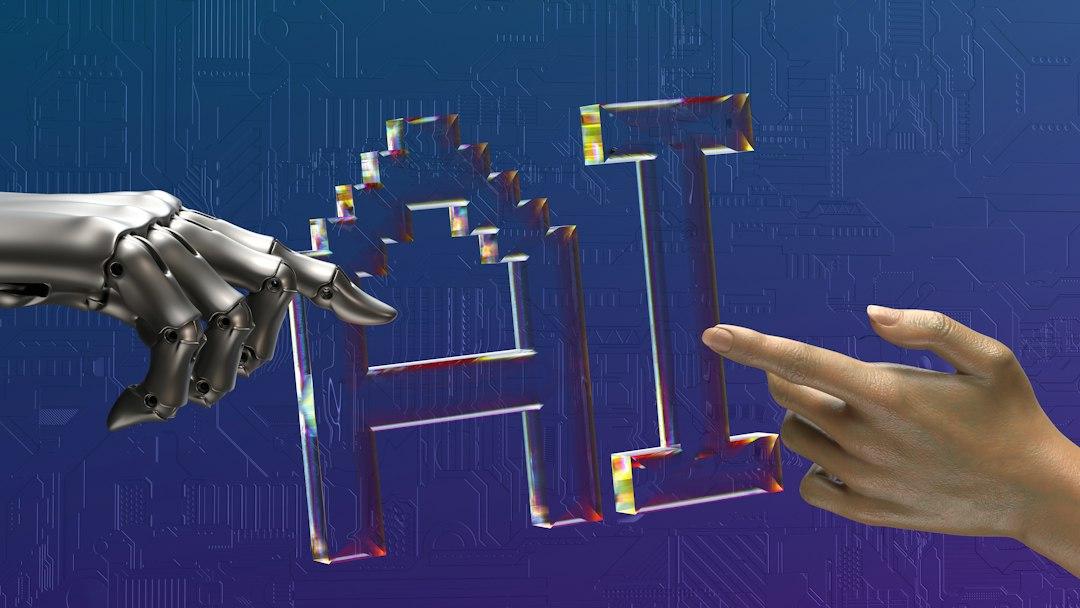
The landscape of artificial intelligence is shifting from the purely digital realm of text and code toward the physical world. This transition, often referred to as the pursuit of 'Embodied AI,' has found a new champion in General Intuition. Recent reports indicate that the startup is currently in discussions to raise $300 million in a fresh funding round, a move that would catapult its valuation to approximately $2 billion.
This capital injection is more than just a financial milestone; it is a signal that investors are betting heavily on the concept of 'World Models'—the internal representations of the physical world that allow AI agents to predict the consequences of their actions. As the industry moves beyond the limitations of Large Language Models (LLMs), General Intuition is positioning itself as a foundational player in the quest for spatial intelligence.
In the AI arms race, data is the ultimate currency. While OpenAI and Google have feasted on the open web's text and image repositories, General Intuition has secured a unique and high-octane fuel source: the Medal dataset. Medal, a platform designed for gamers to clip and share their gameplay, generates an astounding 2 billion videos per year from its 10 million monthly active users.
For General Intuition, this isn't just entertainment; it is training data for the physical laws of the universe. Video games are, by definition, physics-based simulations. They contain complex interactions involving navigation, object manipulation, and goal-oriented behavior. By training on billions of clips that show how characters move, how light reflects off surfaces, and how objects respond to force, General Intuition can build models that understand 'the way the world works' without needing to experience the physical world directly in the initial stages.
This approach bypasses the 'data bottleneck' that many robotics companies face. Collecting real-world physical data is expensive and slow. By leveraging the synthetic-yet-realistic data of the gaming world, General Intuition can iterate at a speed that traditional robotics firms simply cannot match.
To appreciate the $2 billion valuation, one must understand the technical shift General Intuition is spearheading. Most current AI models are 'reactive'—they predict the next token in a sentence or the next pixel in an image. However, for an AI to operate a robot, drive a car, or manage a complex logistical warehouse, it needs a 'World Model.'
A World Model is a mental map of reality. It allows an AI to simulate 'what happens if I do this?' before it actually moves. If an AI agent understands gravity, momentum, and spatial depth, it can perform tasks with a level of intuition that mirrors biological organisms. General Intuition’s focus on Embodied AI means they are moving the intelligence out of the chat box and into the physical (or simulated) body.
This evolution is critical for the next stage of automation. We are moving from AI that talks about the world to AI that acts within it. The implications for manufacturing, healthcare, and household robotics are profound. If General Intuition succeeds, they won't just have a better chatbot; they will have the 'brain' that powers the physical machines of the future.
General Intuition is not alone in this pursuit. The sector for spatial intelligence and world models is becoming increasingly crowded and well-funded. Notable competitors include:
- World Labs: Founded by AI pioneer Fei-Fei Li, this startup recently emerged with a focus on teaching AI to understand the 3D world, reportedly reaching a unicorn valuation almost immediately.
- Wayve and Tesla: Both companies are building world models specifically for autonomous driving, using vast amounts of road data to predict traffic scenarios.
- Physical Intelligence (Pi): A startup focused on a universal 'brain' for robots, backed by heavyweights like Jeff Bezos and OpenAI.
What sets General Intuition apart is its specific data pipeline. While others rely on expensive sensor data from cars or slow-moving robotic arms in labs, General Intuition’s access to 2 billion videos of human-driven interaction in diverse environments provides a breadth of experience that is difficult to replicate. The gaming data captures 'edge cases'—unusual movements and creative problem-solving—that are rare in controlled environments.
The $300 million funding round reflects a broader trend in the VC ecosystem: the 'Model-Plus' strategy. Investors are no longer just looking for smart algorithms; they are looking for startups that own a proprietary data loop. General Intuition’s relationship with Medal creates a moat that is difficult for even the largest tech giants to cross without their own social or gaming platforms.
However, significant challenges remain. Transitioning from 'sim-to-real'—taking knowledge learned in a simulated or gaming environment and applying it to the messy, unpredictable physical world—is a notorious hurdle in AI research. Furthermore, the compute costs associated with processing 2 billion videos are astronomical. General Intuition will need to demonstrate that its models can generalize across different domains, moving beyond the digital physics of games into the tangible physics of reality.
As General Intuition nears its $2 billion valuation, the tech industry is watching closely. This is more than just another high-priced AI startup; it is a test case for whether the next generation of intelligence will be built on the back of digital simulations.
If General Intuition can successfully translate Medal’s massive video archive into a robust, intuitive world model, they will have unlocked the key to true robotic autonomy. We are witnessing the birth of AI that doesn't just process information, but understands the fundamental fabric of our environment. For the business world, the message is clear: the most valuable AI of tomorrow won't just be the ones that can write a poem, but the ones that can navigate the room.