In the fast-paced world of corporate finance, accuracy, speed, and analytical depth are paramount. Historically, finance departments have relied heavily on manual data entry, complex legacy spreadsheets, and specialized software to manage their workflows. However, the rise of generative AI—specifically code-generation models like OpenAI’s Codex—is ushering in a new era of financial automation.
Rather than replacing finance professionals, these advanced artificial intelligence tools are empowering them. By translating natural language instructions into functional code (such as Python, SQL, and VBA), Codex allows finance teams to automate tedious tasks, conduct deeper analyses, and build robust financial assets from raw operational inputs.
Here is a comprehensive look at how forward-thinking finance teams are utilizing OpenAI’s Codex to transform their daily operations.
Monthly Business Reviews (MBRs) and executive reporting packs are critical for tracking organizational health, yet compiling them is notoriously labor-intensive. Finance analysts often spend days extracting data from various Enterprise Resource Planning (ERP) systems, reconciling discrepancies, formatting tables, and pasting charts into slide decks.
With Codex, finance teams can streamline this entire pipeline. By describing the desired output in plain English, analysts can instruct Codex to write custom Python scripts that:
- Connect directly to database APIs (e.g., NetSuite, Workday, or Salesforce).
- Clean, aggregate, and normalize the raw transactional data.
- Generate standardized financial statements (Income Statement, Balance Sheet, Cash Flow).
- Automatically populate pre-formatted PowerPoint slides or interactive BI dashboards.
This shifts the analyst's role from a "data assembler" to a "data interpreter," allowing more time to be spent on strategic commentary rather than manual formatting.
A variance bridge (or "walk" analysis) is a fundamental tool used to explain the gap between budgeted figures and actual financial performance. Isolating the specific drivers of variance—such as price fluctuations, volume changes, or product mix shifts—requires meticulous mathematical modeling.
Codex simplifies this process by generating target-specific formulas and scripts. For instance, a finance manager can prompt Codex:
"Write a Python script using pandas to calculate the price, volume, and mix variance for our Q3 product sales compared to the original budget, and output the results as a waterfall chart."
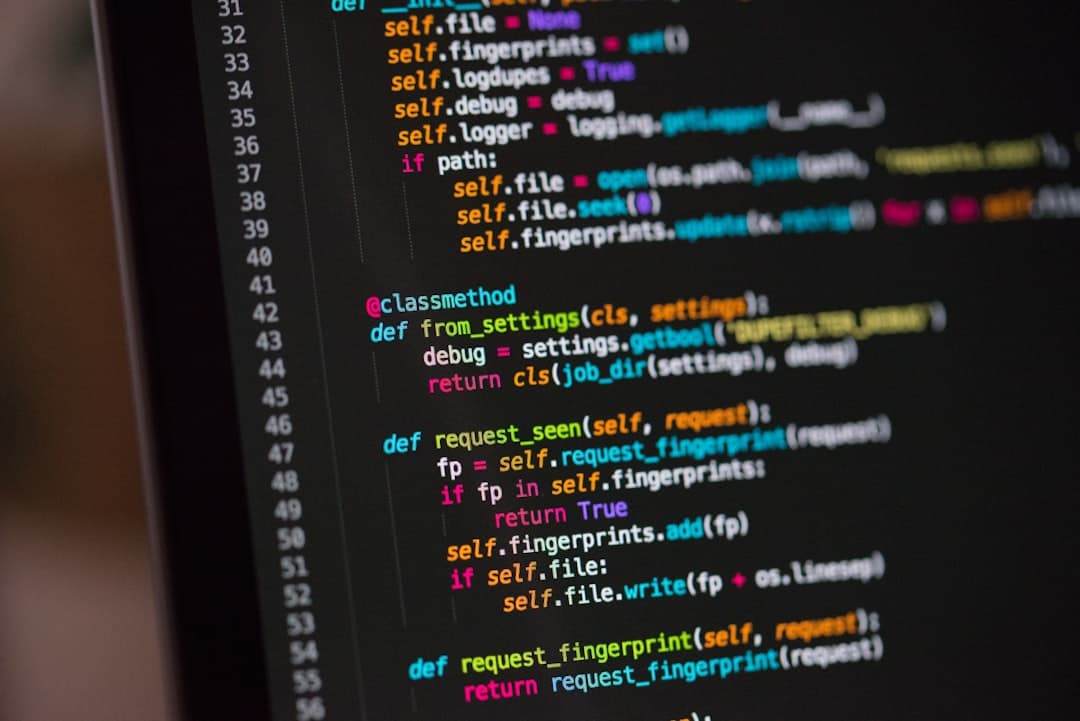
Codex can instantly generate clean, executable code like the following:
import pandas as pd
import matplotlib.pyplot as plt

# Sample data processing generated by Codex
def calculate_variance_bridge(actual_df, budget_df):
    # Merge datasets on Product ID
    merged = pd.merge(actual_df, budget_df, on='product_id', suffixes=('_act', '_bud'))

    # Calculate volume and price variances
    merged['volume_variance'] = (merged['qty_act'] - merged['qty_bud']) * merged['price_bud']
    merged['price_variance'] = (merged['price_act'] - merged['price_bud']) * merged['qty_act']
    merged['total_variance'] = merged['volume_variance'] + merged['price_variance']

    return merged[['product_id', 'volume_variance', 'price_variance', 'total_variance']]
This capability democratizes advanced data science techniques, allowing traditional finance professionals to run sophisticated multi-variable variance analyses without needing a background in software engineering.
Financial models built in Excel or Python are the foundation of corporate decision-making. However, even minor errors—such as hardcoded values hidden in formulas, circular references, or broken cell links—can lead to catastrophic financial miscalculations.
Finance teams are now using Codex as an automated auditor. By feeding model structures, formulas, or Python-based financial scripts into Codex, analysts can ask the model to:
- Identify logical inconsistencies or calculation anomalies.
- Flag hardcoded values that should be dynamic inputs.
- Verify that the balance sheet balances across all projected periods.
- Suggest optimizations to speed up complex workbook calculations.
This automated QA layer drastically reduces operational risk and ensures that executives are making decisions based on flawless mathematical logic.
In volatile economic environments, business leaders constantly ask "what-if" questions. What if inflation rises by another 2%? What if our supply chain costs increase by 15%?
Running these planning scenarios manually in traditional static spreadsheets is painfully slow. Codex enables dynamic scenario modeling by generating simulation frameworks on the fly. Analysts can describe a scenario, and Codex will generate the code to run Monte Carlo simulations or multi-variable sensitivity tables. This allows finance teams to stress-test their business models against hundreds of potential economic outcomes in seconds, providing leadership with probabilistic forecasts rather than single-point estimates.
One of the most significant barriers to modernizing corporate finance has been the technical skills gap. While many financial analysts are wizard-level Excel users, fewer are proficient in programming languages like Python, SQL, or R, which are required for modern big-data analysis.
Codex acts as an interactive translator and tutor. By allowing analysts to write prompts in natural language and receive commented, educational code in return, Codex serves as an on-the-job training tool. Over time, finance professionals naturally upskill, learning how to read, debug, and write code alongside their AI assistant.
While Codex is a powerful ally, finance teams must implement it with proper guardrails:
- Human-in-the-Loop: Never execute AI-generated code or publish AI-generated reports without thorough review by a qualified financial analyst.
- Data Privacy: Ensure that any prompt interface used complies with enterprise data privacy standards to prevent sensitive corporate financial data from being used in public training sets.
- Version Control: Store Codex-generated scripts in secure, version-controlled repositories (like GitHub or GitLab) to maintain auditability.
The integration of OpenAI’s Codex into corporate finance signals a shift from descriptive reporting to predictive strategy. As finance teams spend less time wrangling data, they can spend more time acting as strategic business partners to the CEO. By leveraging AI to automate MBRs, build variance bridges, audit models, and run real-time scenarios, the modern CFO office is transforming into a highly agile, tech-forward engine of corporate growth.