- Omen AI raised $31M to solve biological and chemical issues in data center liquid cooling systems.
- Bacterial biofilms act as thermal insulators, threatening the performance of high-end AI chips like NVIDIA GPUs.
- Real-time monitoring and predictive maintenance reduce downtime and extend the life of expensive hardware.
- The technology supports ESG goals by reducing water waste and chemical runoff in cooling loops.
Beyond the Silicon: Omen AI Secures $31M to Solve the Data Center’s Greatest Bio-Threat
As the AI arms race shifts from chip design to infrastructure integrity, Omen AI’s liquid cooling monitoring aims to prevent the 'biological clogs' threatening global compute capacity.
Jul 4, 2026·0 views
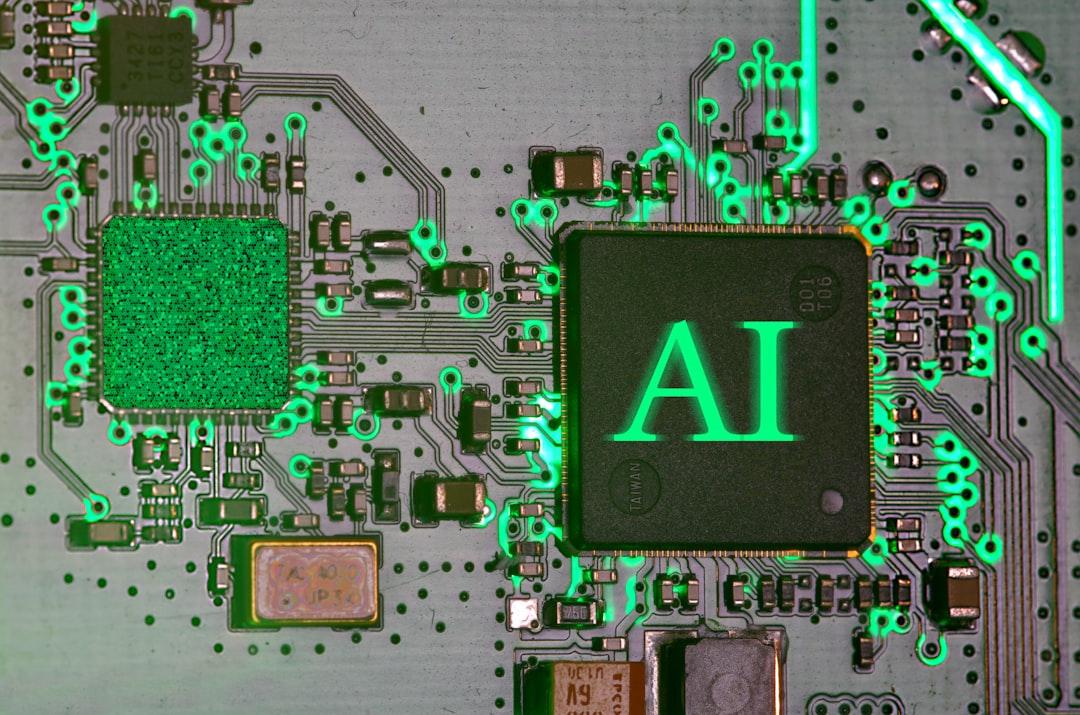
Key Takeaways
The global appetite for artificial intelligence has triggered a secondary crisis that the general public rarely sees: a thermal management emergency. As NVIDIA, AMD, and Intel push the boundaries of Transistor density, the heat generated by modern AI clusters has surpassed the physical limits of traditional air cooling. The industry is currently undergoing a massive migration toward liquid-to-chip cooling, a transition that brings high-performance computing closer to the mechanics of heavy industry than traditional IT.
However, liquid cooling introduces a volatile new variable into the data center environment: fluid chemistry. Omen AI’s recent $31 million Series A funding round highlights a growing realization among venture capitalists and infrastructure providers alike. It is not enough to simply pump water or dielectric fluid through a rack; one must ensure that the fluid does not become a liability.
When we think of data center downtime, we typically imagine software bugs, power surges, or fiber cuts. We rarely consider Legionella or complex biofilms. Yet, the warm, nutrient-rich environments found within data center cooling loops are ideal breeding grounds for microbial life.
Bacterial outbreaks in cooling systems are more than just a maintenance headache; they are a direct threat to hardware longevity. Biofilms—slimy layers of bacteria that adhere to the internal surfaces of pipes and cold plates—act as powerful thermal insulators. Even a microscopic layer of biofilm can significantly reduce heat transfer efficiency, forcing chips to throttle their performance or, in extreme cases, suffer catastrophic thermal failure.
Omen AI’s platform utilizes proprietary sensors and machine learning algorithms to detect the earliest chemical signatures of microbial growth and corrosion. By identifying these issues in real-time, data center operators can intervene with targeted chemical treatments before a full-scale outbreak necessitates a complete system flush and multi-day downtime.
The Series A round, led by a consortium of deep-tech investors, signals a shift in the AI investment landscape. While the last 24 months were dominated by LLM application layers and silicon startups, the focus is now moving toward the 'picks and shovels' of the AI era.
Omen AI’s value proposition is built on the high stakes of the modern cloud. In a world where a single minute of downtime for a top-tier GPU cluster can cost tens of thousands of dollars in lost revenue, predictive maintenance is the only viable path forward. Omen’s technology doesn't just monitor; it predicts when a coolant’s pH levels or conductivity suggests an impending chemical imbalance.
Beyond operational uptime, Omen AI is positioning itself as a key player in the data center industry’s push for sustainability. Water scarcity is becoming a primary bottleneck for data center expansion, particularly in regions like Arizona, Ireland, and the Netherlands.
Traditional cooling towers consume millions of gallons of water through evaporation. Closed-loop liquid cooling is far more efficient, but only if the fluid remains viable for long periods. If a system becomes contaminated, thousands of gallons of chemically treated water must be drained and replaced—a process that is both costly and environmentally damaging. Omen AI’s monitoring suite allows for 'life extension' of coolants, reducing the frequency of fluid replacement and aligning data center operations with stricter ESG (Environmental, Social, and Governance) mandates.
Omen AI’s entry into the market is part of a larger trend toward the autonomous data center. As facilities grow in scale and complexity, human-led manual testing of water chemistry—often performed once a week or even once a month—is no longer sufficient.
We are moving toward a future where the data center is a self-healing organism. In this vision, Omen AI’s sensors feed data directly into a facility’s Building Management System (BMS), which can automatically adjust flow rates, temperatures, or chemical dosing levels without human intervention.
For the enterprise, this means more reliable AI services. For the investor, it represents a de-risking of the massive capital expenditures currently being poured into physical infrastructure. As we look toward the 2026-2027 horizon, the winners in the AI space will not just be those with the best models, but those who can keep their hardware running at peak efficiency in the face of mounting thermal and biological challenges.
Omen AI’s $31 million raise is a testament to the complexity of the modern digital world. As we build increasingly abstract and intelligent software, we remain tethered to the fundamental laws of thermodynamics and biology. By mastering the 'wet' side of the data center, Omen AI is ensuring that the foundation of the AI revolution remains rock solid—and perfectly chilled.
Enjoying this article?
Get the daily AI briefing sent straight to your inbox.
Frequently Asked Questions
Why is bacteria a problem in AI data centers?
Liquid cooling systems provide a warm environment where bacteria can thrive. These microbes form biofilms that insulate components, preventing heat from escaping and causing chips to overheat or fail.
How does Omen AI's technology work?
Omen AI uses specialized sensors and AI algorithms to monitor the chemical and biological state of coolants in real-time, allowing operators to fix issues before they cause hardware damage.
What is the significance of the $31 million Series A?
This funding highlights a shift in investment toward the physical infrastructure required to sustain the AI boom, focusing on reliability and thermal management.
Comments
0Please sign in to leave a comment.
Related articles
xFusion’s Blueprint for Scalable Enterprise AI: Bridging the Gap from Edge to Liquid-Cooled Data Centers
The transition from AI experimentation to full-scale production requires more than just algorithms. At ISC 2026, xFusion showcased a comprehensive hardware roadmap that scales from localized edge workstations to high-density, liquid-cooled data centers, addressing the critical industry needs for data sovereignty and thermal efficiency.
Scam.ai Partners with Qualcomm to Launch Halo Deepfake Detection at Computex 2026
Scam.ai has unveiled 'Halo,' a revolutionary deepfake detection model, in partnership with Qualcomm, aiming to secure desktop video calls from synthetic manipulation.
Beyond the Geek Elite: Why Flipper Devices is Pivoting to Productivity with the $249 Busy Bar
Flipper Devices, creator of the viral Flipper Zero, is entering the productivity market with 'Busy Bar'—a $249 customizable smart display designed to redefine how we interact with desktop data.