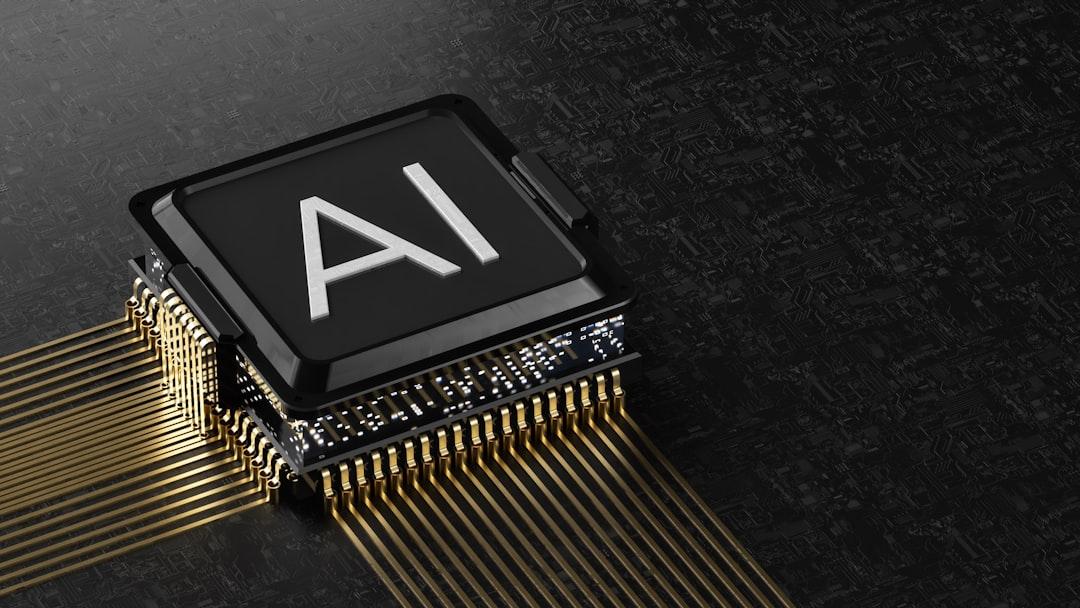
- Anthropic is in early talks with Samsung to develop custom AI chips.
- The move aims to reduce reliance on third-party GPU providers like Nvidia.
- This follows a similar move by OpenAI, who recently partnered with Broadcom.
- Custom silicon allows AI labs to optimize hardware specifically for their proprietary model architectures.
Anthropic Eyes Custom Silicon: A Strategic Pivot Toward Samsung Partnership
As the race for AI dominance intensifies, Anthropic seeks to reduce reliance on third-party hardware by exploring custom chip development with Samsung.
Jul 3, 2026·0 views

Key Takeaways
The artificial intelligence landscape is witnessing a seismic shift as the industry’s most prominent players move beyond off-the-shelf solutions. Anthropic, the developer behind the Claude model family, has entered preliminary discussions with Samsung to explore the creation of custom AI chips. This move represents a strategic attempt to gain greater control over the hardware infrastructure required to train and deploy increasingly complex large language models (LLMs).
For years, the generative AI boom has been defined by a heavy reliance on Nvidia’s flagship GPUs. While these processors have been the backbone of the industry, the surging demand for compute power has created a supply bottleneck and significant cost pressures. By pursuing custom silicon, Anthropic joins an elite group of tech giants seeking to optimize their hardware specifically for their own software architectures.
Samsung Electronics represents one of the few entities on the planet capable of handling the end-to-end production of high-end AI processors. Unlike many fabless chip designers, Samsung operates its own semiconductor manufacturing foundries, providing a vertical integration advantage that is highly attractive to AI labs.
Industry analysts suggest that Anthropic’s interest in Samsung is multi-faceted:
- Manufacturing Capacity: Samsung’s state-of-the-art foundries offer the scale necessary to meet the massive production demands of a company like Anthropic.
- Advanced Packaging: Beyond simple chip design, Samsung has invested heavily in advanced memory technologies, such as High Bandwidth Memory (HBM), which is critical for handling the memory-intensive nature of LLMs.
- Supply Chain Diversification: By partnering with Samsung, Anthropic can mitigate the risks associated with relying too heavily on existing suppliers like TSMC, which currently processes the vast majority of high-end AI chips.
The timing of these talks is particularly telling. This development follows closely on the heels of OpenAI’s recent announcement regarding its own partnership with Broadcom to develop custom silicon. The industry is clearly entering a phase where the "software-only" era of AI is coming to an end. To maintain a competitive edge, AI labs must now ensure that their models are running on hardware that is purpose-built for their specific inference and training needs.
This trend is forcing a rethink of the relationship between software developers and hardware manufacturers. Companies are no longer content to wait for the next generation of general-purpose GPUs; they want chips that are tailored to the specific mathematical operations that power transformers and other neural network architectures.
If the partnership between Anthropic and Samsung moves forward, it could reshape the semiconductor market. A shift toward custom silicon among the "Big AI" players suggests a future where compute is no longer a commodity, but a proprietary asset.
However, the path to custom silicon is fraught with challenges. Design cycles for advanced chips can take years, and the capital expenditure required is immense. Anthropic will need to balance its research and development resources carefully, ensuring that its hardware strategy does not distract from its primary mission of advancing safe and capable AI.
Furthermore, the entry of AI labs into the chip design space puts additional pressure on traditional chipmakers. If major customers begin to design their own chips, companies like Nvidia may face increased competition not just from other chipmakers, but from their own clients who have decided to bring hardware design in-house.
As we look ahead to the remainder of the decade, the collaboration between software-heavy AI firms and manufacturing-heavy hardware giants will likely become the standard. Whether this leads to a more efficient and affordable AI ecosystem remains to be seen, but one thing is certain: the battle for the future of AI will be fought in the factories as much as it is in the code.
Enjoying this article?
Get the daily AI briefing sent straight to your inbox.
Frequently Asked Questions
Why is Anthropic looking to build custom chips?
Anthropic is seeking custom silicon to gain better control over performance, optimize hardware for their specific AI models, and mitigate supply chain risks associated with third-party providers.
How does this affect current AI hardware providers?
The shift toward custom chips by major AI labs like Anthropic and OpenAI could eventually challenge the dominance of traditional GPU manufacturers by creating a market where companies produce their own proprietary hardware.
Comments
0Please sign in to leave a comment.
Related articles
NVIDIA Unveils Nemotron-Labs-TwoTower: A Breakthrough in LLM Speed
NVIDIA has launched Nemotron-Labs-TwoTower, an innovative diffusion model that addresses the throughput bottlenecks inherent in standard generative AI.

Google AI Unveils TabFM: The Future of Zero-Shot Tabular Data Processing
Google Research introduces TabFM, a groundbreaking hybrid-attention model designed to perform zero-shot classification and regression on tabular data effortlessly.

Baidu’s CUP Library: Streamlining Python Workflows for Large-Scale Engineering
Baidu’s CUP (Common Useful Python) library offers a comprehensive suite of tools designed to enhance Python workflow reliability, from resource monitoring to advanced thread management.