- Major tech companies are shifting toward custom chip design to reduce dependence on Nvidia.
- Custom ASICs offer better performance-per-watt and cost efficiency for specific AI tasks.
- OpenAI’s 'Jalapeño' project represents the industry trend of software firms becoming hardware architects.
- The market is moving toward a hybrid model of general-purpose GPUs and specialized internal hardware.
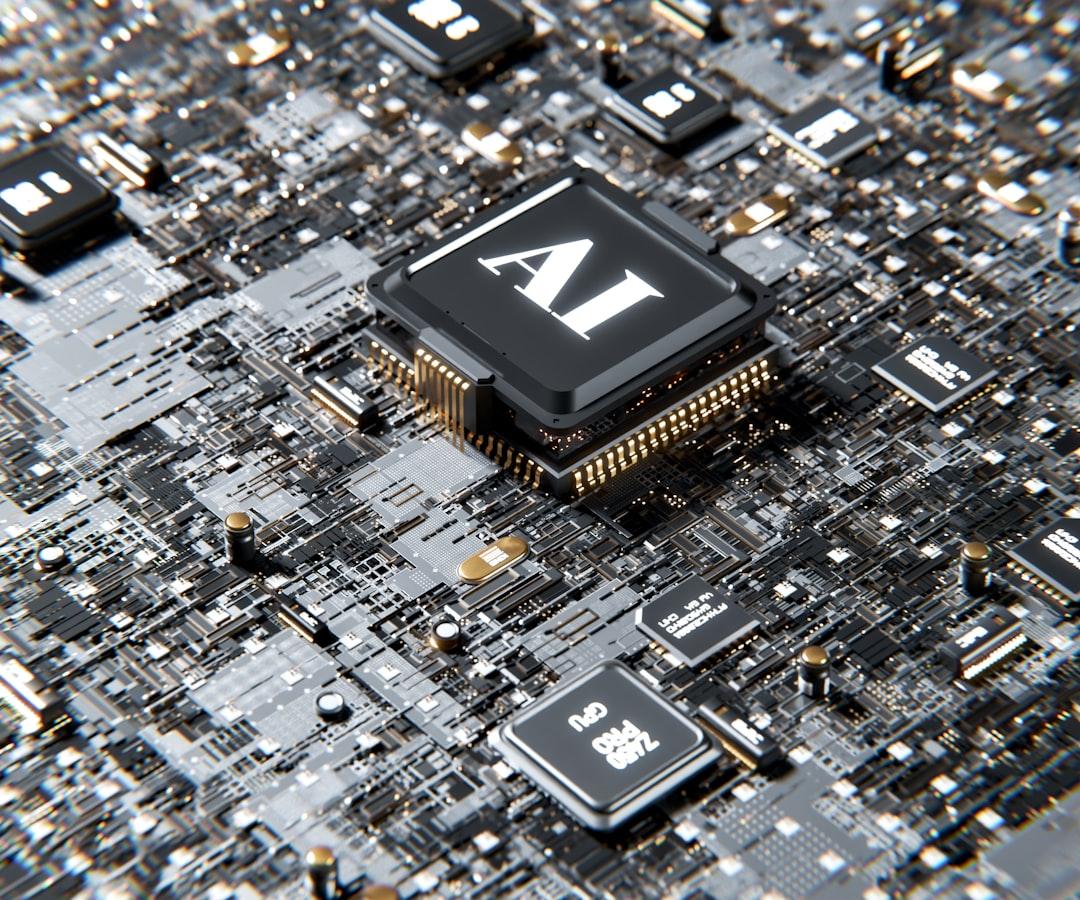
The Silicon Shift: Why Tech Giants are Ditching Nvidia for Custom Chips
From OpenAI’s 'Jalapeño' to SpaceX’s specialized hardware, the industry is moving toward vertical integration to break Nvidia's iron grip on AI infrastructure.
Jul 5, 2026·0 views
Key Takeaways
For the past decade, Nvidia has stood as the undisputed gatekeeper of the artificial intelligence revolution. Its graphics processing units (GPUs), particularly the H100 and Blackwell series, have become the primary engines powering everything from large language models (LLMs) to autonomous driving systems. However, the tech landscape is witnessing a seismic shift. Major players, ranging from OpenAI to SpaceX, are increasingly looking inward, opting to design their own custom silicon to reduce reliance on a single supplier.
This trend, often described as a move toward vertical integration, is not merely about cost-cutting. It is a strategic pivot designed to optimize performance for specific workloads, secure supply chain stability, and mitigate the risks associated with being tethered to a single company’s roadmap. As the demand for compute power skyrockets, the 'one-size-fits-all' approach of general-purpose GPUs is no longer sufficient for the nuanced needs of next-generation AI.
Perhaps the most significant development in this space is OpenAI’s reported foray into custom chip design. Industry insiders have pointed to a project dubbed 'Jalapeño,' a custom inference chip developed in collaboration with Broadcom. By designing hardware tailored specifically for the inference tasks required by models like GPT-4 and its successors, OpenAI aims to optimize energy efficiency and latency—two critical bottlenecks in the current AI economy.
This partnership highlights a growing trend: tech software giants are becoming hardware companies. By leveraging Broadcom’s expertise in chip architecture and manufacturing logistics, OpenAI is effectively shortening the time-to-market for hardware that is optimized for its proprietary software stack. This move suggests that the future of AI is not just about better algorithms, but about the seamless fusion of specialized hardware and software.
Nvidia’s dominance has created a 'single-supplier risk' that keeps CEOs at major tech firms awake at night. When a company depends entirely on one vendor for its most critical infrastructure, it loses bargaining power and becomes vulnerable to production delays or sudden price hikes. The decision to build custom chips is, at its core, a move to regain leverage.
- Workload Optimization: General-purpose chips are designed to do many things well. Custom chips, or Application-Specific Integrated Circuits (ASICs), are designed to do one thing perfectly. This allows for significantly higher performance-per-watt ratios.
- Supply Chain Resilience: By diversifying their hardware sources, companies like Google, Meta, and SpaceX are insulating themselves from potential shortages in the global semiconductor market.
- Cost Control: While the initial investment in chip design and fabrication is astronomical, the long-term cost of running massive AI clusters on internally designed silicon is often substantially lower than paying the premium for Nvidia’s high-margin hardware.
It is important to note that OpenAI is not a pioneer in this space, but rather a late entrant to a club that already includes the heavyweights of the industry. Google’s Tensor Processing Units (TPUs) have powered the company’s AI research for years, providing a significant competitive advantage in training massive models. Similarly, Apple’s Silicon shift in its Mac lineup demonstrated that custom-designed chips could outperform industry standards while consuming a fraction of the power.
Even companies not traditionally associated with consumer software are getting in on the act. SpaceX, for instance, is increasingly building custom hardware to handle the immense data processing requirements of its Starlink satellite constellation and autonomous flight systems. This 'build-it-yourself' mentality is spreading across sectors, suggesting that the competitive advantage in the 2020s will belong to those who own their hardware stack.
Does this mean the end of Nvidia’s reign? Not necessarily. Nvidia remains the gold standard for versatility and developer support, particularly through its CUDA platform. However, the 'Nvidia-only' era of AI development is clearly drawing to a close. We are entering a fragmented, specialized future where the most advanced AI companies will run their models on a hybrid of off-the-shelf high-performance GPUs and highly specialized custom silicon.
As the industry matures, the focus will shift from simply having 'enough' compute to having the 'right' compute. For investors and industry observers alike, the next few years will be defined by which companies can successfully transition from software-only entities to sophisticated hardware architects.
Enjoying this article?
Get the daily AI briefing sent straight to your inbox.
Frequently Asked Questions
Why are companies like OpenAI building their own chips?
Companies are building custom chips to optimize performance for specific AI workloads, reduce supply chain reliance on Nvidia, and lower long-term infrastructure costs.
Is Nvidia being replaced by custom chips?
Not entirely. While custom silicon is growing, Nvidia remains the leader for general-purpose AI development due to its robust ecosystem and CUDA software platform.
What is OpenAI's 'Jalapeño' project?
Jalapeño is a reported custom inference chip developed by OpenAI in partnership with Broadcom, designed to optimize the performance of their AI models.
Comments
0Please sign in to leave a comment.
Related articles
OpenAI Unveils GPT-5.6 Sol: A New Era for AI in Coding, Science, and Cybersecurity
OpenAI has previewed GPT-5.6 Sol, a powerful new AI model designed to excel in complex domains like coding, scientific research, and cybersecurity. Coupled with an enhanced safety stack, this release underscores a commitment to both advanced functionality and responsible AI deployment.

Anthropic Gains White House Green Light to Deploy Advanced 'Mythos' AI Model
Following weeks of high-stakes negotiations, Anthropic has received federal approval to pilot its advanced Mythos model with select U.S. government and private sector entities.

Corgi Insurance Denies Theft Allegations Amidst 'Vibe Coding' Controversy
Corgi, a rising star in the insurtech space, is defending its reputation against allegations of software theft, highlighting the growing tensions in the era of 'vibe coding'.