- AI growth is currently limited by the physical constraints of traditional silicon hardware.
- Thermal management and energy efficiency are the primary bottlenecks for next-generation data centers.
- New materials like Gallium Nitride are being explored to overcome current semiconductor limits.
- Future AI development will require a 'co-design' approach between software engineers and material scientists.
The Silicon Ceiling: Why Material Science is the New Frontier for AI Growth
As computational demands soar, the future of artificial intelligence depends as much on chemistry and physics as it does on software engineering.
Sep 19, 2026·0 views
Key Takeaways
For the past decade, the narrative of the AI revolution has been dominated by parameter counts, neural architecture, and training data. However, as we push toward the next generation of artificial intelligence, a quiet crisis is brewing at the atomic level. The infrastructure required to power large language models (LLMs) and autonomous systems is rapidly approaching the physical limits of current material science.
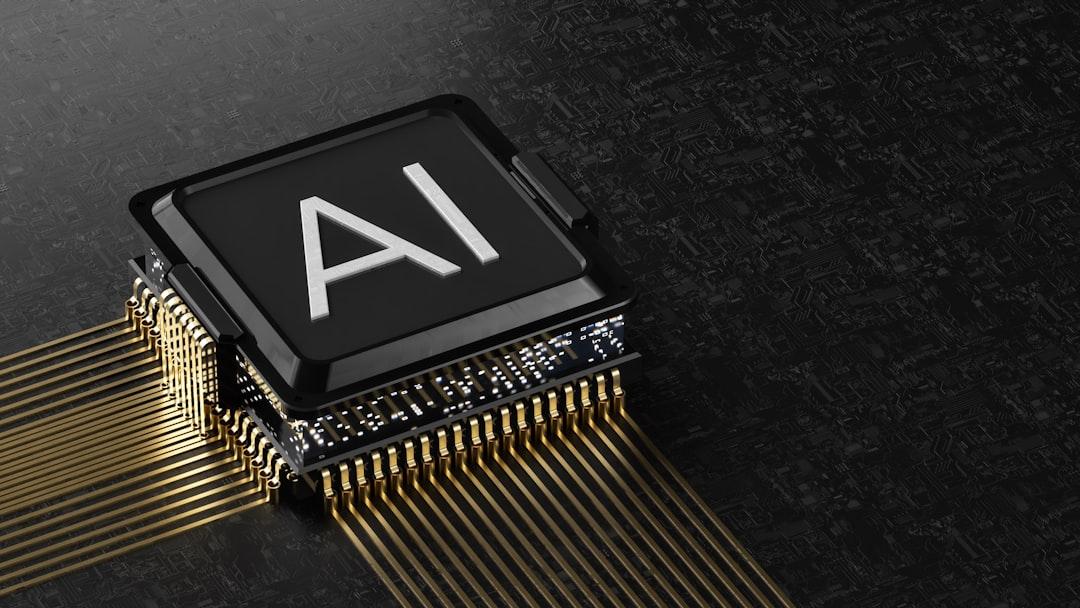
Semiconductors, the bedrock of modern computing, are no longer just about shrinking transistors. We are reaching a point where traditional silicon-based architectures struggle with thermal management, electrical leakage, and signal integrity. To sustain the growth trajectory of AI, the industry must pivot toward a new "materials foundation" that can handle unprecedented heat and energy loads.
As AI workloads demand higher clock speeds and lower latency, heat dissipation has become the primary bottleneck. Current data centers consume massive amounts of electricity, not just for processing, but for cooling the hardware required to prevent physical degradation. Researchers are now exploring wide-bandgap semiconductors, such as Gallium Nitride (GaN) and Silicon Carbide (SiC), to replace traditional silicon in power-intensive applications.
These materials offer superior thermal conductivity and higher voltage tolerances, allowing for more efficient power conversion. By integrating these materials into the AI hardware stack, companies can effectively increase the computational density of a server rack without the risk of thermal runaway. This shift is not merely an incremental improvement; it is a fundamental redesign of how we handle the energy density of machine learning operations.
Thermal management has historically been treated as an afterthought in software-driven development, but it is now a central design constraint. As AI chips become more complex, the "hot spots" on a single silicon die can reach temperatures that threaten the structural integrity of the chip itself. New cooling solutions, including advanced liquid cooling systems and phase-change materials, are being integrated directly into the packaging of AI accelerators.
Furthermore, the industry is looking at specialized thermal interface materials (TIMs) that can bridge the gap between high-performance chips and heat sinks more effectively. These materials must be highly conductive while maintaining mechanical flexibility to account for the thermal expansion and contraction that occurs during heavy AI training cycles.
Environmental concerns are inseparable from the material challenges of AI. As the demand for data centers grows, so does the carbon footprint of the hardware lifecycle. Material scientists are tasked with developing substances that are not only high-performing but also sustainable and easier to recycle.
This includes the search for rare-earth element alternatives. Many of the materials used in today’s state-of-the-art processors rely on supply chains that are geographically concentrated and environmentally taxing. Developing synthetic or abundant alternatives is essential for the long-term viability of the global AI sector. Researchers are now utilizing AI itself to simulate the properties of new materials, creating a feedback loop where machine learning accelerates the discovery of the very materials needed to power its own evolution.
The most significant shift in the industry is the move toward "co-design," where software developers and material scientists work in lockstep. Previously, software was written with the assumption that hardware would simply improve according to Moore’s Law. Today, that assumption is dead.
Instead, future AI models will be designed to work in harmony with the physical properties of the hardware they run on. We are entering an era of hardware-aware AI, where the architecture of the neural network is optimized for the specific material limits of the chip. This synergy between the atomic structure of a semiconductor and the logical structure of an algorithm will define the next decade of technological progress. As we look toward 2030, the companies that master this material foundation will likely dictate the pace of the global AI race.
Enjoying this article?
Get the daily AI briefing sent straight to your inbox.
Frequently Asked Questions
Why is material science important for AI?
As AI models grow more complex, they push existing hardware to its physical limits, requiring new materials to manage heat, power consumption, and signal efficiency.
What are wide-bandgap semiconductors?
Materials like Gallium Nitride (GaN) and Silicon Carbide (SiC) that offer better thermal and electrical properties than traditional silicon, making them ideal for high-performance AI hardware.
What is co-design in AI development?
Co-design is the collaborative process where software algorithms are optimized specifically for the physical and material capabilities of the underlying hardware.
Comments
0Please sign in to leave a comment.
Related articles

IBM Unveils Granite Switch 4.1: Streamlining Multimodal AI for Enterprise
IBM has launched Granite Switch 4.1, an open-source, multimodal AI solution on Hugging Face. This release consolidates chat, decision intelligence, and speech processing into one unified endpoint, simplifying AI deployment for a wide range of enterprise applications under the Apache 2.0 license.

NVIDIA and AI4Bharat Unveil 2.8 Trillion Token Dataset to Revolutionize Indic Language AI
NVIDIA and AI4Bharat have launched an unprecedented 2.8 trillion token pretraining dataset and an open data generation pipeline, set to transform Large Language Model development for 12 major Indic languages. This initiative aims to overcome the significant challenges of data scarcity and linguistic diversity, fostering digital inclusion for hundreds of millions.
Welcome Beam: The New 501B Parameter Open Model Redefining AI Ownership
With 501 billion parameters, Beam marks a new chapter in open-weights AI, offering unprecedented control for developers and businesses.