- Lionel Messi maintains elite-level performance by shifting from a pace-based winger to a deep-lying tactical playmaker.
- His scoring efficiency remains a statistical anomaly, defying traditional aging curves in professional football.
- Messi’s ability to manipulate defensive positioning and manage game tempo provides a blueprint for longevity in sports.
- The 2026 World Cup discussion centers on whether his adaptive style can continue to withstand the pressures of international tournament play.
The Messi Factor: Why the GOAT Continues to Redefine World Cup Greatness
As the global football landscape evolves, Lionel Messi proves that age is merely a number when it comes to tactical brilliance and unmatched scoring efficiency.
Jul 9, 2026·0 views
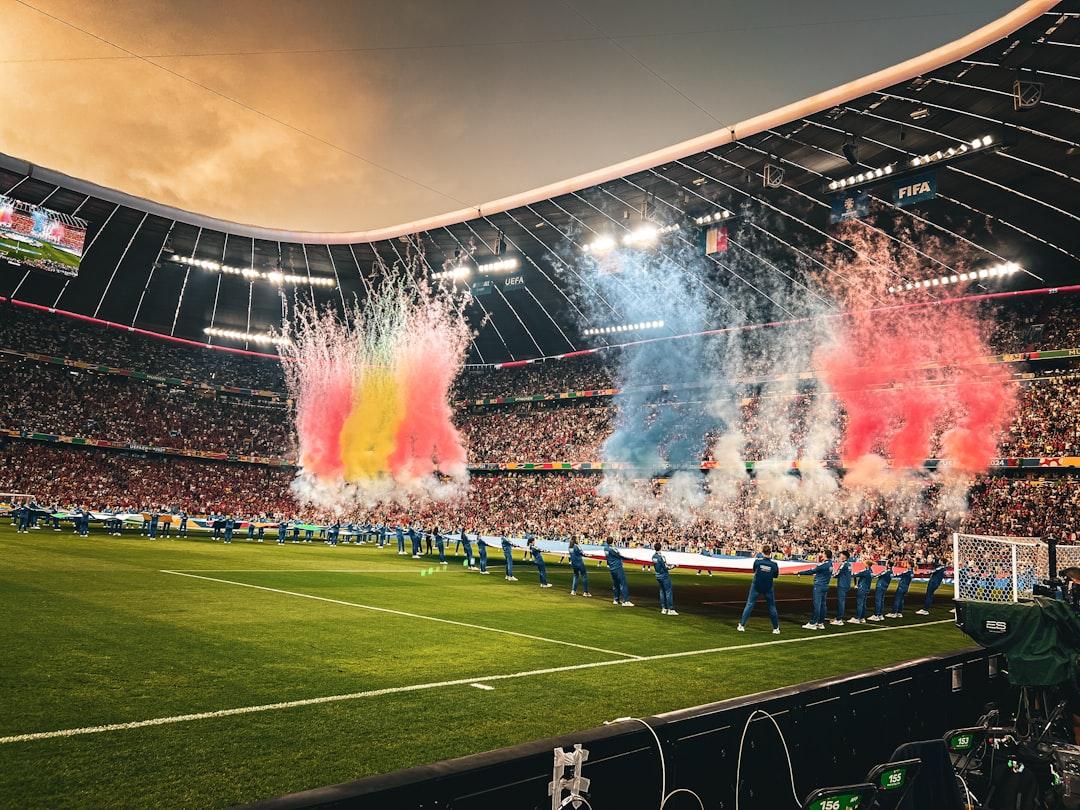
Key Takeaways
In the modern era of professional football, few athletes have managed to sustain a level of dominance that defies the natural arc of aging. Lionel Messi, the Argentine talisman, continues to be the exception to every rule. As we look toward the horizon of the 2026 World Cup, analysts and fans alike are still dissecting the sheer statistical anomaly that is Messi’s recent performance. With eight goals in just five matches during his most recent campaign, Messi is not just playing the game; he is evolving it.
What makes Messi’s recent output so remarkable isn't just the goal tally—it is the context in which those goals were scored. In an era dominated by high-pressing defensive schemes and data-driven tactical analysis, Messi remains a ghost in the machine. He operates in the pockets of space that defensive midfielders are taught to guard, yet he consistently finds ways to exploit them. His ability to read the game three steps ahead of his opponents allows him to conserve energy while maximizing his efficiency.
- Tactical Awareness: Messi’s positioning is rarely about speed; it is about geometry. He occupies spaces that force defenders into impossible decisions.
- Efficiency: Unlike younger players who rely on high-volume shooting, Messi’s conversion rate remains at an elite, world-class level.
- Leadership: Beyond the goals, his presence on the pitch elevates the play of his teammates, acting as a gravitational force that draws defensive pressure away from his peers.
Observers often note that the "old" Messi was a winger defined by blistering pace. The "current" Messi is something entirely different: a deep-lying orchestrator who happens to be the most clinical finisher in the tournament. This transition is a masterclass in professional longevity. By adapting his style to compensate for declining physical speed, he has effectively extended his prime by nearly a decade.
There is a specific pressure associated with the FIFA World Cup that no club competition—not even the UEFA Champions League—can replicate. The intensity of a tournament where a single mistake can send a nation home makes Messi’s composure even more profound. Critics often point to the physical toll of international football, yet Messi treats the tournament stage as his personal sanctuary. His ability to perform under the weight of global expectation is perhaps his greatest asset, one that young stars are still struggling to emulate.
As the football world turns its eyes toward the 2026 World Cup, the conversation surrounding Messi has shifted. It is no longer about whether he can compete, but rather how long he can continue to maintain this standard. The integration of AI-driven performance analytics in modern sports has provided coaches with more data than ever, yet even the best algorithms struggle to predict the unpredictable nature of Messi’s decision-making on the field.
Whether or not Messi graces the pitch for another full tournament cycle, his impact is already etched into the history books. He has redefined what it means to be a modern forward, proving that skill, intelligence, and vision are the ultimate currencies in world football. For aspiring athletes, the lesson is clear: physical gifts may get you to the professional level, but it is the mastery of the game’s mental landscape that keeps you at the summit.
Ultimately, Messi’s career serves as a reminder that greatness is not static. It is a constant process of adaptation. As he continues to defy the odds, the global football community remains in awe, waiting to see what he will do next. Whether he is scoring from distance or threading a needle-point pass through a crowded defensive line, one thing remains certain: we are witnessing the twilight of an era, and it is every bit as brilliant as the dawn.
Enjoying this article?
Get the daily AI briefing sent straight to your inbox.
Frequently Asked Questions
What makes Lionel Messi's recent World Cup performances so special?
Messi combines elite goal-scoring efficiency with high-level tactical intelligence, allowing him to dominate games even as his physical speed naturally declines.
How has Messi's playing style changed over his career?
He has evolved from a high-speed winger into a strategic playmaker who dictates the pace of the game and exploits defensive gaps through superior positioning.
Comments
0Please sign in to leave a comment.
Related articles
Aston Villa’s Defensive Rebuild: Is a Contract Extension Necessary?
Aston Villa is undergoing a strategic evolution under Unai Emery, leading to intense speculation regarding the future of key defensive stalwarts.
Premier League Giants Liverpool and Manchester United Target Felix Nmecha
Liverpool and Manchester United are reportedly monitoring Borussia Dortmund midfielder Felix Nmecha, signaling a potential return to the Premier League for the German talent.
Chelsea Scouting Mission: The Rise of IFK Göteborg Starlet Oliver Mansson
Chelsea is reportedly tracking IFK Göteborg midfielder Oliver Mansson, fueling speculation about the club's long-term strategy for elite youth acquisition.