Major automotive revolutions rarely arrive with a theatrical fanfare; more often, they are quietly slipped into the footnotes of corporate press releases. Such was the case when Porsche announced its latest updates for the highly anticipated Cayenne Electric. Buried beneath headlines celebrating new exterior paint options and minor interior upgrades was a monumental announcement: Porsche is officially bringing wireless inductive charging to a production electric vehicle (EV) for the first time.
For years, wireless charging has been the holy grail of EV infrastructure—frequently promised, repeatedly delayed, and dismissed by skeptics as an expensive novelty. By integrating this technology into its flagship luxury SUV, Porsche is not just offering a new luxury convenience; it is establishing a new benchmark for the premium automotive sector and signaling a profound shift in how we interact with electric mobility.
At its core, Porsche’s wireless EV charging relies on the principles of magnetic resonance. The system consists of two primary components:
- The Transmitter Pad: Installed on or flush-mounted into the garage floor or parking space, connected directly to the electrical grid.
- The Receiver Pad: Integrated into the underbody of the Porsche Cayenne Electric.
When the vehicle parks over the ground pad, an alternating electromagnetic field is created. The receiver pad intercepts this field and converts it back into electrical energy to charge the vehicle’s high-voltage battery pack.
Historically, the primary criticism of wireless charging has been energy loss. However, modern inductive systems have achieved remarkable efficiency rates, often hovering between 90% and 92%. This performance is highly comparable to traditional Level 2 wired AC charging, effectively neutralizing the argument that wireless transfer is too wasteful for practical, daily use.
To understand why Porsche is pioneering this technology on the Cayenne Electric, one must look at the demographics of luxury EV buyers. For these consumers, luxury is defined by the elimination of friction.
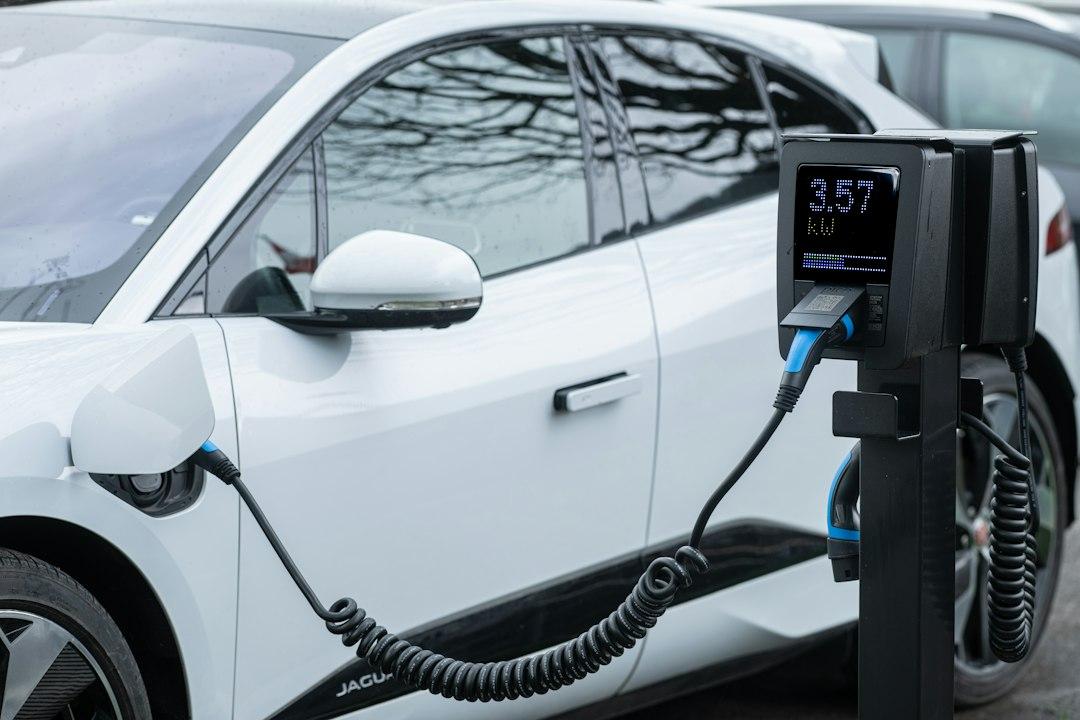
While plugging in a cable at the end of the day is a minor inconvenience, it remains a manual touchpoint. In cold, rainy, or snowy climates, handling heavy, stiff, and dirty charging cables is a distinctly un-luxurious experience. Wireless charging transforms this routine into an invisible, effortless interaction. A driver simply parks their Cayenne Electric in their garage, and the vehicle begins charging automatically.
Furthermore, this technology aligns perfectly with the aesthetic demands of high-end homes. A flush-mounted ground pad eliminates the visual clutter of wall-mounted charging boxes and dangling cables, preserving the clean architectural lines of modern luxury garages.
For wireless charging to transition from a proprietary luxury perk to a mainstream automotive standard, interoperability is critical. The Society of Automotive Engineers (SAE) has already established the SAE J2954 standard, which defines the safety, performance, and testing criteria for wireless power transfer up to 11 kW.
Porsche’s deployment of this technology in a production vehicle will serve as a crucial real-world test case for these standards. As Porsche proves the viability and safety of inductive systems, it will likely pressure other premium manufacturers—such as Mercedes-Benz, BMW, and Audi—to accelerate their own wireless charging programs. If the industry coalesces around unified standards, we could eventually see wireless charging pads integrated into public parking spaces, valet lots, and high-end retail locations, creating an ecosystem where EVs charge passively throughout the day.
Despite the immense promise of wireless charging, significant hurdles remain before widespread adoption can occur. The most prominent of these is the cost of installation and hardware. Inductive charging systems require specialized ground pads that must be professionally installed, often requiring excavation or concrete work for flush-mounting.
Additionally, vehicle alignment is critical. If a vehicle is parked too far off-center from the ground pad, charging efficiency drops dramatically. To solve this, Porsche is utilizing advanced parking assist systems. By leveraging the Cayenne Electric’s array of cameras, sensors, and automated parking algorithms, the vehicle can precisely guide itself over the pad, ensuring optimal alignment and maximum power transfer every time.
There are also safety considerations. Inductive charging systems must feature robust Foreign Object Detection (FOD) and Living Object Detection (LOD). If a metal object (like a soda can) or a living creature (like a cat) gets between the pad and the vehicle during charging, the system must instantly shut down to prevent overheating or injury. Porsche’s production-ready system indicates that these safety protocols have successfully met rigorous global regulatory standards.
The introduction of wireless charging on the Porsche Cayenne Electric is more than just a technological milestone; it is a glimpse into the future of autonomous mobility. As the automotive industry marches toward a future defined by self-driving vehicles, wireless charging becomes an absolute necessity. An autonomous robotaxi or a self-driving luxury sedan cannot plug itself in; it must be capable of replenishing its battery without human intervention.
By taking the bold step of putting wireless charging into production today, Porsche is laying the groundwork for the autonomous infrastructure of tomorrow. It is a powerful reminder that sometimes, the most revolutionary technologies are the ones we cannot see.