- Recursive self-improvement in AI is facing significant technical hurdles, making an 'intelligence explosion' unlikely in the near term.
- The industry is shifting from pure scale to human-in-the-loop collaborative systems for safety and reliability.
- Data center heat and energy demands are creating physical bottlenecks that limit the growth of massive AI models.
- Small Language Models (SLMs) are emerging as a sustainable alternative to current power-intensive architectures.
The AI Recursive Self-Improvement Paradox and the Looming Energy Crisis
As researchers debate the feasibility of self-improving AI, the industry faces a critical bottleneck: the immense power demands of next-generation hardware.
Aug 19, 2026·0 views
Key Takeaways
The artificial intelligence industry has long dangled a tantalizing promise before investors and the public: the era of recursive self-improvement. The theory suggests that once an AI model reaches a certain threshold of sophistication, it will be capable of rewriting its own code, optimizing its own architecture, and accelerating its intelligence at an exponential rate—all with minimal human intervention.
However, recent reports indicate that this "intelligence explosion" may be significantly further off than previously anticipated. While large language models (LLMs) have demonstrated an uncanny ability to assist in software engineering tasks, the leap from "assisting a developer" to "architecting a superior version of oneself" involves complex cognitive and structural hurdles that current transformer architectures are not yet equipped to overcome.
Recursive self-improvement requires more than just raw processing power; it demands a deep, systemic understanding of underlying logic and safety guardrails. Current models often hallucinate or struggle with long-term planning, both of which are fatal flaws when attempting to optimize complex neural networks. If an AI makes a minor error in its own self-optimization, the subsequent generation could inherit and compound that flaw, leading to rapid degradation rather than improvement.
Researchers are now pivoting toward a more measured approach. Instead of chasing a "singularity" event, the industry is focusing on "human-in-the-loop" systems. This method leverages AI to suggest improvements, but keeps human experts as the final arbiters of architectural changes. This collaborative model is safer, though it lacks the breakneck speed that some venture capitalists have been betting on.
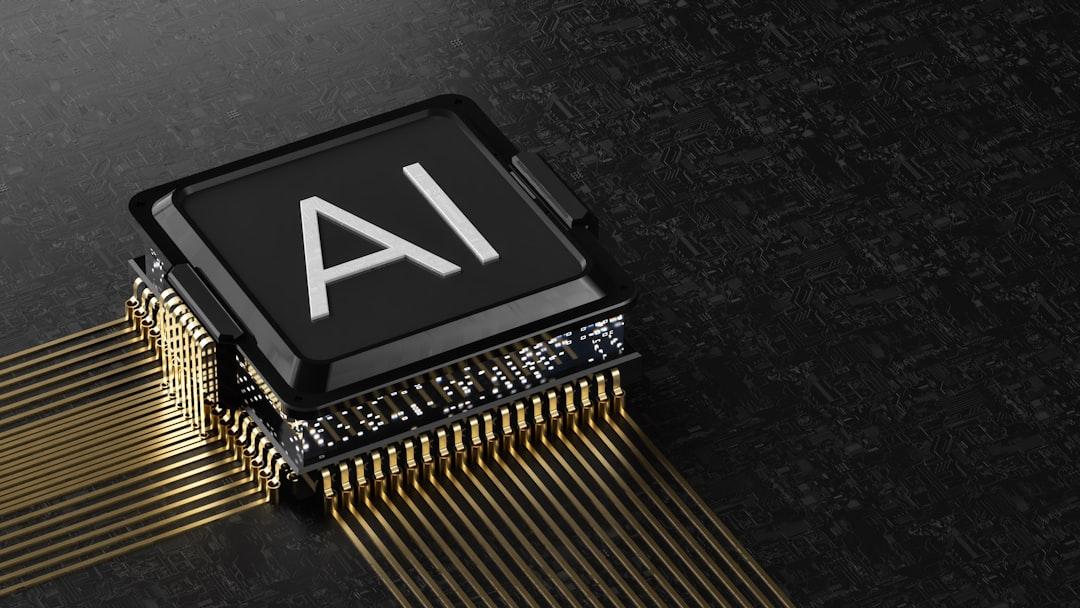
While the software side of AI grapples with its own limitations, the hardware side is facing a reality check of a different kind: the laws of thermodynamics. As AI models grow in complexity, the demand for high-performance computing (HPC) clusters has skyrocketed, leading to an unprecedented strain on global energy grids.
Recent data suggests that the heat generated by these massive data centers is not merely an operational challenge—it is becoming a limiting factor for growth. In several regions, the sheer amount of electricity required to cool these server farms is causing local power outages and pushing energy prices to record highs.
- Cooling Demands: Advanced liquid cooling systems are becoming standard, but they require massive amounts of water and electricity.
- Grid Stability: Data centers are now competing with residential areas for power, leading to political friction in tech-heavy hubs.
- Hardware Efficiency: The push for more powerful chips is outpacing the development of efficient power management, leaving us with hardware that is incredibly fast but equally inefficient in its power-to-performance ratio.
The intersection of these two problems—the difficulty of recursive self-improvement and the physical cooling crisis—suggests that the AI industry is entering a "plateau phase." After years of exponential growth, the focus is shifting toward sustainability and architectural efficiency rather than simply building larger models.
Companies that can figure out how to train smaller, more efficient models—often called "Small Language Models" (SLMs)—may ultimately win the day. By reducing the reliance on massive, power-hungry clusters, these firms can bypass the thermal bottlenecks that are currently stifling their larger competitors.
Ultimately, the dream of an AI that improves itself in a vacuum is fading in favor of a more grounded, pragmatic future. In this new landscape, success will be defined not by who has the most compute, but by who can create the most intelligent systems with the smallest possible footprint. As we look ahead to the next decade, the industry's ability to solve these physical and logical constraints will determine whether the AI revolution continues to accelerate or hits a permanent wall.
Enjoying this article?
Get the daily AI briefing sent straight to your inbox.
Frequently Asked Questions
What is recursive self-improvement in AI?
It is a theoretical process where an AI system is capable of rewriting its own code to become more intelligent without human intervention.
Why is AI energy consumption a problem?
Massive data centers require immense amounts of electricity and water for cooling, which can strain local power grids and increase operational costs.
Are Small Language Models the future?
Yes, many experts believe SLMs are the future because they offer high performance with a much smaller energy and computational footprint.
Comments
0Please sign in to leave a comment.
Related articles

Hugging Face Integrates llama.cpp Quantization into Transformers Library
Hugging Face has officially integrated llama.cpp quantization support into the Transformers library, simplifying the deployment of large language models on consumer hardware.
Jun Kim Joins Hugging Face to Accelerate MLX Ecosystem Growth
Jun Kim, the developer behind oMLX, has joined Hugging Face to lead efforts in expanding and supporting the MLX machine learning framework.

Microsoft Unveils 'ThinkingBox': A New Frontier for LLM Reasoning
Microsoft has introduced ThinkingBox, a groundbreaking framework designed to enhance Large Language Model reasoning through iterative, data-backed validation.