- The US Department of Energy has officially adopted the term 'aeromechanical energy systems' to replace 'wind turbines' in official documentation.
- Analysts view the move as a strategic effort to reframe renewable energy as a heavy industrial sector, distancing it from 'green' political movements.
- The rebranding could introduce regulatory friction and affect investor confidence in the offshore and onshore wind markets.
- Despite the name change, wind energy remains one of the most cost-effective methods of power generation in the current global economy.
Semantic Warfare: The US Department of Energy’s Strategic Rebranding of Wind Power
Beyond the 'War on Wind': Decoding the shift to 'Aeromechanical Energy Systems' and its implications for the global green tech race.
Sep 19, 2026·0 views
Key Takeaways
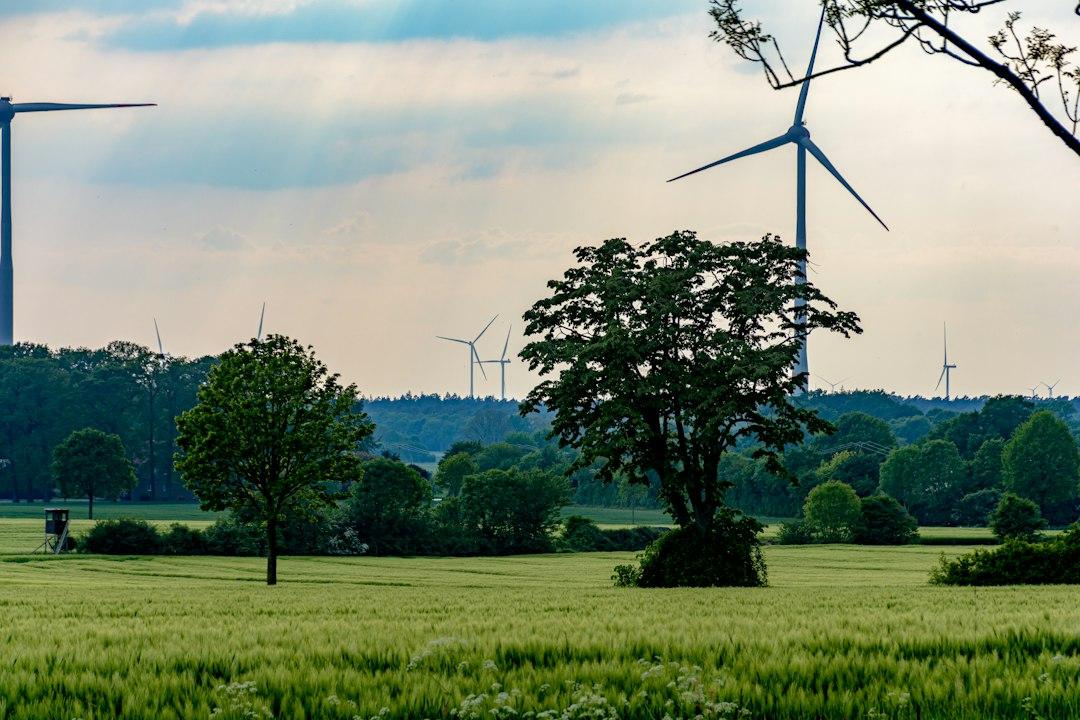
In a move that has sent ripples through both the scientific community and the political landscape, the United States Department of Energy (DOE) has officially begun a transition to phase out the term "wind turbine" in favor of a more clinical, industrial descriptor: "aeromechanical energy systems." While at first glance this may appear to be a simple matter of semantics, seasoned observers of the energy sector recognize it as a calculated maneuver in the ongoing ideological tug-of-war over the future of the American power grid.
This rebranding effort, spearheaded under the current administration, reflects a broader strategy to decouple renewable energy technologies from their traditional associations with environmentalism and the "Green New Deal" ethos. By adopting the term "aeromechanical energy systems," the administration seeks to frame these installations as heavy industrial machinery rather than symbols of environmental preservation. This shift is not merely about vocabulary; it is about changing the narrative framework within which energy policy is debated, funded, and regulated.
To understand the current rebranding, one must look back at the historical friction between President Trump and the wind energy sector. For years, the President has voiced a litany of grievances against turbines, ranging from aesthetic concerns regarding golf course views to more controversial claims about noise-induced health issues and the impact on local bird populations.
By renaming the technology, the administration effectively attempts to reset the public's relationship with the hardware. "Wind turbines" carry a heavy load of cultural and political baggage. "Aeromechanical energy systems," conversely, sounds like a component of the aerospace or defense industry—sectors that typically enjoy broader bipartisan support and less localized aesthetic opposition. However, critics argue that this is a "ludicrous" obfuscation of a proven technology that is essential for meeting global carbon reduction targets.
For the global energy market, consistency is a form of currency. The sudden shift in terminology at the federal level introduces a layer of bureaucratic friction that could have tangible economic consequences. Institutional investors, particularly those in the ESG (Environmental, Social, and Governance) space, rely on standardized nomenclature to categorize assets and assess risk.
- Regulatory Confusion: If federal grants, tax credits, and environmental impact studies begin using disparate terminology, the administrative burden on developers could increase significantly.
- Market Perception: There is a risk that rebranding wind energy as an "aeromechanical system" is a precursor to stripping away specific subsidies currently tied to "renewable energy" definitions.
- Global Competitiveness: While the U.S. focuses on linguistic shifts, global competitors like China and the European Union are doubling down on the deployment of massive 18MW+ offshore units, maintaining a clear and consistent policy framework that attracts long-term capital.
From an engineering perspective, the term "aeromechanical energy system" is not technically inaccurate. A wind turbine is, by definition, a system that converts the kinetic energy of the wind into mechanical power and then into electricity via a generator. However, the move is widely viewed as a solution in search of a problem. Modern turbines are marvels of AI-driven optimization, utilizing complex sensors to adjust blade pitch in real-time to maximize efficiency and minimize structural stress.
By stripping the word "wind" from the title, the administration also subtly downplays the infinite and free nature of the fuel source. In the competitive landscape of the 2020s, where the Levelized Cost of Energy (LCOE) for wind has plummeted to become one of the cheapest forms of new generation, the physical reality of the technology remains unchanged regardless of what it is called. The wind will continue to blow, and the blades will continue to turn, generating gigawatts of power for the American grid.
The timing of this rebranding is particularly sensitive as the world looks toward the late 2020s as a critical window for energy transition. The U.S. is currently in a fierce competition for leadership in "Future Tech," which includes everything from advanced battery storage to small modular reactors (SMRs) and, of course, large-scale wind arrays.
If the rebranding is perceived as a move to marginalize the wind industry, it could signal to international partners that the U.S. is retreating from its role as a leader in green technology. This creates a vacuum that other nations are more than happy to fill. In the high-stakes world of international trade, the terminology used by the Department of Energy serves as a signal of national priority. Shifting that signal toward a more industrial, less "green-sounding" nomenclature suggests a pivot back toward a traditional fossil-fuel-centric energy hierarchy.
As we look toward the 2026 landscape, the energy sector remains one of the most volatile and influential sectors of the global economy. Whether we call them wind turbines or aeromechanical energy systems, the underlying truth remains: the transition to a diversified, high-tech energy grid is an inevitability driven by economics as much as by policy.
For stakeholders in the tech and energy sectors, the challenge will be to see through the rhetorical fog. The rebranding may satisfy a specific political base, but the data—on grid stability, cost-per-kilowatt-hour, and carbon intensity—will continue to be the primary driver of the industry’s future. At Imai News, we will continue to track whether this linguistic shift translates into substantive policy changes or remains a curious footnote in the history of American energy politics.
Enjoying this article?
Get the daily AI briefing sent straight to your inbox.
Frequently Asked Questions
What does 'aeromechanical energy system' actually mean?
It is a technical descriptor for a wind turbine. It refers to a system that uses aerodynamic forces (wind) to create mechanical motion (the spinning of blades) to generate power.
How will this change affect renewable energy subsidies?
While the name change itself doesn't automatically cut funding, industry experts fear it provides a linguistic framework to redefine which technologies qualify for 'green' subsidies or environmental protections.
Is this rebranding permanent?
Energy policy terminology often shifts between administrations. While it is the current standard for the DOE, a future administration could revert to traditional terminology or introduce new descriptors.
Comments
0Please sign in to leave a comment.
Related articles

Alef Aeronautics Welcomes Tesla to the Flying Car Race with Aerial Stunt
Alef Aeronautics has officially entered the public spotlight by demonstrating its flying car technology directly above a Tesla Roadster, marking a symbolic rivalry in the future of mobility.

Tesla Unveils 'Cyberfied' Roadster Capable of Mid-Air Kickflips
Tesla has revealed a redesigned 'Cyberfied' Roadster, showcasing the ability to perform aerial maneuvers through advanced cold-gas propulsion technology.
Kia Debuts Revolutionary Remote-Driving Car-Sharing Service with PV5 EV
Kia has officially launched a pioneering remote-controlled car-sharing service in Korea, utilizing its versatile PV5 electric van to redefine convenience and fleet efficiency.