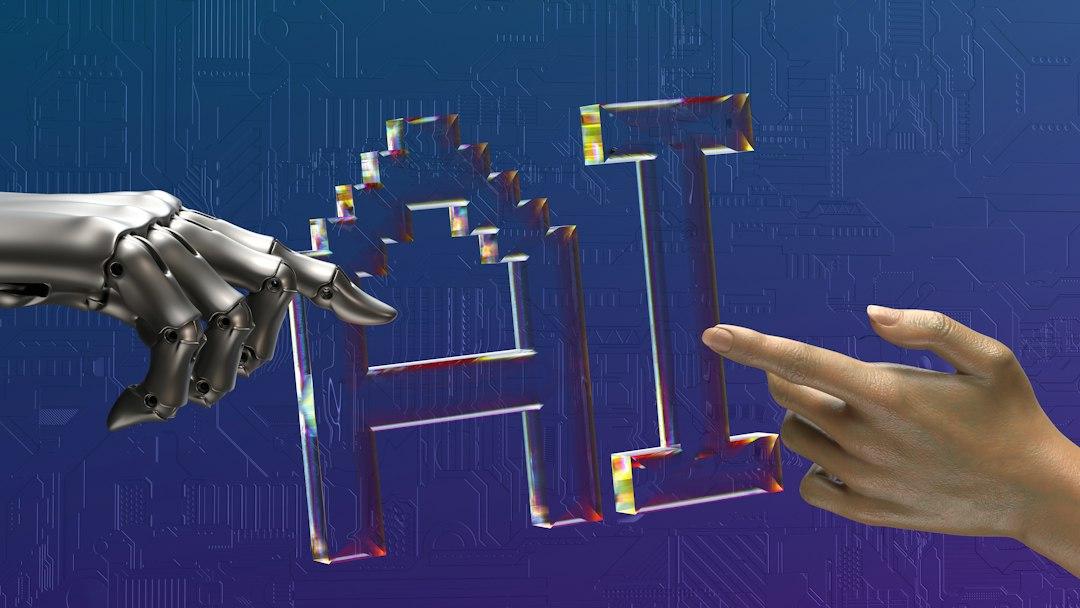
As artificial intelligence continues to permeate every sector of the global economy, the classroom has become the primary battleground for the future of human-AI collaboration. OpenAI has officially signaled the next phase of its "Education for Countries" initiative, a comprehensive program aimed at bringing generative AI to national school systems worldwide. This expansion marks a shift from experimental pilot programs to large-scale, systemic integration, focusing on teacher training, localized tools, and improved learning outcomes.
For OpenAI, this isn't just about expanding its user base; it is about establishing a foundational role in how the next generation learns, thinks, and creates. By partnering directly with governments and educational ministries, OpenAI is positioning itself as the primary architect of the AI-powered curriculum.
One of the most significant hurdles to AI adoption in schools has been the apprehension of educators. In the early days of ChatGPT, many schools responded with bans, fearing a surge in academic dishonesty. OpenAI’s updated strategy seeks to flip this narrative by placing teachers at the center of the AI revolution.
Through the "Education for Countries" framework, OpenAI is launching specialized teacher training programs. These modules are designed to help educators move beyond the role of "content delivery" and toward becoming "AI orchestrators." Teachers are being taught how to use AI to automate administrative tasks—such as lesson planning and grading—allowing them to spend more one-on-one time with students. Furthermore, the program emphasizes "AI Literacy," ensuring that teachers can guide students on the ethical use of technology, bias detection, and prompt engineering.
One size does not fit all in global education. A curriculum in Finland differs vastly from one in Brazil or Japan. OpenAI’s next phase focuses heavily on localization and cultural relevance. This involves fine-tuning models to respect regional linguistic nuances and ensuring that the AI’s knowledge base is reflective of local history, geography, and social values.
By providing countries with the tools to build their own custom GPTs and educational interfaces, OpenAI is enabling a form of personalized learning at scale. Imagine a student in a rural village having access to a personal tutor that speaks their dialect and understands their specific curriculum—this is the vision OpenAI is pitching to world leaders.
There is a persistent fear that AI will widen the gap between wealthy and developing nations. OpenAI’s "Education for Countries" initiative purports to address this by lowering the barrier to entry for high-quality educational resources. By providing the infrastructure for AI-driven education, OpenAI aims to provide students in underserved regions with the same level of academic support as those in elite institutions.
However, this mission comes with significant responsibility. Critics point out that reliance on a single, private company for national educational infrastructure poses risks regarding data sovereignty and long-term dependency. OpenAI’s challenge will be to prove that its tools can be integrated into diverse political and economic landscapes without compromising the autonomy of the host nations.
As OpenAI moves into this next phase, the focus on policy and safety has never been higher. Working with national governments requires a rigorous adherence to data privacy laws, such as GDPR in Europe and similar frameworks elsewhere. OpenAI is reportedly working on enhanced safety guardrails specifically for the educational sector, ensuring that AI interactions remain age-appropriate and free from harmful biases.
Moreover, the initiative is expected to produce a wealth of data on how AI impacts learning outcomes. This research will be vital for the next decade of educational policy. If OpenAI can demonstrate a measurable increase in literacy rates or STEM proficiency through its partnerships, "Education for Countries" could become the standard model for national development in the 21st century.
The "Education for Countries" initiative represents a pivotal moment for OpenAI. It is a transition from providing a tool to providing a service that is fundamental to society. As the program rolls out across new borders, the world will be watching to see if AI can truly democratize education or if it will present a new set of challenges for the teachers of tomorrow. For now, OpenAI is betting that the future of learning is not just human or machine—but a sophisticated blend of both.