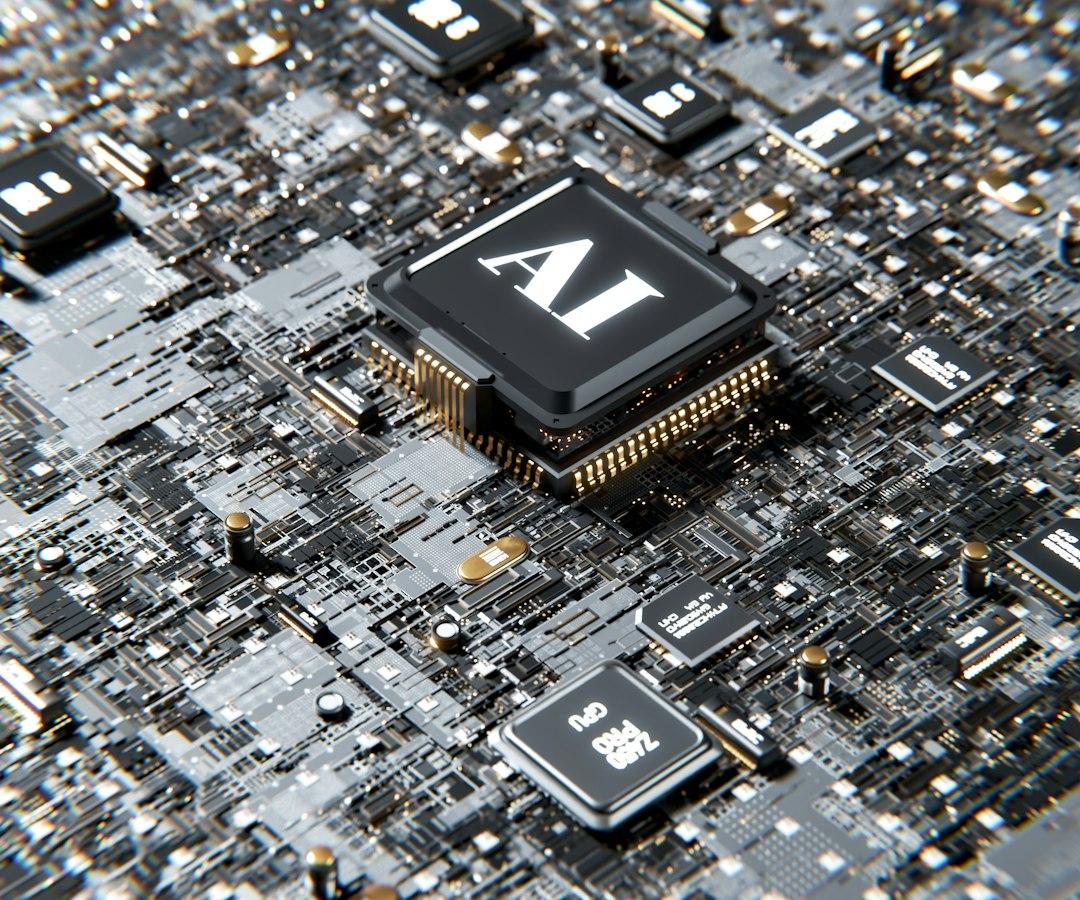
- Meta will commence production of its custom AI-specific chips this September.
- The initiative aims to decrease heavy reliance on expensive third-party GPUs from Nvidia.
- Custom silicon is expected to improve energy efficiency and performance for Meta's Llama models.
- This shift represents a growing trend of tech giants building proprietary hardware to control infrastructure costs.
Meta Accelerates AI Independence: Custom Chip Production Starts in September
As Meta looks to reduce its heavy reliance on expensive Nvidia hardware, the tech giant prepares to initiate mass production of its proprietary AI silicon.
Jul 9, 2026·0 views

Key Takeaways
For years, the artificial intelligence gold rush has been defined by a singular dependency: the high-performance Graphics Processing Units (GPUs) produced by Nvidia. As Meta Platforms continues to pour billions into its Large Language Model (LLM) development and generative AI infrastructure, the company is finally taking a decisive step toward vertical integration. Sources confirmed this week that Meta is on track to begin production of its latest generation of custom-designed AI chips starting in September.
This move marks a critical milestone in CEO Mark Zuckerberg’s broader strategy to decouple Meta’s vast data center requirements from the supply chain bottlenecks and premium pricing associated with third-party hardware providers. By designing its own silicon, Meta is not only looking to trim its massive capital expenditure budget but is also optimizing its hardware specifically for the unique architectural demands of the Llama model family and its various AI-driven features.
Meta’s AI ambitions are resource-intensive. Running models like Llama 3 requires an immense amount of compute power, and until now, the company has been one of the world’s largest purchasers of Nvidia’s flagship H100 and Blackwell chips. However, relying on off-the-shelf hardware comes with trade-offs. General-purpose GPUs are designed to be versatile, but they are not always the most energy-efficient or cost-effective solution for specific neural network workloads.
By transitioning to custom-built chips, Meta aims to achieve several key objectives:
- Cost Optimization: Reducing the massive overhead associated with procuring thousands of high-end GPUs from external vendors.
- Energy Efficiency: Custom chips can be optimized to perform specific mathematical operations more efficiently, potentially lowering the massive electricity costs associated with Meta’s data centers.
- Performance Tuning: Tailoring the hardware architecture to match the specific software stack of Meta's AI models, resulting in faster training times and more responsive inference.
- Supply Chain Resilience: Decreasing dependence on a single supplier mitigates risks related to market shortages and geopolitical instability.
While September marks the start of production, the industry is watching closely to see how quickly these chips can be integrated into Meta's global data center footprint. Hardware deployment is rarely a "plug-and-play" scenario; it requires significant software optimization, testing, and infrastructure retooling.
Industry analysts suggest that Meta’s move is part of a larger trend among Big Tech companies. Microsoft, Google, and Amazon have all followed similar paths, investing heavily in proprietary silicon to gain a competitive edge in the AI race. As the demand for generative AI continues to outstrip the supply of available compute power, those who control their own hardware supply chains will likely be the ones to dominate the market.
Does this signal the end of Meta's relationship with Nvidia? Not necessarily. Analysts expect that Meta will continue to use Nvidia hardware for its most demanding training tasks for the foreseeable future. However, the introduction of proprietary chips suggests that Meta plans to handle a growing percentage of its inference and secondary training workloads in-house.
For the broader tech market, this shift represents a maturing of the AI ecosystem. As specialized AI hardware becomes more common, the barrier to entry for AI innovation may lower, potentially leading to more decentralized and efficient AI systems. For Meta, the September production start is just the beginning of a multi-year effort to build a more sustainable and high-performance foundation for the next generation of digital experiences.
Enjoying this article?
Get the daily AI briefing sent straight to your inbox.
Frequently Asked Questions
When does Meta start producing its new AI chips?
Meta is scheduled to begin production of its latest custom AI chips in September.
Why is Meta building its own AI chips?
Meta is moving toward custom silicon to reduce costs, improve energy efficiency, and decrease its dependence on third-party hardware providers like Nvidia.
Comments
0Please sign in to leave a comment.
Related articles

HiRO-ACEv2: Revolutionizing Weather Forecasting with AI Precision
New AI weather modeling from the Allen Institute for AI promises to democratize climate data by cutting computational costs while maintaining extreme precision.
TII Unveils Falcon ASR: A New Era in Open-Source Speech Recognition
TII has launched Falcon ASR, a state-of-the-art open-source speech recognition model designed to set new benchmarks in accuracy and efficiency.

How the AI Community is Building the Models That Big Tech Won't
When the perfect AI model doesn't exist, the modern developer doesn't wait—they build it. Here is how the open-source movement is reshaping the AI landscape.