- IBM developed a prototype chip with 100 billion transistors, doubling the density of its 2021 technology.
- The breakthrough utilizes sub-1nm architecture to improve speed and energy efficiency.
- This advancement is expected to sustain Moore's Law for at least another decade.
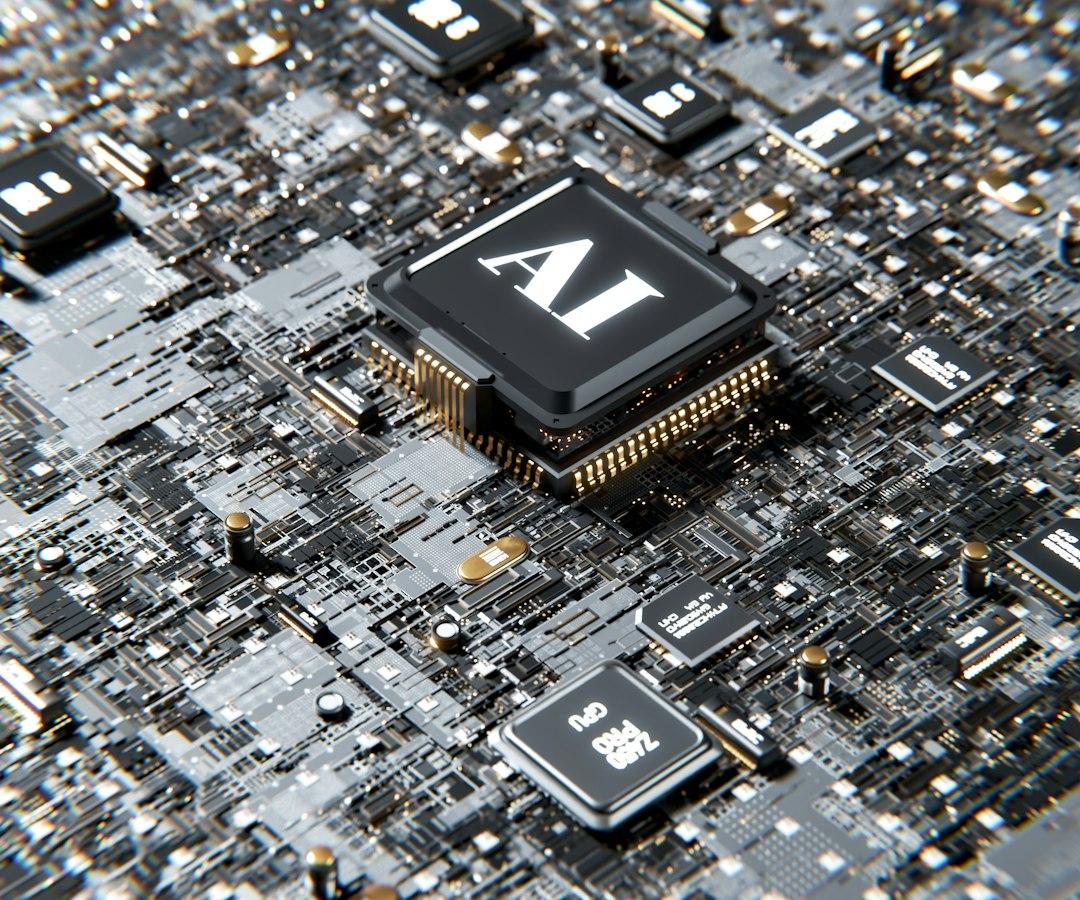
- The chip design is specifically poised to support the growing demands of AI and machine learning hardware.
IBM’s Sub-1nm Breakthrough: A New Era for Moore’s Law
IBM’s latest semiconductor breakthrough packs 100 billion transistors onto a fingernail-sized chip, promising a decade of computing advancements.
Jul 5, 2026·0 views

Key Takeaways
For more than half a century, the electronics industry has been guided by Moore’s Law—the observation that the number of transistors on a microchip doubles roughly every two years. As physical limitations have begun to stifle progress, skeptics have long predicted the end of this golden age. However, IBM has just delivered a resounding rebuttal to those claims. The tech giant has unveiled a new prototype chip that packs approximately 100 billion transistors into an area no larger than a human fingernail, marking a significant leap forward in density and performance.
This new development is twice as dense as the state-of-the-art technology IBM showcased in 2021. By pushing the boundaries of sub-1nm (nanometer) architecture, IBM is not merely iterating on existing designs; it is fundamentally altering the trajectory of hardware development for the next decade.
The secret to this breakthrough lies in the refined architecture of the transistors themselves. As we approach the sub-1nm threshold, traditional manufacturing techniques encounter significant leakage issues—where electrons escape their intended pathways, leading to power loss and heat generation. IBM’s latest prototype utilizes advanced materials and structural innovations to maintain efficiency at unprecedented scales.
Key technical advantages of this new design include:
- Increased Transistor Density: With 100 billion transistors, processors can handle more complex calculations simultaneously, which is critical for the burgeoning AI and machine learning sectors.
- Energy Efficiency: By minimizing electron leakage, the chip requires significantly less power to perform at high speeds, extending battery life for mobile devices and reducing the carbon footprint of massive data centers.
- Performance Gains: The architecture allows for faster switching speeds, directly translating to snappier applications and the ability to process massive datasets in real-time.
The rapid evolution of Large Language Models (LLMs) and generative AI has created an insatiable demand for computational power. Current hardware struggles to keep pace with the energy requirements of training these massive neural networks. IBM’s innovation provides a much-needed bridge. By densifying the chip, IBM is enabling the next generation of AI hardware to be more compact and significantly more efficient.
As these chips move from the laboratory to commercial production, we can expect to see a new class of edge-computing devices. Imagine AI models running locally on smartphones with the same precision currently reserved for server farms, all while maintaining lower temperatures and extended battery performance.
Critics have often argued that Moore’s Law is effectively dead due to the laws of physics. IBM’s latest announcement suggests that the law isn't dead—it is simply evolving. The ability to continue shrinking chip components while managing thermal and electrical interference is a testament to the ingenuity of current semiconductor engineering.
Industry experts suggest that this breakthrough could support the industry's roadmap for at least another ten years. While the challenges of scaling down to the atomic level remain, this prototype proves that there is still significant headroom for performance gains through architectural design rather than just physical size reduction.
While the prototype is a monumental scientific success, the road to mass manufacturing is complex. IBM must now work with its fabrication partners to scale the manufacturing process, ensuring that these high-density chips can be produced with high yields. If successful, this technology will likely become the backbone of the next generation of supercomputers, cloud infrastructure, and consumer electronics.
As the world becomes increasingly reliant on digital infrastructure, the energy efficiency provided by such advancements is not just a commercial advantage—it is an environmental necessity. IBM’s research serves as a vital reminder that technical innovation remains the primary engine for global economic and technological growth.
Enjoying this article?
Get the daily AI briefing sent straight to your inbox.
Frequently Asked Questions
What is the significance of IBM's new chip?
The chip contains 100 billion transistors, doubling the density of previous technology, which allows for faster, more energy-efficient computing.
How does this chip impact Moore's Law?
It demonstrates that semiconductor density can continue to increase, effectively extending the lifespan of Moore's Law for another decade.
Why is this important for AI?
High-density chips are essential for training and running complex AI models, offering the performance and energy efficiency required for modern AI workloads.
Comments
0Please sign in to leave a comment.
Related articles

HiRO-ACEv2: Revolutionizing Weather Forecasting with AI Precision
New AI weather modeling from the Allen Institute for AI promises to democratize climate data by cutting computational costs while maintaining extreme precision.
TII Unveils Falcon ASR: A New Era in Open-Source Speech Recognition
TII has launched Falcon ASR, a state-of-the-art open-source speech recognition model designed to set new benchmarks in accuracy and efficiency.

How the AI Community is Building the Models That Big Tech Won't
When the perfect AI model doesn't exist, the modern developer doesn't wait—they build it. Here is how the open-source movement is reshaping the AI landscape.