- Space science has evolved from basic optical astronomy in 1776 to complex, AI-driven exploration.
- Spectroscopy in the 19th century allowed scientists to identify the chemical makeup of stars.
- The 20th-century Space Race transitioned the cosmos into a destination for human exploration.
- Modern exploration now focuses on private enterprise, AI integration, and long-term planetary habitation.
From Telescopes to Mars: The Evolution of Space Exploration Since 1776
As we celebrate independence and progress, we trace the monumental journey of human discovery from early celestial observations to the dawn of the interplanetary age.
Jul 4, 2026·0 views
Key Takeaways
When the United States declared its independence on July 4, 1776, the scientific understanding of the universe was vastly different from our current reality. At the time, space science was largely confined to the visual capabilities of early optical telescopes and the mathematical foundations laid by Isaac Newton. Astronomers were primarily focused on mapping the stars, tracking planetary orbits, and attempting to comprehend the mechanics of a solar system that still held many secrets.
In the late 18th century, the concept of a 'galaxy' was barely understood, and the idea of humans traversing the vacuum of space was relegated to the realms of fiction. However, the seeds of modern astrophysics were already being sown. As the world transitioned into the industrial era, the tools available to scientists began to sharpen, setting the stage for a revolution in how we perceive our place among the stars.
Throughout the 1800s, the scientific community began to move beyond simple observation. The introduction of spectroscopy—the study of the interaction between matter and electromagnetic radiation—allowed astronomers to determine the chemical composition of stars. This was a turning point in history; for the first time, humanity realized that the stars were not just points of light, but massive, burning furnaces made of elements found right here on Earth.
Key advancements during this period included:
- Improved Lens Technology: Larger, more precise telescopes allowed for deeper imaging of the night sky.
- Mathematical Modeling: More accurate predictions of planetary movements led to the discovery of Neptune in 1846.
- Astrophotography: The marriage of chemistry and optics allowed for the first permanent records of celestial bodies.
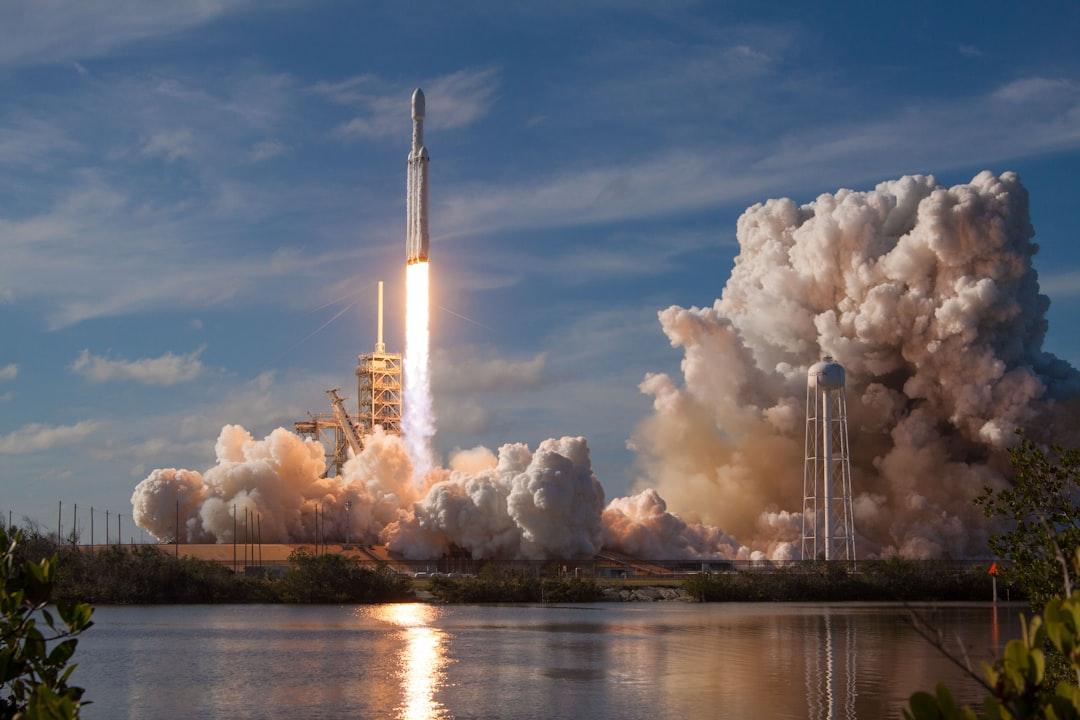
By the mid-20th century, the rapid acceleration of technology, fueled partly by the geopolitical tensions of the Cold War, pushed space exploration into a new dimension. The launch of Sputnik in 1957 marked the true beginning of the space age, transforming the cosmos from a subject of study into a destination. This era culminated in the Apollo 11 moon landing, an event that demonstrated that human ingenuity could overcome the immense challenges of orbital mechanics and life support systems.
As the 20th century closed, the focus shifted from 'getting there' to 'seeing further.' The deployment of the Hubble Space Telescope provided humanity with a window into the deep past of the universe, revealing the existence of billions of galaxies and confirming the accelerating expansion of space itself.
Today, we stand at the precipice of a new era defined by artificial intelligence and private enterprise. Modern space science is no longer the sole domain of government agencies. Companies are deploying constellations of satellites that provide global connectivity, while AI-driven data analysis allows researchers to sift through massive amounts of telescope data to identify exoplanets with unprecedented speed.
Looking forward, the focus has shifted toward sustainability and colonization. With missions aimed at the Moon’s south pole and the eventual goal of human footprints on Mars, the scope of space exploration has expanded to include resource utilization and long-term habitation. The legacy that began with simple 18th-century observations has blossomed into a multi-disciplinary effort that integrates robotics, biology, and high-performance computing.
It is humbling to reflect on the timeline of human progress. The transition from a world that viewed the stars as static, unknowable entities to a global society capable of landing rovers on the red planet is a testament to the power of the scientific method. As we continue to push the boundaries of what is possible, the lessons learned since 1776 serve as a reminder that curiosity is our most powerful tool for progress. The saga of space science is far from over; in many ways, it has only just begun.
Enjoying this article?
Get the daily AI briefing sent straight to your inbox.
Frequently Asked Questions
How has space science changed since 1776?
Space science has evolved from simple observation using early telescopes to advanced interplanetary exploration, robotics, and high-tech satellite communications.
What role did spectroscopy play in astronomy?
Spectroscopy enabled astronomers to analyze the light from stars to determine their chemical composition, proving they are made of elements found on Earth.
What is the current focus of modern space exploration?
Modern focus has shifted toward private commercial spaceflight, the use of AI to analyze astronomical data, and long-term goals like colonizing Mars.
Comments
0Please sign in to leave a comment.
Related articles

Astronomers Identify Potentially Habitable 'Super-Earth' 25 Light-Years Away
A newly discovered exoplanet, Gliese 12 b, sits at an ideal distance from its host star, sparking hopes for atmospheric study and habitability.

Cosmic Independence: Astronomers Capture Infant Stars Igniting the Nebula
In honor of the Fourth of July, astronomers have unveiled a stunning new space image showcasing the violent and beautiful process of star formation.
Buck Moon 2026: Everything You Need to Know About July’s Celestial Spectacle
Get ready for the 2026 Buck Moon. We break down the exact timing, the best viewing techniques, and the cultural significance of this annual summer lunar event.