- Astronomers discovered a rare triple-supermassive black hole system in a distant galaxy.
- The system is the result of multiple galactic mergers over millions of years.
- Interactions between these black holes release gravitational waves and influence star formation.
- AI and adaptive optics are critical to identifying such complex, multi-body systems.
Cosmic Collision: Scientists Detect Three Supermassive Black Holes Merging
In a rare astronomical event, researchers have identified a trio of supermassive black holes locked in a gravitational dance deep within a distant galaxy.
Aug 19, 2026·0 views
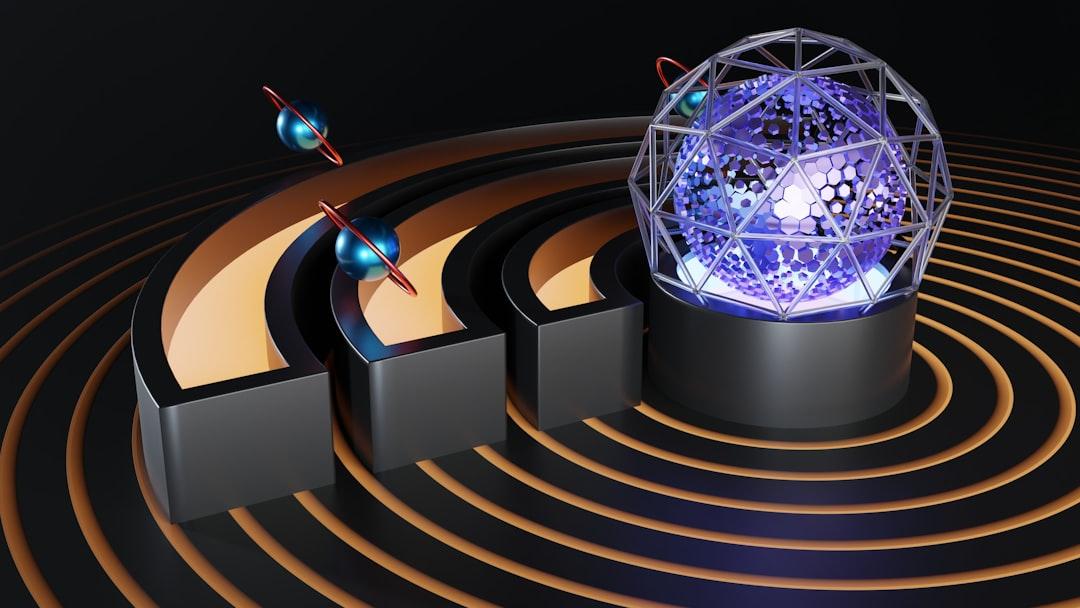
Key Takeaways
In the vast, dark expanse of the cosmos, few events are as cataclysmic or as scientifically significant as the collision of supermassive black holes. Recently, an international team of astronomers made a discovery that has sent ripples through the scientific community: a galaxy containing not one, but three supermassive black holes on the verge of a complex, multi-body merger. This rare finding, located in a distant galaxy, provides a unique laboratory for studying the gravitational forces that govern the evolution of the universe.
Traditionally, astronomers have observed binary black hole systems—two of these gravitational giants locked in an orbital embrace. However, the discovery of a triple system is exceptionally rare. These objects, which reside at the centers of galaxies, possess masses millions or even billions of times that of our Sun. When they interact, they create gravitational waves—ripples in the fabric of spacetime—that scientists are only just beginning to map with precision.
How do three supermassive black holes end up in such close proximity? According to current astrophysical models, this phenomenon is usually the byproduct of galactic mergers. When two galaxies collide, their respective central black holes eventually begin to orbit one another. If a third galaxy enters the fray or if the system captures an additional black hole through complex gravitational interactions, a triple system is born.
In this specific case, the three black holes are currently in a state of orbital decay. As they circle one another, they lose energy in the form of gravitational waves, causing their orbits to shrink steadily. Eventually, this process will culminate in a series of mergers, potentially resulting in a single, even more massive black hole, or the ejection of one of the objects from the galactic core entirely.
These black holes are not merely passive occupants of their host galaxy; they are active agents of change. The energy released during their interaction influences the surrounding gas and dust, effectively "shutting down" star formation in their vicinity. By studying this triple system, researchers hope to understand the "feedback" mechanisms that prevent galaxies from growing indefinitely.
Key areas of interest for the research team include:
- Gravitational Wave Signatures: Measuring the unique waveforms produced by three interacting bodies rather than two.
- Star Formation Quenching: Analyzing how the intense radiation from the merging black holes clears out the interstellar medium.
- Galaxy Merging History: Reconstructing the timeline of the host galaxy’s formation based on the current configuration of the trio.
This discovery was made possible by a combination of high-resolution imaging and sophisticated data processing. Astronomers utilized ground-based telescopes equipped with adaptive optics, which compensate for the blurriness caused by Earth's atmosphere. By analyzing the light spectrum emanating from the galaxy's center, the team was able to distinguish the distinct gravitational influence of all three bodies.
As AI-driven image processing continues to improve, astronomers expect to find more of these elusive systems. Modern machine learning algorithms are now being trained to scan terabytes of sky survey data, identifying subtle anomalies in galactic cores that might indicate the presence of multiple black holes. This transition from manual observation to AI-assisted discovery represents a new era in space exploration.
While the collision is inevitable, it will not happen tomorrow. On a cosmic scale, these events unfold over millions of years. However, the data gathered from this system will serve as a foundational study for future space-based gravitational wave observatories, such as LISA (Laser Interferometer Space Antenna). These future missions will be sensitive enough to detect the "hum" of such mergers across the entire observable universe, providing a clearer picture of how the largest structures in existence are built and maintained.
Enjoying this article?
Get the daily AI briefing sent straight to your inbox.
Frequently Asked Questions
What happens when three black holes collide?
When three supermassive black holes interact, they typically orbit one another until they lose enough energy through gravitational waves to merge, or until one is ejected from the system.
Why is this discovery important?
It provides rare data on how galaxies evolve and allows scientists to test theories about gravitational waves and galactic feedback mechanisms.
Comments
0Please sign in to leave a comment.
Related articles
Gemstones in the Clouds: Scientists Discover Exotic Weather on WASP-193b
Astronomers have identified potential gemstone-like particles in the atmosphere of WASP-193b, an ultra-low-density exoplanet that defies conventional physics.
Why Can You See the Moon During the Day? A Guide to Daytime Stargazing
Ever wondered why the Moon is visible during daylight hours? Experts explain the mechanics of lunar orbits and why this week offers prime viewing opportunities.
SpaceX Thrusters and the Tesla Roadster: A Deep Dive into Orbital Dynamics
Years after its historic launch, the Tesla Roadster remains a fixture in space lore. Recent developments in thruster technology have reignited interest in its trajectory.