- Large-scale compressed-air storage projects are increasing in capacity, but economic viability remains low.
- Round-trip efficiency losses continue to hinder CAES compared to battery and thermal storage.
- Geographical constraints and high civil engineering costs limit the scalability of gas-based storage.
- Future success depends on the adoption of advanced adiabatic designs to improve efficiency.
Compressed-Air Energy Storage: Why Bigger Isn't Always Better
Despite massive infrastructure projects in China and beyond, the economic viability of compressed-gas storage remains under intense scrutiny.
Sep 19, 2026·0 views
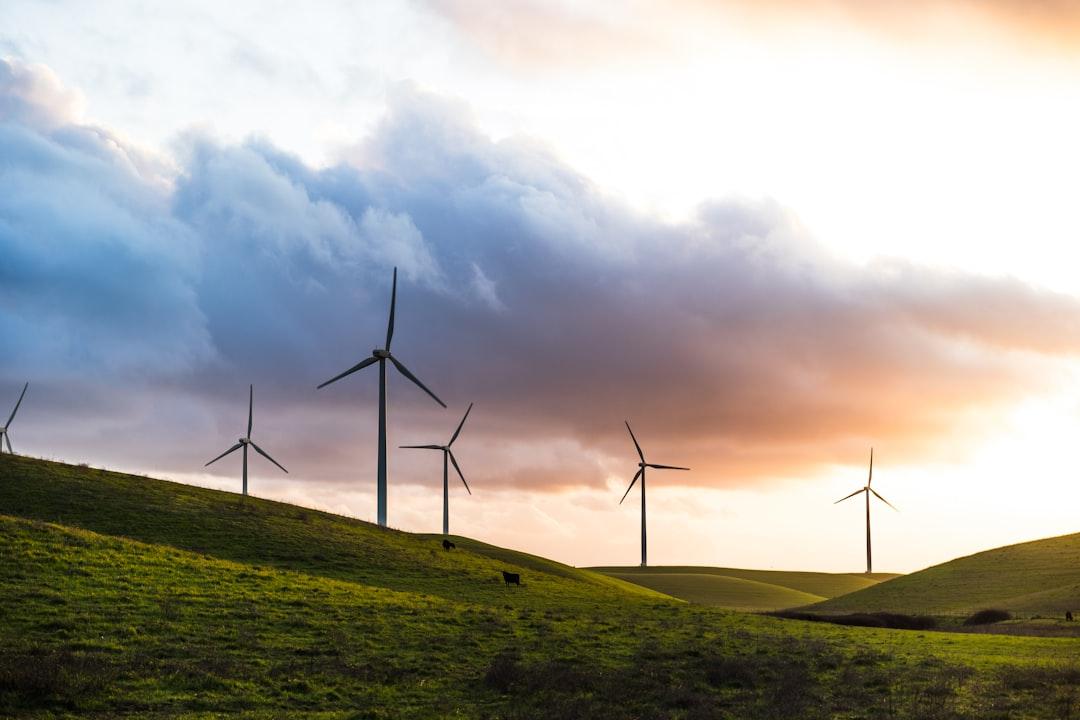
Key Takeaways
For years, the energy sector has looked toward Compressed-Air Energy Storage (CAES) as a potential long-duration solution to the intermittency of renewable power. The premise is conceptually elegant: use excess electricity from wind or solar farms to compress air into underground caverns, then release it through turbines to generate power when demand peaks. Recently, the technology has moved from theoretical pilots to massive, utility-scale deployments, most notably in China.
The commissioning of the 600 MW / 2.4 GWh Huai’an compressed-air facility stands as a testament to the engineering ambition behind this sector. With projects of this magnitude, proponents argue that economies of scale should naturally drive down the levelized cost of storage (LCOS). However, a deeper look at the operational data suggests that while the hardware has grown larger, the underlying economic challenges remain largely unchanged.
When evaluating energy storage, industry experts focus on the round-trip efficiency (RTE) and the capital expenditure (CAPEX) per kilowatt-hour. Traditional lithium-ion batteries have set a high bar, offering RTEs often exceeding 90%. In contrast, compressed-gas systems struggle to match this. Even with advanced thermal management, the energy lost during the compression and expansion cycles acts as a significant drag on profitability.
Furthermore, the geographical requirements for CAES are restrictive. These systems typically require specific geological formations, such as salt caverns or abandoned mines, to store the pressurized gas safely and efficiently. This creates a "location tax" that lithium-ion and flow batteries—which can be deployed almost anywhere—do not face. As projects like Hydrostor’s latest ventures continue to progress, the industry is finding that the cost of site preparation and specialized civil engineering often offsets the savings gained from larger turbine capacity.
As Imai News has covered extensively, the race for long-duration energy storage (LDES) is crowded. Beyond mechanical storage, several other technologies are competing for market share:
- Flow Batteries: Offering modularity and independent scaling of power and energy capacity.
- Gravity Storage: Utilizing heavy weights to store potential energy, avoiding the thermodynamic losses of gas compression.
- Thermal Storage: Capturing heat in molten salts or bricks, which serves as a highly efficient medium for long-duration discharge.
While CAES offers the advantage of utilizing mature turbo-machinery technology, it faces a "middle-ground" problem. It is currently too expensive to compete with the rapid response times of short-duration lithium-ion batteries, and it faces stiff competition from pumped hydro for ultra-long-duration storage. For investors, the question is not whether the technology works, but whether it can achieve the necessary margins to survive in a competitive merchant power market.
For compressed-gas storage to become a cornerstone of the grid, the industry must pivot toward advanced adiabatic designs. Traditional CAES systems often rely on natural gas to reheat the air during expansion, which undermines the "green" credentials of the storage project. Advanced adiabatic systems, which capture and store the heat generated during compression to use later during expansion, represent the next frontier.
However, these systems add significant complexity and cost. Until the industry can prove that these sophisticated designs can operate with high reliability and lower maintenance costs, the sector will likely remain a niche player. The Huai’an project is a vital data point for the global energy transition, but it also serves as a warning: engineering success does not automatically translate into commercial viability. As the world moves toward 2030, the pressure to deliver cost-effective, long-duration storage will only intensify, and CAES will need to prove it is more than just hot air.
Enjoying this article?
Get the daily AI briefing sent straight to your inbox.
Frequently Asked Questions
What is Compressed-Air Energy Storage (CAES)?
CAES is a technology that stores energy by compressing air into underground reservoirs, releasing it through turbines to generate electricity during periods of high demand.
Why is CAES struggling to compete with batteries?
CAES faces challenges with lower round-trip efficiency, high site-specific infrastructure costs, and thermodynamic energy losses compared to lithium-ion alternatives.
Are compressed-air storage projects environmentally friendly?
While they store renewable energy, many traditional systems use natural gas for reheating, which impacts their overall carbon profile unless advanced adiabatic technologies are used.
Comments
0Please sign in to leave a comment.
Related articles
Spiny 2: The Friction-Drive Kit That Electrifies Your Bike in Seconds
Say goodbye to complex wiring and heavy motors; the Spiny 2 friction-drive system aims to make e-bike conversion accessible to everyone in mere seconds.
Lectric's Spooky Sale Leads Major Green Tech Savings This Week
Imai News highlights this week's top green technology discounts, featuring Lectric's e-bike bundles, Worx snow blowers, and Jackery power stations.
Canadian Buyers Delay EV Purchases While Awaiting Chinese Market Entry
Canadian EV shoppers are increasingly holding off on purchases, signaling a major shift in consumer preference toward Chinese automotive technology.