- Colombia defeated Ghana 1-0 thanks to a 14th-minute goal by John Arias, securing the final spot in the 2026 World Cup Round of 16.
- The match highlighted Colombia's tactical evolution under Néstor Lorenzo, emphasizing defensive discipline alongside their traditional attacking flair.
- Ghana's exit marks a transition period for the Black Stars, who showed promise but struggled with clinical finishing against a top-tier South American side.
- The 2026 tournament's expanded 48-team format is testing squad depth and travel logistics, with Colombia emerging as a disciplined dark horse.
Colombia’s Clinical Edge: John Arias Sends Los Cafeteros to the FIFA World Cup 2026 Round of 16
A 1-0 victory over Ghana finalizes the knockout bracket, signaling a shift in South American dominance and the end of a gritty campaign for the Black Stars.
Jul 4, 2026·0 views
Key Takeaways
The 2026 FIFA World Cup, a sprawling odyssey across North America, has finally seen its Round of 16 field set in stone. In a match defined by high-intensity pressing and tactical discipline, Colombia secured the final remaining slot in the knockout stages with a hard-fought 1-0 victory over Ghana. The result not only marks a significant milestone for South American football in this expanded 48-team era but also sets the stage for a series of heavyweight clashes in the weeks to come.
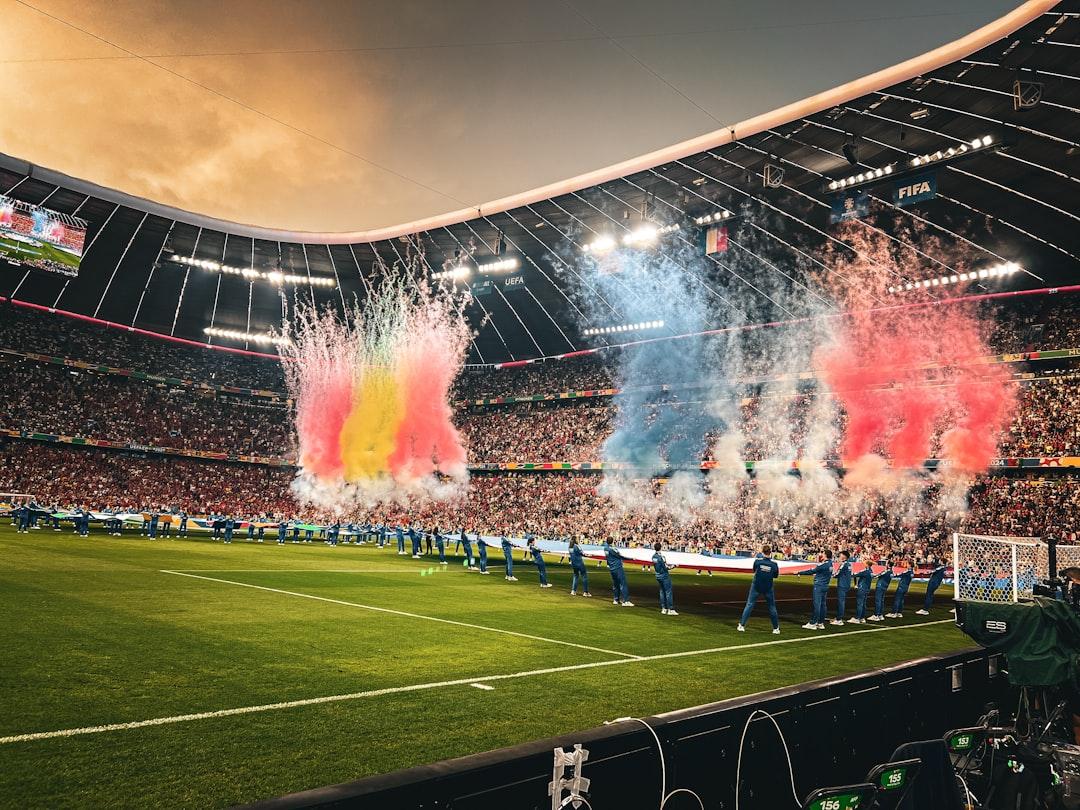
As the final whistle blew, the atmosphere in the stadium—a sea of yellow—was a testament to the enduring passion of the Colombian faithful. For Ghana, the 'Black Stars' of Africa, the defeat marks a bittersweet end to a campaign that showed glimpses of brilliance but ultimately lacked the clinical finishing required at the highest level of international competition.
The decisive moment arrived early in the match, specifically in the 14th minute. John Arias, the Fluminense playmaker who has become a cornerstone of Néstor Lorenzo’s tactical system, capitalized on a defensive lapse from the Ghanaian backline. The goal was a masterclass in spatial awareness: Colombia’s midfield transitioned from defense to attack with lightning speed, finding Arias in a pocket of space between the lines. His composed finish past the Ghanaian goalkeeper silenced the vocal West African supporters and forced Ghana to abandon their conservative counter-attacking shape earlier than planned.
Key tactical observations from the match include:
- High-Press Efficiency: Colombia utilized a sophisticated 4-3-3 formation that transitioned into a 4-5-1 when out of possession, effectively neutralizing Ghana’s creative outlets in the center of the park.
- Width and Overloads: The Colombian full-backs played a pivotal role in stretching the Ghanaian defense, creating 2-on-1 situations on the flanks that kept the Black Stars’ wingers pinned back.
- Defensive Resilience: After taking the lead, Colombia demonstrated a level of defensive maturity that has often eluded them in previous tournaments, managing the game's tempo and limiting Ghana to long-range efforts.
Under the stewardship of Néstor Lorenzo, Colombia has undergone a quiet revolution. While the squad still features world-class individual talents like Luis Díaz and the evergreen James Rodríguez, the current iteration of the team is built on a foundation of collective responsibility. The victory over Ghana was a microcosm of this new philosophy. It wasn't just about the brilliance of Arias; it was about the tireless work rate of the midfield trio and the synchronized movement of the defensive line.
This resurgence is particularly notable given the pressures of the 2026 format. With more teams and a more grueling travel schedule across the United States, Canada, and Mexico, squad depth and tactical flexibility have become more important than ever. Colombia’s ability to rotate players without losing their structural integrity suggests they could be a dark horse as the tournament enters its most critical phase.
For Ghana, this exit will prompt a period of deep reflection. Despite the loss, the Black Stars demonstrated that African football remains a potent force. Their physicality and speed on the break caused Colombia several moments of genuine concern. However, the inability to convert possession into high-quality scoring chances remains a persistent issue.
Industry analysts point to several factors for Ghana's struggle in the 2026 cycle:
- Transition Period: The squad is currently integrating a new generation of talent, and the lack of experienced leadership in high-pressure knockout scenarios was evident.
- Tactical Rigidity: At times, Ghana struggled to adapt to Colombia’s mid-block, failing to find the 'Plan B' needed to unlock a disciplined South American defense.
Despite the disappointment, the performance of African nations in the 2026 tournament—aided by increased slots—shows that the gap between the traditional powerhouses and the rest of the world is narrowing. Ghana’s journey in this World Cup will be remembered for its grit, even if it lacked the final flourish.
With Colombia’s victory, the Round of 16 bracket is now complete. The path to the final is fraught with difficulty, with potential matchups against European giants and regional rivals. The completion of the field allows fans and analysts to look at the broader picture of the tournament. We are seeing a tournament where traditional hierarchies are being challenged, yet the established elite—including a rejuvenated Colombia—are finding ways to navigate the expanded format.
As we move into the knockout stages, the margin for error evaporates. One mistake, one moment of brilliance, or one tactical masterstroke will be the difference between immortality and a flight home. Colombia, with their blend of technical skill and newfound defensive steel, look well-prepared for the challenges ahead.
The 2026 FIFA World Cup is also being hailed as the most technologically advanced sporting event in history. From semi-automated offside technology to real-time player performance metrics, the data coming out of the Colombia-Ghana match provides deep insights into the modern game. Colombia’s victory was supported by high recovery metrics and a passing accuracy percentage that exceeded their group stage average, highlighting the importance of data-driven preparation in modern football.
As we look forward to the Round of 16, the role of AI in match analysis and injury prevention will continue to be a major talking point. Teams that can best leverage these technological tools to optimize player recovery and tactical scouting will have a distinct advantage in the high-altitude and high-temperature environments of the 2026 host cities.
Enjoying this article?
Get the daily AI briefing sent straight to your inbox.
Frequently Asked Questions
Who scored the winning goal for Colombia against Ghana?
John Arias scored the only goal of the match in the 14th minute to secure the 1-0 victory for Colombia.
What is the significance of Colombia's win over Ghana?
The win completes the Round of 16 field for the 2026 FIFA World Cup, finalizing the bracket for the knockout stages.
How has Colombia's strategy changed in the 2026 World Cup?
Under coach Néstor Lorenzo, Colombia has adopted a more balanced approach, combining high-pressing attacking play with a much more disciplined and resilient defensive structure.
Comments
0Please sign in to leave a comment.
Related articles
Arias Delivers in Kansas City: Colombia Clinches Final Round of 16 Spot with Gritty Win Over Ghana
Jhon Arias scored the lone goal in Kansas City as Colombia defeated Ghana 1-0, securing the final slot in the Round of 16. We analyze the tactical masterclass, Arias's rise, and what this means for the knockout stage.
World Cup 2026 Round of 16: The Ultimate Clash of Football Icons
With the 2026 World Cup bracket finalized, dream matchups like Messi-Salah and CR7-Yamal are set to define the tournament's legacy.
Vozinha: The 40-Year-Old Cape Verde Hero Capturing Global Hearts
Cape Verde’s veteran goalkeeper Vozinha has become the breakout star of the tournament, cementing his legacy with heroics that have stunned the football world.