The roar of the crowd in the 2026 Enhanced Games was not just for the speed of the sprinters or the strength of the weightlifters; it was for the triumph of the laboratory. Testosterone, Methenolone, and Human Growth Hormone (HGH) have long been the pariahs of the sporting world, whispered about in locker rooms and banned by the IOC. But in this new arena, they were the stars of the show. The Enhanced Games—often mockingly referred to as the 'Steroid Olympics'—have emerged as a polarizing mirror reflecting our culture’s burgeoning obsession with optimization, longevity, and the systematic dismantling of biological limits.
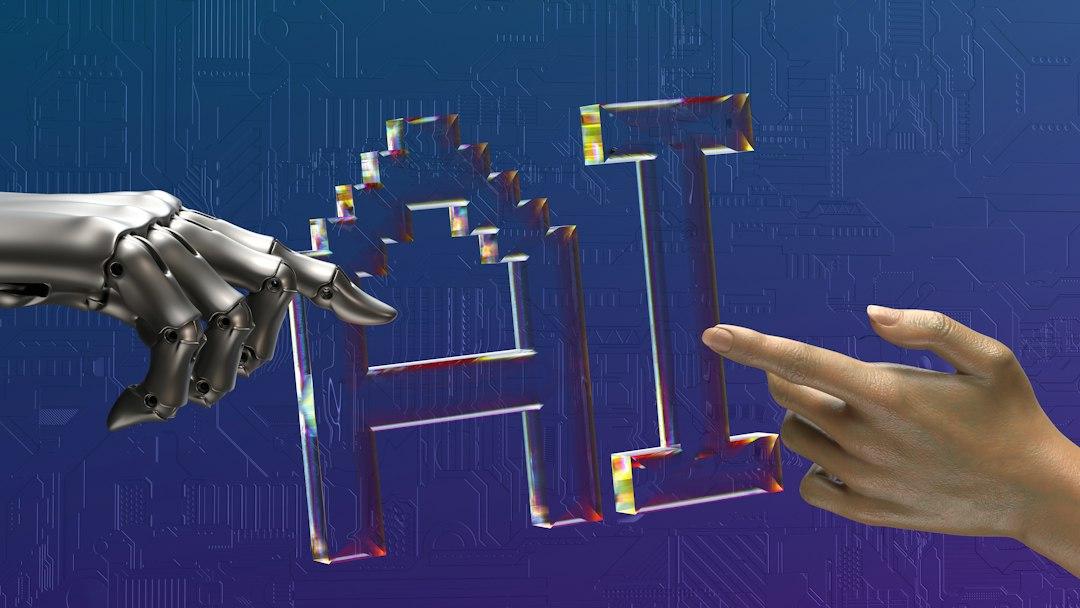
For the tech industry, and specifically for those of us tracking the trajectory of Artificial Intelligence, the Enhanced Games are not merely a sporting curiosity. They represent the first large-scale, public implementation of the 'Quantified Self' taken to its logical, albeit controversial, extreme. We are witnessing the birth of a new era where the human body is treated not as a fixed vessel, but as hardware to be upgraded, overclocked, and optimized through a combination of pharmacology and algorithmic precision.
While the source material highlights a 'galaxy of steroids'—from Nandrolone to Modafinil—the real story lies in how these substances are being identified and refined. We are moving past the era of 'garage chemistry' and into the age of AI-driven drug discovery. Large Language Models (LLMs) and specialized biological AI, such as Google DeepMind’s AlphaFold, have fundamentally changed the speed at which we understand protein structures and molecular interactions.
In the context of the Enhanced Games, this means that the next generation of performance-enhancing drugs (PEDs) will not be discovered by accident. They will be designed. AI models can now simulate how a specific synthetic hormone will interact with a specific athlete's genetic profile, minimizing side effects while maximizing output. This 'precision doping' is the biological equivalent of a software patch, and it marks a transition from blunt-force chemical intervention to surgical-grade biological engineering.
Beyond the substances themselves, the Enhanced Games provide a glimpse into the future of real-time human monitoring. These athletes are walking, breathing data sets. In a world where every heartbeat, glucose fluctuation, and oxygen saturation level is tracked by high-fidelity sensors and analyzed by machine learning models, the 'coach' of the future is an algorithm.
This level of data integration creates a feedback loop that was previously impossible:
- Real-time Optimization: AI models can suggest immediate adjustments to an athlete's intake of metabolic modulators based on live biometric data during training.
- Predictive Injury Prevention: Machine learning can identify the subtle gait changes that precede a stress fracture or a muscle tear long before the athlete feels pain.
- Personalized Recovery: AI-driven protocols for sleep, nutrition, and hormonal rebalancing ensure that the body recovers at a rate that defies natural biology.
This is where the Enhanced Games intersect with the broader tech economy. The technologies being pioneered for a few dozen elite sprinters will inevitably trickle down to the general population, marketed under the banner of 'longevity' and 'wellness.'
It is no coincidence that the Enhanced Games have found financial and ideological backing from the titans of Silicon Valley, including figures like Peter Thiel. The games are a high-stakes beta test for the longevity movement. The goal isn't just to run 100 meters in 9 seconds; it is to understand how to maintain peak human performance well into our 80s and 90s.
The substances listed—Clomiphene, Anastrozole, Levothyroxine—are already staples in the 'biohacking' community. By removing the stigma and the regulatory hurdles of traditional sports, the Enhanced Games allow for a radical transparency in human experimentation. We are seeing a shift in the cultural narrative: enhancement is no longer viewed as 'cheating' the game, but as 'winning' at life. This transhumanist ethos suggests that staying 'natural' is a choice to remain obsolete.
As a tech-focused publication, we must address the glaring ethical chasm this creates. If performance becomes a matter of who has access to the best AI models and the most sophisticated synthetic compounds, we are no longer measuring human grit; we are measuring capital. The Enhanced Games risk becoming a competition between engineering teams rather than athletes.
Furthermore, the long-term health implications of these 'overclocked' bodies remain a black box. While AI can predict short-term gains, the multi-decade impact of synthetic hormones and metabolic modulators is unknown. We are effectively running a live experiment on human subjects, with the results being broadcast for entertainment and profit.
The Enhanced Games are a circus, yes, but they are a circus with a profound message. They signal the end of the 'natural' human as the gold standard of achievement. In a world where AI is already outperforming us in cognitive tasks, the drive to upgrade our physical forms is an inevitable reaction.
As we look forward, the line between athlete and machine will continue to blur. We are entering an era of 'Algorithmic Athleticism,' where the winner is the one with the best data, the best chemistry, and the most seamless integration between the two. The Enhanced Games may be a window into our culture, but they are also a doorway to a post-biological future that is arriving faster than we are prepared for. Whether this leads to a new peak of human potential or a fragmented society of the 'enhanced' and the 'obsolete' remains the defining question of our age.