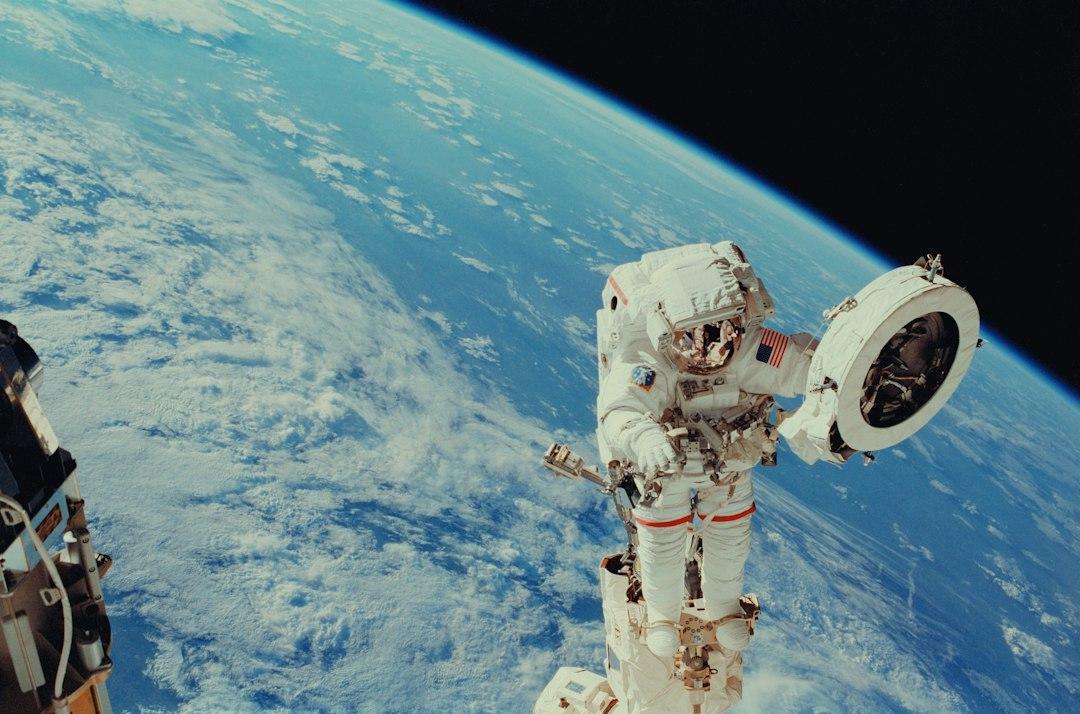
- A July 2026 photo shows an astronaut flexing during an ISS spacewalk.
- Spacewalks are physically demanding, requiring significant muscle conditioning to combat microgravity effects.
- Astronauts use rigorous daily exercise regimens to prevent muscle and bone loss.
- The image highlights the intersection of advanced suit technology and human biological endurance.
Astronaut Flexes in Orbit: A Rare Glimpse of Human Endurance in Space
A stunning new image from the International Space Station captures the physical toll and triumph of life in microgravity.
Jul 7, 2026·0 views

Key Takeaways
In a striking image released on July 7, 2026, the global space community was treated to a rare, candid view of human performance beyond Earth's atmosphere. The photograph, captured during a routine maintenance spacewalk outside the International Space Station (ISS), features an astronaut performing a momentary flex, showcasing the physical conditioning required to navigate the harsh environment of low Earth orbit.
The image has since circulated across social media platforms, serving as a powerful reminder that despite the sophisticated robotics and AI systems assisting modern space travel, the human element remains the most vital—and physically demanding—component of exploration.
Extravehicular activities (EVAs), commonly known as spacewalks, are among the most strenuous tasks an astronaut can undertake. Contrary to the graceful movements often depicted in science fiction, operating in a pressurized spacesuit is an exhausting endeavor. The suit itself is essentially a personal spacecraft, pressurized against the vacuum of space, which makes every movement a battle against stiff joints and rigid materials.
Living in microgravity causes significant physiological changes, including muscle atrophy and bone density loss. To combat these effects, astronauts follow a rigorous exercise regimen, spending approximately two hours every day on specialized equipment like the Advanced Resistive Exercise Device (ARED). The flex captured in the July 7 photo serves as a testament to the success of these protocols.
- Bone Density Preservation: Weight-bearing exercises are critical to prevent skeletal degradation.
- Cardiovascular Health: Maintaining heart strength is vital for the transition back to Earth’s gravity.
- Operational Readiness: Strong muscles are required to manipulate heavy tools and hardware in bulky, restrictive gloves.
While the astronaut’s physical display captured the public's imagination, the context of the mission remains rooted in high-tech advancement. The July 2026 mission is part of a broader initiative to test new, lightweight materials for next-generation spacesuits. These prototypes are designed to be more flexible, reducing the metabolic cost of movement and allowing for longer, more complex spacewalks as humanity prepares for upcoming lunar and Martian missions.
As we look toward the 2030s, the integration of AI-driven biometric monitoring has become standard. These systems track heart rate, oxygen consumption, and even muscle fatigue in real-time, sending data back to ground control to ensure the safety of the crew. The flex seen in the photo wasn't just a moment of bravado; it was a demonstration of a human body operating in peak condition, supported by some of the most advanced medical technology ever developed.
Beyond the scientific data, images like these play a crucial role in public engagement. The "Overview Effect," a cognitive shift reported by astronauts when viewing Earth from space, is often accompanied by a sense of fragility. By sharing photos that humanize these explorers—showing them flexing, smiling, or simply existing in the void—space agencies help bridge the gap between the average citizen and the complex, often intimidating world of aerospace engineering.
As the private sector and national space agencies continue to push the boundaries of human presence in space, these glimpses into daily life aboard the ISS remind us that while the machines are incredible, the human spirit is the true engine of discovery. Whether it is a routine hardware upgrade or a critical repair, the sight of a human flexing their muscles against the backdrop of the infinite cosmos remains one of the most compelling narratives in modern science.
Enjoying this article?
Get the daily AI briefing sent straight to your inbox.
Frequently Asked Questions
Why do astronauts exercise so much in space?
Astronauts must exercise to counteract the negative effects of microgravity on the human body, specifically muscle atrophy and bone density loss.
Are spacesuits difficult to move in?
Yes, spacesuits are pressurized against the vacuum of space, making them stiff and physically exhausting to maneuver, which requires significant strength.
Comments
0Please sign in to leave a comment.
Related articles

Gemstones in the Clouds: Scientists Discover Exotic Weather on WASP-193b
Astronomers have identified potential gemstone-like particles in the atmosphere of WASP-193b, an ultra-low-density exoplanet that defies conventional physics.
Why Can You See the Moon During the Day? A Guide to Daytime Stargazing
Ever wondered why the Moon is visible during daylight hours? Experts explain the mechanics of lunar orbits and why this week offers prime viewing opportunities.
SpaceX Thrusters and the Tesla Roadster: A Deep Dive into Orbital Dynamics
Years after its historic launch, the Tesla Roadster remains a fixture in space lore. Recent developments in thruster technology have reignited interest in its trajectory.