- Agrivoltaics integrates solar panels with farming, offering a dual-use land solution.
- Strategic solar panel placement creates beneficial microclimates, reducing water evaporation and crop stress.
- This approach can lead to increased crop yields, extended growing seasons, and improved crop quality.
- Agrivoltaics provides farmers with additional revenue from electricity sales, diversifying income.
- Successful implementation requires careful design, crop selection, and supportive policies.
Agrivoltaics: Solar Power's Unexpected Agricultural Ally
Innovative 'agrivoltaics' systems are proving that solar panels can do more than just generate electricity – they can actively benefit crop yields and water conservation.
Jul 4, 2026·1 views
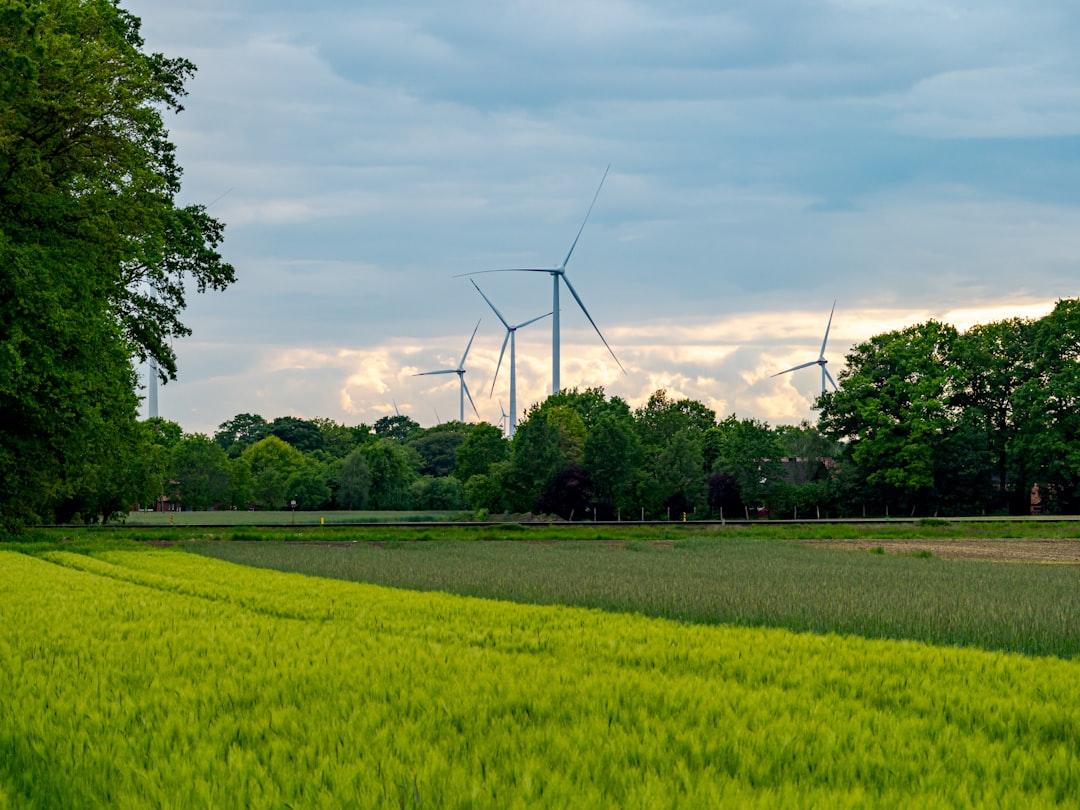
Key Takeaways
Agrivoltaics, a burgeoning field that integrates solar photovoltaic (PV) systems with agricultural activities on the same land, is demonstrating remarkable potential to address competing land-use demands. Far from being a simple cohabitation of crops and solar panels, successful agrivoltaic projects are revealing a more sophisticated interplay where the solar infrastructure actively contributes to farm productivity and sustainability.
The core appeal of agrivoltaics lies in its promise to reconcile the seemingly conflicting needs for agricultural land and renewable energy generation. By co-locating these two functions, proponents argue that the pressure on land resources can be significantly eased, allowing for both food production and clean electricity generation to occur simultaneously. This approach offers a more nuanced and integrated solution compared to traditional, separate land-use models.
Recent findings are shedding light on the specific mechanisms that make agrivoltaics work effectively. The key lies not just in the presence of solar panels, but in their strategic design and placement. When solar panels are elevated and spaced appropriately, they can create a beneficial microclimate for certain crops.
This shade provided by the panels can offer several advantages:
- Reduced Water Evaporation: The partial shade significantly lowers soil temperatures, which in turn reduces the rate of water evaporation from the soil surface. This is particularly crucial in arid and semi-arid regions where water scarcity is a major challenge for agriculture. Farmers can potentially reduce their irrigation needs, leading to significant water savings and lower operational costs.
- Protection from Intense Sunlight: For many crops, direct, intense sunlight, especially during the hottest parts of the day, can cause stress, leading to reduced growth and lower yields. The shade from agrivoltaic panels can mitigate this stress, allowing plants to thrive in conditions that might otherwise be too harsh.
- Extended Growing Seasons: In some climates, the shade can also help protect crops from frost during cooler periods, potentially extending the growing season and allowing for multiple harvests or the cultivation of more sensitive crops.
- Improved Crop Quality: The more stable microclimate created by the panels can contribute to more consistent plant growth, which can translate into improved crop quality, uniformity, and marketability.
Early perceptions of agrivoltaics often envisioned a passive coexistence, where farming simply occurred in the shadows of inert solar arrays. However, the latest research points towards a more active and symbiotic relationship. The solar panels are not just obstacles to sunlight; they are engineered elements that modulate the environment in ways that are conducive to agricultural success.
The success of agrivoltaics is therefore highly dependent on the specific crop being cultivated and the local climate conditions. Not all crops will benefit equally from shade, and the optimal panel height, density, and orientation are critical design considerations. For instance, shade-tolerant crops like leafy greens, berries, and certain root vegetables often show the most promising results under agrivoltaic systems.
The dual-use nature of agrivoltaics offers compelling economic and environmental benefits. For farmers, it provides an additional revenue stream from the sale of electricity, diversifying their income and making their operations more resilient. This can be particularly impactful for small and medium-sized farms that may be struggling with fluctuating commodity prices and rising input costs.
From an environmental perspective, agrivoltaics contributes to the broader goals of renewable energy deployment and sustainable agriculture. By utilizing land that might otherwise be dedicated solely to one purpose, it can help reduce the pressure for land conversion, preserving natural habitats and biodiversity. The reduction in water usage and potential for reduced fertilizer runoff (due to more controlled growing conditions) also contributes to a more environmentally sound agricultural system.
Despite its promising outlook, agrivoltaics is not without its challenges. The initial investment for elevated solar structures can be higher than for ground-mounted systems. Careful planning is required to ensure that the agricultural operations are not hindered by the solar infrastructure, and vice versa. The development of specialized farming equipment that can operate efficiently within these dual-use sites is also an ongoing area of innovation.
Furthermore, policy and regulatory frameworks are still evolving to fully support and incentivize agrivoltaic projects. Standardized best practices and comprehensive case studies are crucial for widespread adoption. As the technology matures and more data becomes available, the economic viability and practical implementation of agrivoltaics are expected to improve.
The future of agrivoltaics appears bright, offering a compelling vision where renewable energy and sustainable food production can thrive together. By recognizing the active role solar infrastructure can play in enhancing agricultural outcomes, this innovative approach is poised to become a significant component of our transition to a more sustainable and resilient future.
Enjoying this article?
Get the daily AI briefing sent straight to your inbox.
Frequently Asked Questions
What is agrivoltaics?
Agrivoltaics is a land-use system that combines solar photovoltaic (PV) power generation with agricultural activities on the same site. It aims to optimize land use by allowing both electricity production and crop cultivation or livestock grazing to occur simultaneously.
How do solar panels benefit farming in agrivoltaics?
When strategically designed and elevated, solar panels can provide partial shade. This shade reduces soil temperature, which in turn lowers water evaporation, protects crops from intense sunlight stress, and can potentially extend growing seasons. This creates a more favorable microclimate for certain types of crops.
What are the economic benefits of agrivoltaics?
Agrivoltaics offers farmers a dual revenue stream: income from selling electricity generated by the solar panels, and continued income from their agricultural produce. This diversification can enhance financial stability and resilience for farming operations.
Are there any challenges to implementing agrivoltaics?
Challenges include the potentially higher initial investment for elevated solar structures, the need for specialized farming equipment that can operate efficiently around the panels, and the importance of careful planning to ensure both solar and agricultural operations function optimally. Policy and regulatory frameworks are also still developing.
Comments
0Please sign in to leave a comment.
Related articles
Africa's E-Mobility Surge: Landmark Forum in Stellenbosch Signals Sector's Maturation
The recent Africa E-Mobility Week & Forum in Stellenbosch, South Africa, underscored a continental shift in electric mobility. Moving from East to Southern Africa, the event highlighted the sector's rapid growth, evolving discussions from nascent interest to practical implementation and infrastructure development.

New England Wind Power Surges: Generation Jumps 68% in 2026
Wind energy production in the ISO New England region has skyrocketed by 68% compared to 2025, marking a significant win for regional sustainability goals.
Tesla Roadster Reveal: Engineering Marvel or Musk’s Latest High-Stakes Gambit?
The Tesla Roadster reveal has ignited a firestorm of speculation regarding its capabilities, production viability, and the strategic vision behind Elon Musk's most ambitious EV project to date.